
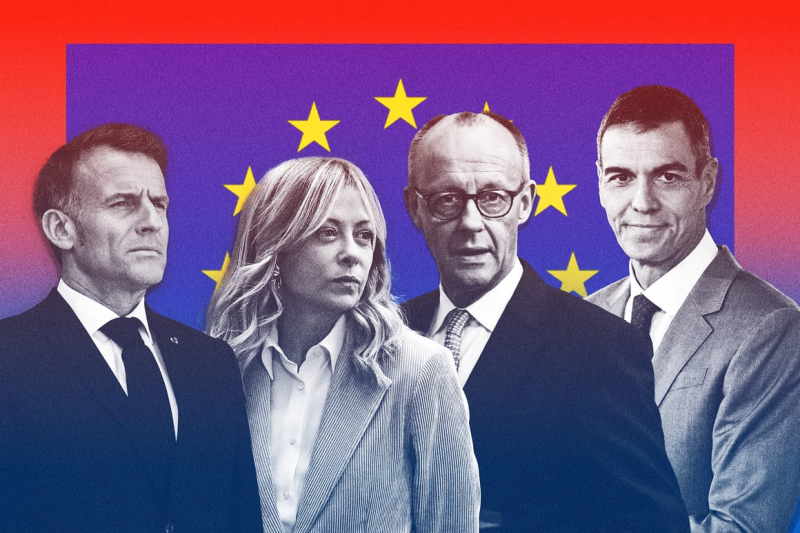

Marathon two-day summit sees posturing and clashes — yet little tangible movement on the most urgent challenges.
Ahead of this two-day summit, EU leaders were clear about the urgency of the tasks at hand — from striking a deal on the bloc’s long-term budget to addressing Ukraine’s financing needs and hashing out disagreements over its climate policies.
But as they leave, the most burning questions — how to fund Kyiv as Washington turns away, how to overcome vastly different spending priorities and unlock a deal on the next budget, and whether the buck for fixing energy costs stops with capitals or Brussels — remain unanswered.
On climate rules, a group of countries led by Poland hijacked much of the summit’s first day trying to water down an emissions-trading scheme, widening their camp to 16 members but ultimately failing to gain the upper hand.
On the budget, French President Emmanuel Macron warned other leaders that a deal was needed by year-end because he would soon be lacking the political mandate to strike a deal. But the summit ended with no indication that either the camps calling for a wider budget or those wanting to cut costs were any nearer to a compromise.
On meeting Ukraine’s funding shortfall, several leaders insisted on the need for further financial aid, including possibly by mobilizing some €300 billion of Russian frozen assets, as Ukrainian President Volodymyr Zelenskyy said his country needs another €70 billion from Europe.
But the summit ended without any sense of where the money would come from, with Sweden’s prime minister saying “nothing has changed” on the matter of Russian frozen assets after Belgium struck down plans to use them during a summit last December.
Leaders will meet again twice next month, in Dublin and Brussels, to give it all another go.