

As Germany hosts its first Invest in Germany Summit, leading VCs urge pension funds and institutional investors to back domestic startups and reduce reliance on foreign capital.
Today the German federal government is holding its first investor conference: the Invest in Germany Summit
The event focuses on what Germany needs right now as a business and investment destination. Venture capital leaders warn that the country’s reliance on foreign funding risks losing both economic value and control over critical technologies.
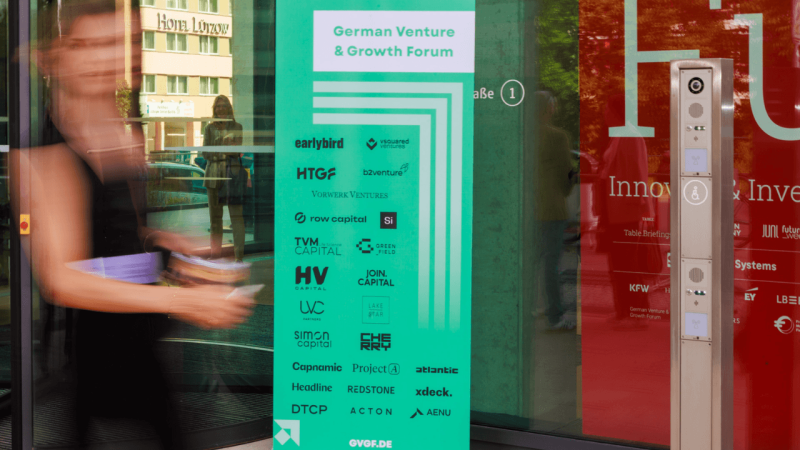
The German Venture and Growth Forum (GVGF), representing more than 20 leading German venture capital and growth funds with €28 billion in assets under management, argues that Germany must mobilise more domestic institutional capital to finance the next generation of global technology companies.
According to figures provided by the Forum, €5.1 billion was invested in German startups during the first half of 2026, but less than a third came from domestic investors.
The Forum estimates that Germany could mobilise approximately €15 billion in additional private capital annually for growth companies by increasing institutional allocations to venture capital.
Germany’s domestic investment gap
Germany’s startup ecosystem remains heavily dependent on foreign capital, particularly as companies progress into larger funding rounds.
According to the GVGF, US investors have provided as much capital as European investors to European companies raising more than €100 million in growth financing over the past five years.
By comparison, approximately 70 per cent of investment in American growth companies comes from domestic sources.
Christian Nagel, Co-founder and Partner at Earlybird Venture Capital, said Germany has significant untapped potential to finance its own technology companies.
“In the first half of this year, €5.1 billion were invested in German startups. Less than a third of this capital came from within Germany.
The US typically has a 70 per cent self-sufficiency rate when it comes to investing in its own American growth companies. There is still great potential here for Germany.”
Further, he called for greater cooperation, transparency, and dialogue to reverse the trend of German institutional capital currently moving abroad.
The Forum estimates that matching US growth investment levels relative to the size of the economy, while maintaining a comparable domestic investment share, would require almost €30 billion in additional annual investment across Europe, including approximately €15 billion from Germany.
Unlocking Germany’s €2.8 trillion institutional capital pool
Germany’s pension funds, insurance companies, and foundations collectively manage approximately €2.8 trillion in assets, yet their portfolios remain heavily concentrated in traditional investments such as government bonds and real estate.
According to OECD figures cited by the Forum, German pension funds recorded average five-year nominal returns of 2.9 per cent, equivalent to a real return of -0.6 per cent after inflation. By comparison, US pension funds achieved nominal returns of 5.3 per cent and real returns of 1.2 per cent over the same period.
The GVGF also cites Invest Europe data suggesting that German institutional investors have committed an average of €400 million annually to European venture and growth funds over the past decade, representing an allocation rate of approximately 0.1 per cent. Increasing this allocation to just 2 per cent could, according to the Forum’s estimates, mobilise approximately €15 billion in additional annual investment.
Dr Tanja Emmerling, Partner at High-Tech Gründerfonds, sees Germany’s planned statutory capital pension as a potential catalyst.
“The planned statutory capital pension offers an enormous opportunity to increase capital for VC in Germany. Within a diversified portfolio, VC offers exactly what the capital pension is intended to provide: returns and growth.”
Emmerling argued that venture capital investment could also strengthen the economic foundations on which future pension systems depend, while insurance companies could play a greater role in financing innovation.
Financing tomorrow’s global market leaders
Beyond the funding gap, the GVGF argues that Germany’s economic competitiveness and technological sovereignty increasingly depend on its ability to develop and retain high-growth technology companies.
Benedikt von Schoeler, Co-founder and General Partner at Vsquared Ventures, said discussions about Germany’s attractiveness to investors must look beyond established industries:
“We cannot safeguard our prosperity and jobs by relying solely on yesterday’s business models.
An attractive investment location is defined not only by the companies already established there, but above all by those that have yet to be or are being founded and have the potential to grow and scale across the globe.”
GVGF has also published a German Venture & Growth Playbook, presenting data on the risks and returns of venture capital and calling for institutional investors to reconsider their exposure to the asset class. It aims to establish a structured dialogue between venture capital firms, institutional investors, and policymakers, with a particular focus on removing barriers to domestic investment.
The challenge is not simply to attract investment into Germany’s existing industries, but to ensure that the companies defining its future economy can secure the capital they need to grow into global leaders.
Lead image: Beto Ruiz Alonso.