

The changing power dynamic in Washington puts Donald Trump under pressure and gives Europe’s mainstream a rare moment of transatlantic relief.
Europe is feeling more than a little bit of schadenfreude.
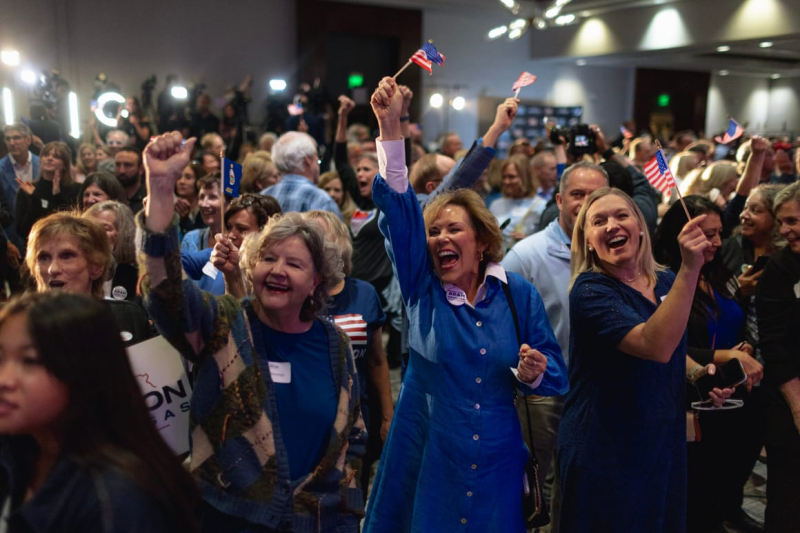
In a stunning U.S. midterm election, Democrats regained control of the House of Representatives and the Senate, as well as several governorships, winning big in Republican strongholds like South Carolina, Texas and even Kansas. While some races were yet to be called Wednesday morning, the result is a monumental rebuke of U.S. President Donald Trump.
For Europe, which has weathered Trump’s incessant verbal attacks and tariff threats for the last two years, it was a rare ray of hope in transatlantic politics — if not because Washington would become a more predictable partner, then at least because the U.S. president might be too distracted to focus his usual ire on Europeans.
European Parliament Vice President Sophie Wilmès, a former Belgian prime minister, heralded a “major shift in the balance of power in the U.S. Congress,” adding: “I hope it will lead to a calmer, more constructive relationship with Europe.”
It remains to be seen how Trump will shift his stance on Europe, if at all, with Congress no longer under his control. As president, he still retains many of the executive’s powers on foreign policy.
German Defense Minister Boris Pistorius called the Democratic victory “historic” but cautioned against Europe expecting too much. “We will seek close contact with the Democrats,” he said Wednesday morning at the Berlin Security Conference. “But we do not know what the president will do after the election in the near future.”
Two senior EU figures — both regular Trump antagonists — couldn’t resist celebrating the result, though.
“American society voted against policies that only impoverish,” Spanish Prime Minister Pedro Sánchez said. “Against hate. Against sexism. Against climate change denial and against the privileges of the elites.”
Polish Foreign Minister Radosław Sikorski reshared his own tweet from June last year responding to Elon Musk, a key Trump ally. “See, big man, politics is harder than you thought,” he snarked.
Headache for Europe’s far right
For Europe’s ascendant far right, which has long balanced admiration for Trump with the reality that he is deeply unpopular across the continent, the midterms are an uncomfortable reminder of the political risks of being too closely associated with the U.S. president.
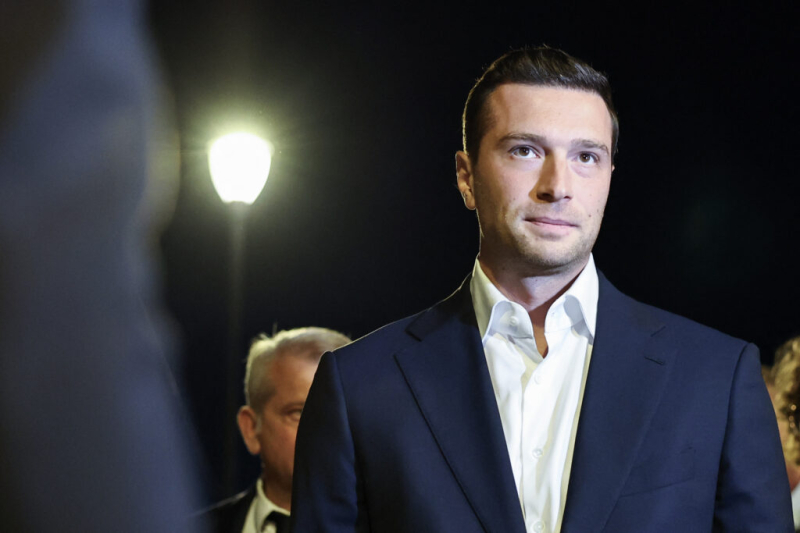
Jordan Bardella, leader of France’s National Rally (RN), was keen to chalk up Trump’s “unfavorable” result to his decision to go to war with Iran more than anything else.
“It’s the case that the U.S. intervention in Iran has had a very strong impact on the U.S. economy, but also on the European economy,” he said Wednesday morning.
Bardella added that the RN’s presidential candidate Marine Le Pen was still leading in the French polls ahead of next year’s election and insisted defeats for nationalist politicians in Brazil, Hungary and now the U.S. did not bode ill for his party’s chances.
But the cost-of-living crisis was top of American voters’ minds, according to polls. That’s also the case in European countries, from France to Spain to Greece, which are grappling with soaring rents and widespread anger at apparently impotent governments.
Marine Tondelier, leader of France’s Greens, said Trump had “made the United States the laughingstock of the world” and called the result a “warning for France” ahead of the presidential election in April.
“If our country brings the RN to power next year, it will meet the same tragic fate as the United States,” she said.
U.S. Ambassador to NATO Matthew Whitaker sought to downplay the prospect of a shift in Washington’s foreign policy following the midterm elections, insisting that the issues facing the U.S. and its European allies remained unchanged.
“The foreign policy of the United States has not changed,” Whitaker said, adding that “the issues that we’re facing as a country and as an alliance are the same.”
European markets, meanwhile, greeted the results with cautious optimism. Paris, London and Frankfurt opened slightly higher on Wednesday, following the Democrats’ sweeping victory.
Reality check for Trump
For all the celebrations, European officials were also quick to acknowledge that a Democratic-controlled Congress does not automatically translate into a more accommodating U.S. administration.
Trump retains considerable room to maneuver on foreign policy, including on the issues that have most strained transatlantic ties: European security, trade and Russia’s war in Ukraine.
France’s Economy Minister Roland Lescure noted Wednesday morning that while Trump would be “quite weakened” domestically, the “unpredictable” president remained “in charge of international policy.”
But a hostile Congress could make it harder for him to push through his domestic agenda, while opening the door to greater scrutiny of his administration.
“Voters have a habit of balancing power,” Finnish MEP Mika Aaltola said on X, “and now the president’s hands are more tied in domestic and foreign policy.”
Former Italian Prime Minister Enrico Letta was more emphatic.
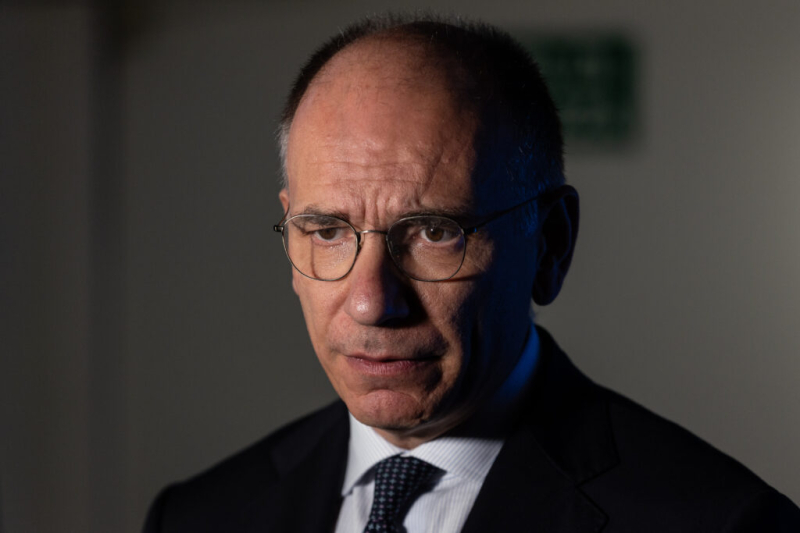
“Europe is much stronger” thanks to the “blue wave,” he wrote on X.
Kathleen Van Brempt, vice-chair of the European Parliament’s International Trade Committee, shared a White House tweet predicting a Trump victory — and captioned it that it was, actually, America that won.
“And he lost,” she said.
Despite the ballot-box drubbing, Trump himself couldn’t resist a final shot at Europe, during an election night call with Fox News.
“You look at Europe, it’s dying. You look at what’s going on in France, what’s going on in Italy and all these other countries. I mean, they’re going through a terrible time. And they may not even survive, frankly,” he warned. “And we are thriving.”