
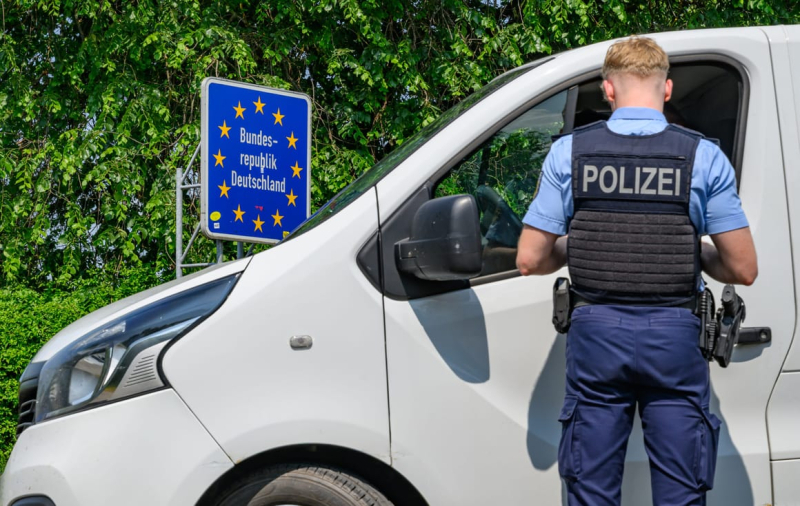

The European Commission is obliged to consider whether Berlin’s border checks are necessary and proportional, but has given no timeframe for an opinion.
BERLIN — Germany will prolong its controversial border checks, even as Brussels is due to check whether the practice is in line with the bloc’s promise of free movement.
“Border controls are one element of our reorganization of migration policy in Germany,” the country’s Interior Minister Alexander Dobrindt told German tabloid BILD, a sister publication of POLITICO in the Axel Springer Group. The conservative politician said checks would be extended for another six months beyond their provisional mid-March end date.
Dobrindt moved to drastically bolster checks along the country’s national borders on his first full day in office last year. Experts argue the controls are largely symbolic and say they have little to do with an overall drop in the number of asylum claims over the last two years.
But the checks have angered Berlin’s neighbors, in part for creating traffic headaches at border crossings, and led to tit-for-tat retaliation from Warsaw. A Berlin court also deemed the most controversial measure of Berlin’s border regime — namely turning away asylum seekers at its frontiers — to be in violation of European law.
Chancellor Friedrich Merz has sought to crack down on migration under pressure from the far-right, anti-immigration Alternative for Germany (AfD), which is now the largest opposition party in Germany’s federal parliament. The AfD is currently polling neck-and-neck with Merz’s conservatives.
Border controls of the type implemented by Merz are generally allowed under EU law to respond to a serious threat to the public; they should, however, be temporary and a measure of last resort.
A European Commission spokesperson told POLITICO that the executive body is obliged to issue an opinion on the necessity and proportionality of Germany’s border checks, but no specific timeframe has been set. Under European law, the Commission issues an opinion on internal border controls after they have been in place for 12 months under the same grounds.
Germany first decided to allow temporary controls at all its land borders in September 2024 under the previous government led by former center-left Chancellor Olaf Scholz. Dobrindt then tightened those controls last May, sending thousands of police officers to the borders.
Berlin argued the checks were necessary due to “threats to public security and order posed by continued high levels of irregular migration and migrant smuggling, and the strain on the asylum reception system.”