

Brussels is considering 1,600 new sanctions targeting Russia’s military-industrial complex.
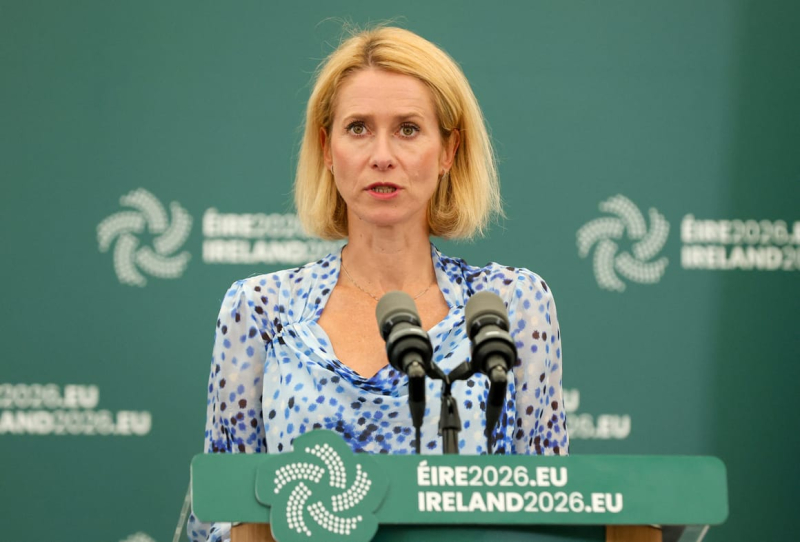
The EU’s top diplomat, Kaja Kallas, said Wednesday that the thwarted drone attack at Leipzig-Halle Airport bore “all the hallmarks of state-sponsored terrorism,” after Germany blamed Russia for the incident.
Speaking as the bloc’s foreign ministers gather in Wicklow, Ireland, Kallas said Germany’s attribution sent a “very strong signal” and praised EU governments for closing ranks behind Berlin.
“We have already summoned the Russian ambassador, so have also many member states,” she said. “We will discuss what more can we do.”
Other ministers struck an equally hard line. French Foreign Minister Jean-Noël Barrot called the attack part of a “long-running attempt by the Kremlin to destabilize the European Union, its democratic processes” and weaken support for Ukraine.
“We will not let an act of such gravity go without consequences,” Barrot said, adding that France would support Germany’s sanctions proposals and propose measures against additional Russian vessels.
Irish Foreign Minister Helen McEntee said Europe had moved beyond talking simply about “hybrid threats.”
“We’re talking about significant activity,” she said, accusing Moscow of a “very, very clear attempt” to divide EU governments and “put fear into citizens.”
Berlin formally blamed Moscow on Tuesday for the Aug. 4 incident, in which three explosive-laden drones were detected around Leipzig-Halle Airport. Germany announced retaliatory diplomatic measures and plans to seek fresh EU sanctions. Russia denies any involvement.
Kallas added that another 1,600 listings targeting Russia’s military-industrial complex were already “in the pipeline.”
No decision will be made at Wednesday’s meeting. But, she said, Germany has the political backing of its EU partners. “This is the unified response that we need.”