

The unlikely alliance comes as lawmakers across the country’s political spectrum express concerns over Rabat’s alleged role in the Ceuta migration crisis.
Anger over Rabat’s suspected role in the surge of 72,000 migrants into Ceuta has brought the Spanish far left and far right together in opposing Morocco as co-hosts of the 2030 World Cup alongside Spain and Portugal.
Though ideologically opposed, the far-left Sumar party and far-right Vox are both officially calling for a major revision to hosting plans for the global sporting event.
Morocco cannot be allowed to “obtain the prestige, economic benefits, and international legitimacy of hosting a World Cup” while doubts remain about Rabat’s role in last week’s crisis, argued Sumar — which is part of Prime Minister Pedro Sa´nchez’s coalition government — in a proposal submitted to the Spanish parliament on Wednesday.
Less than 24 hours later, Vox filed a nearly identical motion questioning the wisdom of hosting the World Cup alongside a country that “is not a loyal partner, neither for organizing a sporting event of this magnitude nor for any neighborly matter.”
“The very serious events that took place in Ceuta on July 30 and 31 have completely shattered the foundations of trust and cooperation on which a shared candidacy necessarily rests,” asserted Vox’s proposal, stating that co-hosting with Morocco would constitute “a deliberate humiliation that Spain must vehemently oppose.”
Both proposals are non-binding and do not oblige Madrid to take action. However, the legislative initiatives show that lawmakers from across the political spectrum are uniting in their resentment of Rabat’s perceived role in the crisis, which many in Madrid view as an example of Morocco using migrants to exert political pressure on its neighbor.
Spain’s Socialist-led government has avoided blaming Morocco, looking to find a speedy resolution to the crisis.
In addition to Sumar and Vox, Spain’s far-left Podemos party and Portugal’s environmentalist Livre party have also called for the Iberian neighbors to host the next World Cup without Morocco.
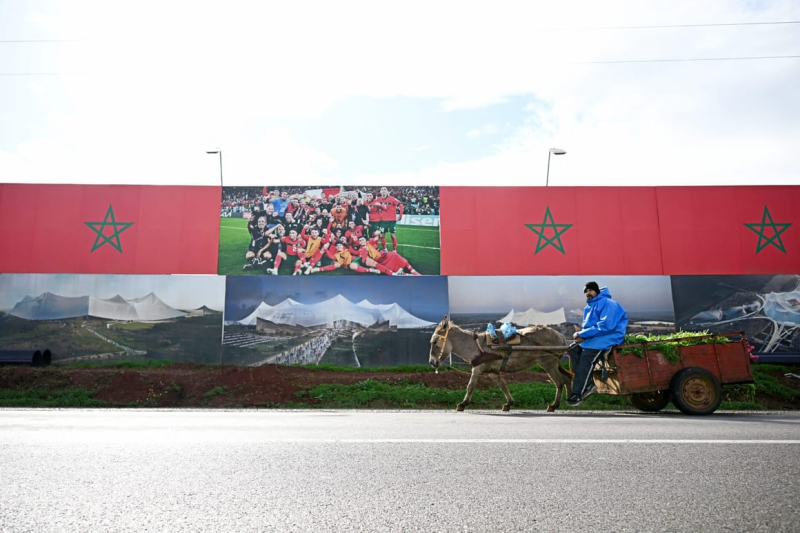
In 2023, world football’s governing body FIFA awarded the 2030 tournament to Spain, Portugal and Morocco, with games to be held in stadiums such as Madrid’s Santiago Bernabéu Stadium, Lisbon’s Estádio da Luz, and a new custom-built facility in Casablanca that Moroccan authorities say will be the largest football stadium in the world.
The future host cities also made headlines on Wednesday, as controversial FIFA President Gianni Infantino allegedly offered Moroccan officials the right to host the tournament’s final match in exchange for a declaration of support from the country’s football federation, according to The Times newspaper. FIFA denied the report, insisting the football chief had made no such commitment.
This article has been updated.