

Contents
After he quit the Greater Manchester mayoralty to become prime minister, voters will pick Burnham’s successor in Britain’s second-largest urban region Thursday.
MANCHESTER — Andy Burnham hasn’t even been prime minister for two weeks — but his record is already on the ballot paper in a key mayoral race.
Just 10 days after entering Downing Street, Burnham will be closely watching the verdict Thursday of voters across Greater Manchester who will pick his replacement as mayor of the city region that helped him build his power base and define himself against Westminster.
The post, which Burnham held for nine years until resigning in June after winning a seat in parliament, comes with a host of powers including over transport, policing and housing for more than three million people.
And Burnham has already talked about transferring more power from London to England’s mayors, so whoever wins the contest could end up as a guinea pig for his big devolution pitch.
“Greater Manchester is my home — and serving you as Mayor for nearly a decade was an immense privilege,” said Burnham in words released overnight, as he talked up the prospects of Labour’s candidate, Bev Craig, and pitched for a continuation of his legacy.
POLITICO mapped the contest and spoke to the parties duking it out for Greater Manchester’s top job.
Why is the election happening?
Because Burnham jumped back to Westminster, leaving a big vacancy.
The current prime minister found his voice as Greater Manchester mayor — even earning the moniker “King of the North” for his feisty response to Boris Johnson’s handling of the Covid-19 pandemic. He won three mayoral elections in a row, but national politics again came calling.
Labour’s dire performance in local and devolved elections earlier this year meant MPs wanted a new leader. Burnham found a path back, winning the Makerfield by-election, seizing the Labour crown, and becoming prime minister.
The ascent disqualified him from seeing out his term as mayor — and triggered a contest estimated to cost up to £5 million.
Who are the main candidates?
Labour, Reform UK, and the Greens are the three parties with a chance of making it to a second round in the supplementary vote (SV) system used for this contest (more on that a little later).
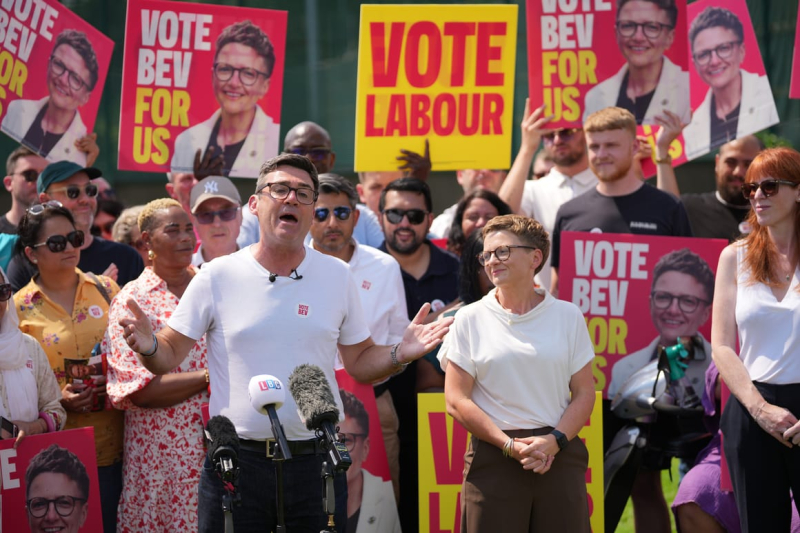
Bev Craig, current leader of Manchester City Council, has been cast as Burnham’s protégé and said that she wants to continue and expand many of the changes he started while in charge. These include building more affordable housing, expanding free bus passes, and pushing for more devolution of powers from Westminster.
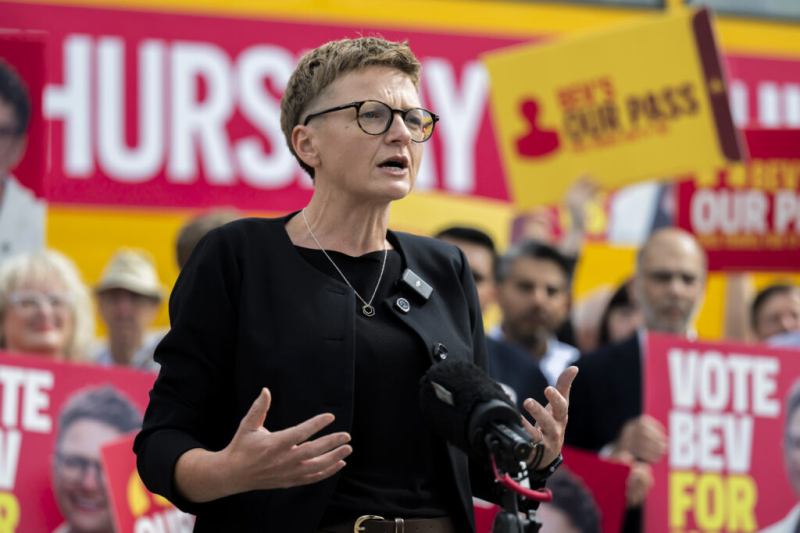
But she said in a call on the eve of the vote that she would be prepared to stand up to the new prime minister — a friend — if required. “I will always put Greater Manchester first, and he wouldn’t expect anything less,” she said.
Reform UK has spent months unsettling Labour, making major inroads in the May local elections across England. Its Manchester candidate Sian Astley only joined the party 18 months ago and was elected as a councilor in May.
She promised a Day One policy of “transparency” — including re-investigations into the hot-button subject of sexual exploitation by grooming gangs. She also wants more scrutiny of Burnham-era decisions on housing developments and clean air zones.
“Let’s go in and have a look. Let’s open it up,” she said at a food market in Altrincham, a town in the south-west of Greater Manchester. Astley said Labour has had “an absolute stronghold of a vice-like grip” across the region for too long. “This is really the first time this level of political choice has been available to the voters,” she said.
Geraldine Coggins is the Green Party pick. She has stood in seven elections, and been elected as a councilor in Trafford three times.
Having joined the party in 2010, she is now relishing the growth in campaign resources after recent electoral successes, and said at a community garden cafe in Manchester that activists had come from as far away as Aberdeen and Cornwall to help out on the doorsteps.
Coggins’ pitch is that Greater Manchester needs a mayor to stand up to government — rather than a “Labour apologist,” a term she used to describe Craig. She also wants more devolution — including for mayors to be given the power to impose rent caps — and has her own bus pledge: to make them free for anyone under 22.
How will the vote be decided?
The mayoralty will once again be decided using the supplementary vote system — and that’s caused a little disquiet from Labour’s opponents on the right.
Voters will be asked to pick a first and second preference. If no candidate gets 50 percent or more of first preference votes, all but the top two candidates will be eliminated. The second preferences of voters who initially backed those losing candidates are then redistributed.
This system was used in the 2017 and 2021 mayoral contests, which Andy Burnham won comfortably on first preferences even when Labour struggled nationally. However, the 2024 contest was held under first-past-the-post, the system used for British general elections, with the candidate who simply gets the most votes winning.
Labour flipped the system back to supplementary vote just in time for this contest and this may benefit them, as voters who back the left-wing Greens and centrist Lib Dems are expected to be more likely to give Labour their second vote rather than hand it to Reform UK.
How has the campaign unfolded so far?
In 2021, Burnham won the first round with more than two-thirds support (67.3 percent). Having made major gains across the region during May’s local elections, the mayoral fight was tipped to be neck-and-neck between Reform and Labour.
Current polling suggests a Reform victory is now a more distant prospect. More in Common polling throughout July put Labour on 39 percent in the first round, 20 points ahead of Reform’s Astley on 19 percent. After second preferences are accounted for, Craig beats Astley 65 percent to 35 percent.
However, this election could mark the first time a second preference vote has been needed, and Craig said she is expecting the contest to go to a second round.
“At the very start, people could not have called it,” she said. “A lot of people around me were telling me that Reform would win. To be in a situation where we win, that has been a transformation of where we were in May.”
Craig put this down to the visibility of the campaign — she is being recognized as the “bus pass lady” on doorsteps — as well as people liking the first two weeks of the Burnham premiership.
“We’ve definitely cut through,” she said. “People are a little bit more enthusiastic about it even though they have obviously just had a whole bunch of elections.”
Astley, meanwhile, insists voters are “sick to death of elections” — even as her party is grappling with another one about 200 miles away from Manchester. Two weeks after campaigning began in Greater Manchester, Reform UK leader Nigel Farage announced he would resign as an MP, triggering a by-election in his constituency of Clacton in a bid to battle the “establishment” as scrutiny of his finances mounts.
But this has meant campaigners have been shipped south to campaign for Farage’s re-election. “It’s a lot for a party to deal with, and a lot of people who are in Reform are new to politics, so of course it’s a lot to deal with,” she said.
Asked whether she believes the Clacton fight is a good use of her party’s time, she said of Farage: “Well, I didn’t call the election. I’m sure he has his reasons. He has very good reasons for doing it. Let the people decide. I’m sure he will storm it.”
Astley said her main goal is now to get a result that “will be a shock to the system for Labour in Greater Manchester. “Absolutely I hope to be giving the Labour candidate a very good run for her money,” she added.
The Greens, riding high on their Gorton and Denton by-election victory, have put significant effort into this campaign — with MPs and leader Zack Polanski arriving to knock on doors.
Coggins said that Labour have just put “a new singer playing the same song” with their leadership switch-up, and argues that voters are skeptical to trust Burnham before he has a record on delivery.
About the Thursday contest, Coggins said the Greens hope to make it into the second round with Labour. “We find a lot of people don’t know about the SV, and once they understand that they can use their first vote to vote for what they really want, they ask for a poster too,” she added.
University of Manchester academic Robert Ford said there’s been “much less attention and activity” in the contest compared to either the Makerfield contest or the Gorton and Denton by-election earlier this year. He suggested that polling showing Labour ahead could have played a part: “What may have happened is that all the parties have pretty much concluded that this is a done deal.”
When will we know the winner?
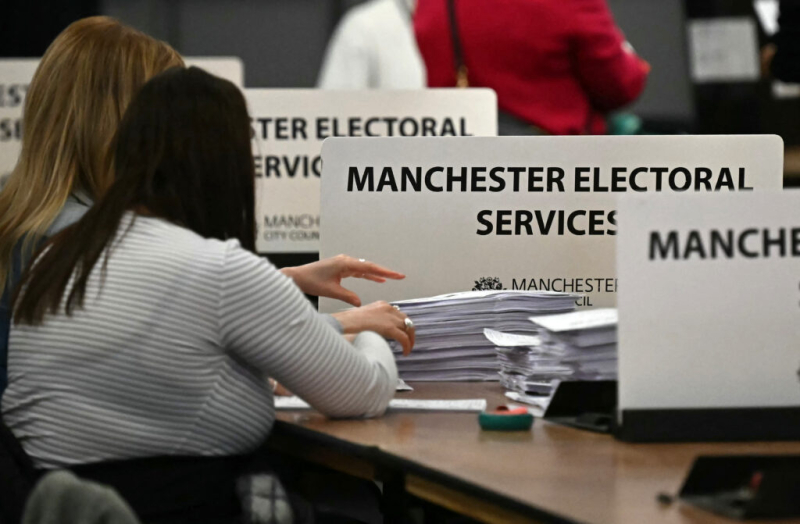
Unlike general elections, the count for this contest won’t take place overnight but instead on Friday in daylight hours.
Turnout tends to be low for mayoral contests (the 2024 vote saw just 32 percent show up, while the 2021 figure wasn’t much better at 34.7 percent) and the contest is the only one on the ballot. That could further reduce the number of voters heading to polling stations.
The redistribution of second preference votes could slightly delay a declaration time, depending on whether the final result is closer than polls predict.
A winner isn’t expected before 2 p.m. at the earliest, though the final result could be declared well into Friday evening.