
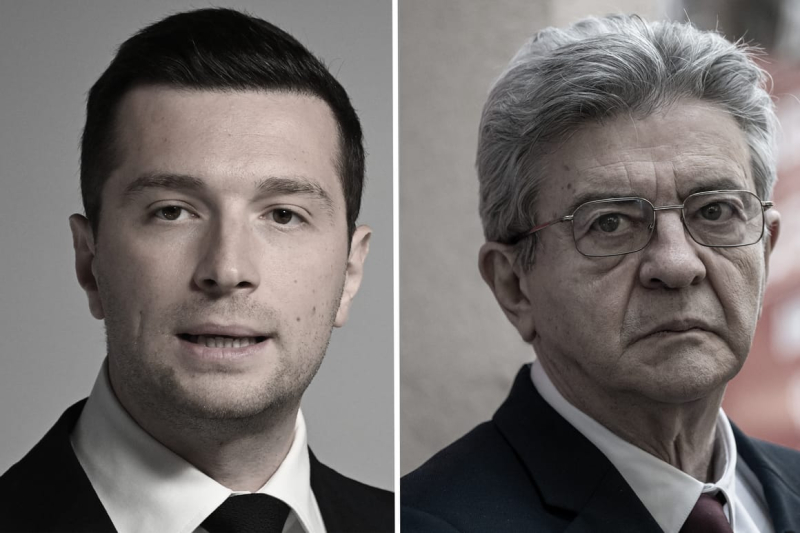

The far right and far left are on the march, while France’s imploding centrists are busy fighting each other.
PARIS — Brussels’ nightmare scenario is no longer looking far-fetched: a French presidential election next year in which both candidates in the runoff hail from the political extremes and hold a deeply skeptical outlook on the EU and NATO.
Jordan Bardella of the far-right National Rally — the nationalist, anti-immigration party of Marine Le Pen — has long been the favorite to win the 2027 race, but mainstream centrist parties have been hoping they can find a unifying challenger to beat him in the second round.
That prospect of stopping Bardella has hit a major potential hurdle, however, as momentum builds behind the campaign of the firebrand Jean-Luc Mélenchon, leader of the far-left France Unbowed party. The latest polls suggest he now has a strong chance of qualifying for the second-round showdown — depriving the race of a centrist who could rally voters against the far right in the EU’s No. 2 economy.
Mélenchon draws much of his support from working-class and immigrant communities, and his critics have condemned him for antisemitism and a “brutalization” of politics. While it would be a major coup for him to reach the second round in 2027, most polls predict he would then lose to Bardella by a landslide.
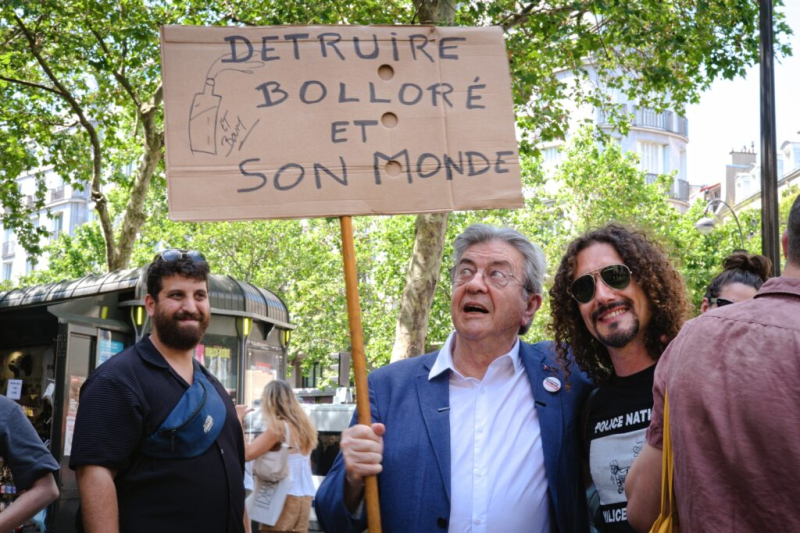
It’s an election landscape that is already bringing the French center out in a cold sweat.
“A lot of people believe that if they have to choose between the France Unbowed and the National Rally … it would be a nightmare. And I agree,” said Édouard Philippe, a conservative, who is seen as the leading mainstream candidate in the race for the Élysée.
Gérald Darmanin, justice minister under liberal President Emmanuel Macron, also warned that Mélenchon was now set to be the main challenger to the far right. “You have … to be wearing blinkers not to see it,” he said.
Shock polls
Last week, two polls shook France’s political class.
The first, conducted by Odoxa, showed Mélenchon neck-and-neck in second place after Bardella with the center-right former Prime Minister Philippe. The second poll, from Toluna-Harris Interactive, showed Mélenchon qualifying for the run-off vote against the far right if there were too many candidates running in center ground, including Philippe and another of Macron’s former prime ministers, Gabriel Attal.
There is no sign yet, however, that the prospect of being eliminated from the presidential race is proving to be the electroshock therapy the political center needs to start uniting around one candidate rather than dividing the field.
The center-right Philippe is locked in an intense rivalry with Attal, and neither shows any indication they want to throw in the towel.
“The competition with Gabriel Attal could be fatal,” said Bruno Cautrès, a political analyst with the Sciences Po institute.
“If Attal doesn’t pull out until the autumn, it might sharpen the appetites of those on the left, who will start thinking we really can make it to the runoff against the far right,” he said.
Comeback kid
For Mélenchon, the national polls are a dramatic comeback after having been largely written off in the wake of his confrontational municipal election campaign in March. Opinion polls repeatedly show that the 74-year-old radical leftwinger is one of the most disliked French politicians.
But Mélenchon has earned the reluctant admiration of rivals for his energetic campaign since he announced in May that he was running in next year’s presidential election.
On June 7, far-left supporters are planning a show of force at a rally in Saint-Denis, an impoverished suburb north of Paris that the France Unbowed won in the local elections.
“It’s hard not to admit that Mélenchon has probably understood better than anybody what a modern presidential campaign looks like,” wrote Stanislas Rigault, a former spokesperson for the far-right Reconquest party of Éric Zemmour.
The potential showdown between Mélenchon and the far right’s Bardella (or perhaps Marine Le Pen, should she be permitted to run) is something that both camps are trying to play up.
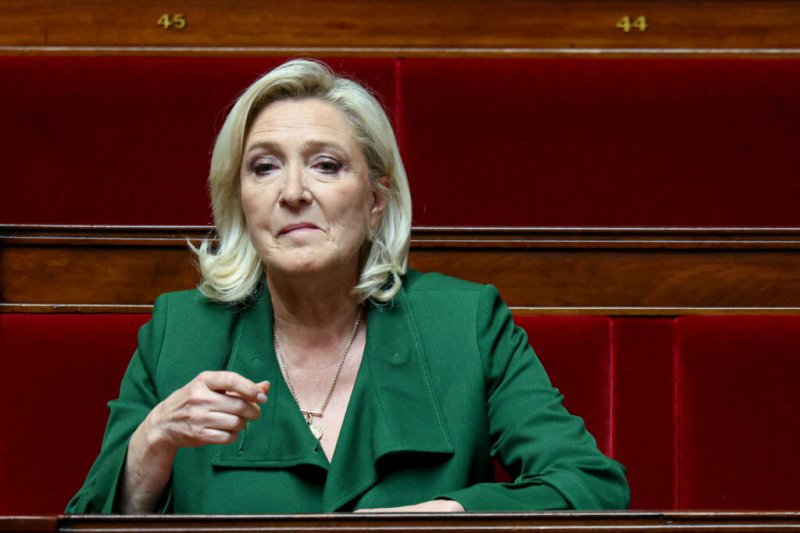
In recent years, Mélenchon has repeatedly insisted that in the end it will be an “us against them” fight against the far right as the traditional center-right and center-left parties unravel. At the other end of the spectrum, members of the National Rally said Bardella is convinced he will face Mélenchon or a leftwing candidate in the second round of the presidential election.
In France, the president is elected in a two-round vote, with the two candidates with the highest share of votes in the first round going through to a run-off.
Both Le Pen and Mélenchon are leaning into the fight and have already started sparring online over the economy and the far left’s concept of a “new France” that the far right says pits a new generation, many with migrant backgrounds, against people of longer French ancestry.
Left out
For the moderate left, Mélenchon’s rise has triggered alarm bells, given he’s highly unlikely to defeat the current favorites on the far right. Indeed, polls have put support for Bardella at more than 70 percent in a second-round showdown with Mélenchon. Last week’s Toluna-Harris Interactive poll showed Bardella winning against Mélenchon with 68 percent of the vote.
“Mélenchon wants to be the king of the cemetery on the left,” said a Socialist Party official, who was granted anonymity to discuss internal politics.”We really need to pull our finger out,” he added.
But the center left has never appeared further from marshalling its forces.
Last month, the Socialist Party came close to imploding when a third of its leadership left over tensions between the party president Olivier Faure and a key ally Boris Vallaud.
One of the strongest presidential hopefuls for the left, MEP Raphaël Glucksmann tried to gather momentum last week, with a book launch and multiple interviews. But he has been weakened by doubts over his talents on the campaign trail and the leaking in POLITICO of an internal memo that suggested he should avoid targeting poor voters.
According to Cautrès, the political analyst, who has studied Mélenchon’s multiple presidential campaigns, the far-left leader is divisive but can also appeal more widely.
“Mélenchon is liked on the left because he’s abrasive, he doesn’t make concessions to capitalism, but there are other aspects to his personality, he is well-versed in history and he can see the bigger picture,” said Cautrès.
“He’s softening his image… he knows how to run a presidential campaign,” he said.
Philippe challenged
But it’s not just the moderate left that is worried about Mélenchon’s popularity surge.
The center right is also under threat.
In the 2022 presidential election, Mélenchon won close to 22 percent of the vote in the first round of voting. That could well prove a very competitive level. In the latest Odoxa poll, Bardella was seen winning the first round on 32 percent, while Philippe was on 17 percent and Mélenchon on 16 percent.
Philippe’s problem is that much of his energy is spent fending off competition from Bruno Retailleau, leader of the conservative Les Républicains party, and the hyperactive centrist Attal, who last month announced he was running for the presidential election.
Most recently, the rivalry between Philippe and Attal focused — somewhat bizarrely — on whether they would be prepared to stand up on a table to make a point and which of them was more like former President Jacques Chirac.
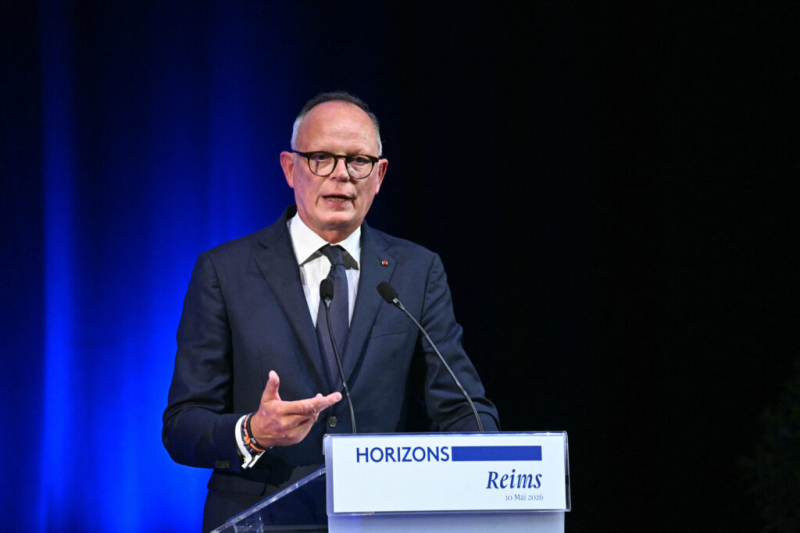
“Things are complicated in the political center because its leaders are too busy attacking each another,” said a person close to Macron.
“I’ve heard a lot about who they are … and not enough about the country or any new ideas,” the person added.
Supporters of Attal and Philippe have said the two men — both of whom are former premiers under Macron — will ultimately reach an agreement and unite behind a single candidate.
But there are indications talks might not be quite so straightforward.
In a briefing with the press on Thursday, an adviser to Attal floated the possibility that he could stay in the race until the end if the Mélenchon threat receded. “That would change the game,” said the adviser.
“We have to work on the assumption that maybe one or the other won’t withdraw,” said an ally of Philippe.
With just under a year to go before the presidential election, there’s still time to settle differences. But in the meantime, the far right and far left are asserting their grip on the race.
Giorgio Leali, Sarah Paillou and Klara Durand contributed reporting.