
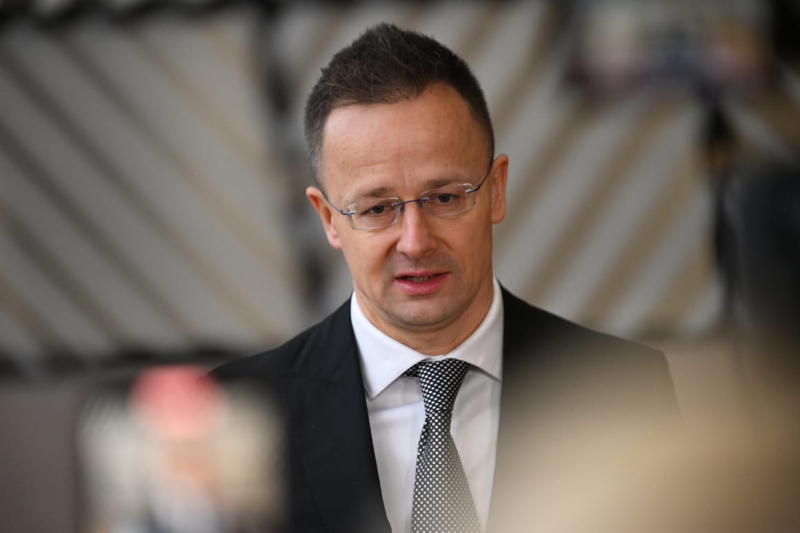

Hungarian foreign minister was accused of passing information from closed-door talks to Moscow.
BRUSSELS — The EU is limiting the flow of confidential material to Hungary and leaders are meeting in smaller groups — as Polish Prime Minister Donald Tusk warned of long-standing suspicions Viktor Orbán’s government is sharing information with Russia.
But there will not be any formal EU response to a fresh set of allegations because of the possible impact on the Hungarian election on April 12, according to five European diplomats and officials who told POLITICO they were concerned about the risk of Budapest leaking sensitive information to the Kremlin.
“The news that Orbán’s people inform Moscow about EU Council meetings in every detail shouldn’t come as a surprise to anyone,” Polish Prime Minister Donald Tusk, who has backed Hungarian opposition leader Péter Magyar in the election, wrote on X on Sunday. “We’ve had our suspicions about that for a long time. That’s one reason why I take the floor only when strictly necessary and say just as much as necessary.”
In a report on Saturday the Washington Post said that Orbán’s government maintained close contacts with Moscow throughout the war in Ukraine, and Foreign Minister Péter Szijjártó used breaks during meetings with other member countries to update his Russian counterpart, Sergey Lavrov.
Worries about Hungary sending information directly to Moscow were behind the rise of breakout formats with like-minded leaders, instead of holding meetings with all 27 EU members, said one of the European government officials, who, like others in this article, was granted anonymity to speak freely about sensitive matters.
“Overall the less-than-loyal member states are the main reason why most of relevant European diplomacy is now happening in different smaller formats — E3, E4, E7, E8, Weimar, NB8, JEF, etc,” the official said.
The numerals refer to the number of European leaders in the group. The Weimar alliance comprises France, Germany and Poland. NB8 is the eight countries in the Nordics and Baltics. JEF is the Joint Expeditionary Force of 10 northern European nations.
‘Fake news’
Former Lithuanian Foreign Minister Gabrielius Landsbergis, who frequently attended Council meetings where Szijjártó was present, told POLITICO he was warned as early as 2024 that the Hungarian side could be passing on information to Russia, and that he and his counterparts had limited the information they shared when he was present.
Even ahead of a critical NATO summit in Vilnius in 2023, envoys moved to cut Budapest’s delegation out of sensitive talks, Landsbergis said.
“We would only speak in formal terms, later breaking out to speak without Hungary about the achievables of the summit,” he said.
The Bucharest Group of Nine, a club of countries on the military alliance’s Eastern Flank, reportedly contemplated kicking Budapest out of the format the following year over failures to agree on support for Ukraine.
Hungary’s Europe Minister János Bóka told POLITICO the reports over the weekend were “fake news” designed as “a desperate reaction to [Orban’s party] Fidesz gaining momentum in the election campaign. But the Hungarian people won’t be deceived.”
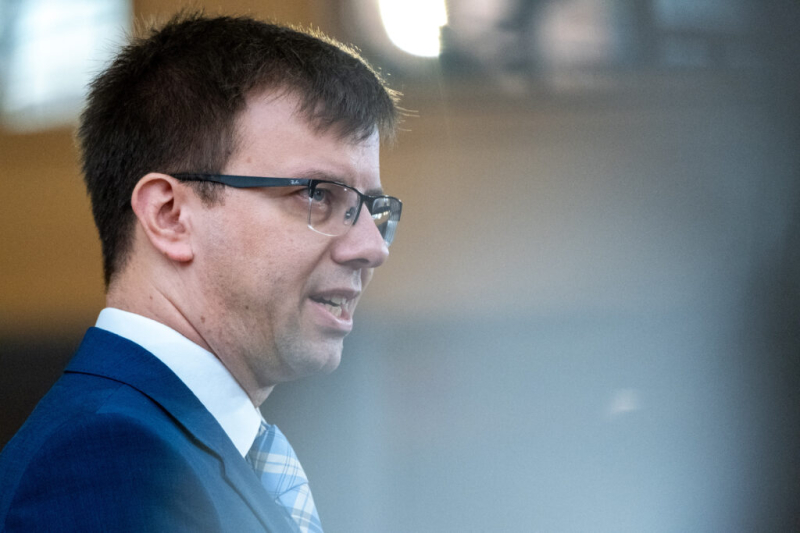
For his part, Szijjártó rejected the content of the Washington Post article and accused the media of putting forward “conspiracy theories that are more preposterous than anything seen before.”
More information could be held back in light of the fresh allegations, one of the diplomats said. “There is an argument to be made for classification of info and documents on the EU side,” the diplomat said. While using the classified designation “isn’t a silver bullet,” it could “serve as a deterrent against leaks and the passing of sensitive info to third parties. It would also make investigations more automatic.”
No surprises
The five diplomats said they were unsurprised by the news, but that any formal response would depend on whether Orbán is re-elected in April. Despite lagging behind Magyar’s Tisza in the polls, the Hungarian prime minister told POLITICO on Friday he could “certainly” secure another term.
“It undermines trust, cooperation, and the integrity of the European Union,” said a second diplomat of the allegations. “It’s a deplorable situation. If he stays after [the] election, I think the EU need to find ways to deal with this in another manner.”
Another cautioned that whatever the EU and its leaders do, Orbán will use it in his favor in the campaign. “I don’t think anybody is eager to do anything that would add oil to fire before April 12,” they said.
Despite widespread agreement on the threat posed by Russia, a fourth diplomat pointed out that the content of discussions among leaders and foreign ministers are routinely reported in the press and frequently take place in an unrestricted format, meaning leaders don’t leave their phones outside to minimize the risk of surveillance. But the optics of an EU government working so closely with a hostile state remains politically explosive.
“The fact that the Hungarian foreign minister, a close friend of [Russian Foreign Minister] Sergey Lavrov, has been reporting to the Russians practically minute by minute from every EU meeting is outright treason,” Magyar said at a campaign rally over the weekend. “This man has not only betrayed his own country, but Europe as well.”
The allegations come as Orbán’s foreign supporters set course for Budapest to help him campaign in the final stretch of the elections. Polish President Karol Nawrocki — a political rival of Tusk’s — will attend events on Monday, while U.S. Vice President JD Vance will jet in ahead of the vote next month.
Orbán refused to sign off on €90 billion in much-needed loans for Ukraine at Friday’s European Council, sparking a furious reaction from fellow leaders.
“It wouldn’t be surprising if this proves true,” said a fifth EU diplomat of the allegations. “Hungary has long been [Russian President Vladimir] Putin’s ally within the EU and continues to sabotage European security. The blocked €90 billion is simply the latest example of that pattern.”