
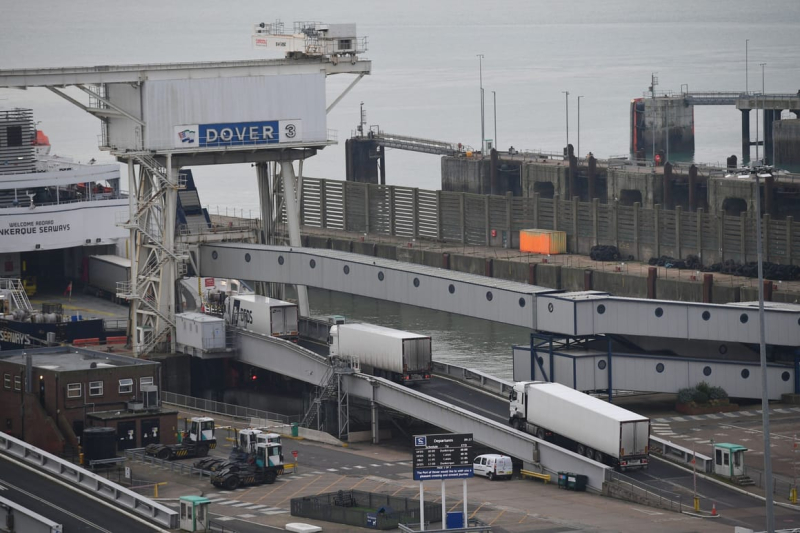

At the start of a hot bank holiday weekend, lengthy queues had formed at Dover port in what its authorities described as a challenging situation.
French border police agreed to scale back biometric checks at the U.K. border on Saturday after port authorities in Dover requested measures to ease passenger delays.
At the start of a hot bank holiday weekend, lengthy queues formed at the Dover facility due to the EU’s new Entry/Exit System (EES), in what port authorities described as a “challenging situation” that prompted an “active escalation” with the French authorities.
“We are pleased that Police Aux Frontieres (PAF) have responded positively by invoking the Article 9 clause of the EES regulations,” the port said in a statement. “While conventional border checks will still be undertaken, this will now enable PAF to significantly reduce the border processing time.”
The EES regulations are designed to replace passport stamps and curb overstays in the Schengen area. The system requires non-EU travelers to register fingerprints and a facial image the first time they cross the bloc’s borders for a short stay.
Because French authorities had not yet switched on the machines used for these checks, officials had to create individual traveler profiles, leading to long waiting times, the BBC said in a report. To ease the situation, the biometric measures have been temporarily suspended.
The port later on Saturday said in social media posts that traffic was free flowing again and that passengers who had missed their ferry crossing due to long waiting times would be transferred to the next available vessel free of charge.