
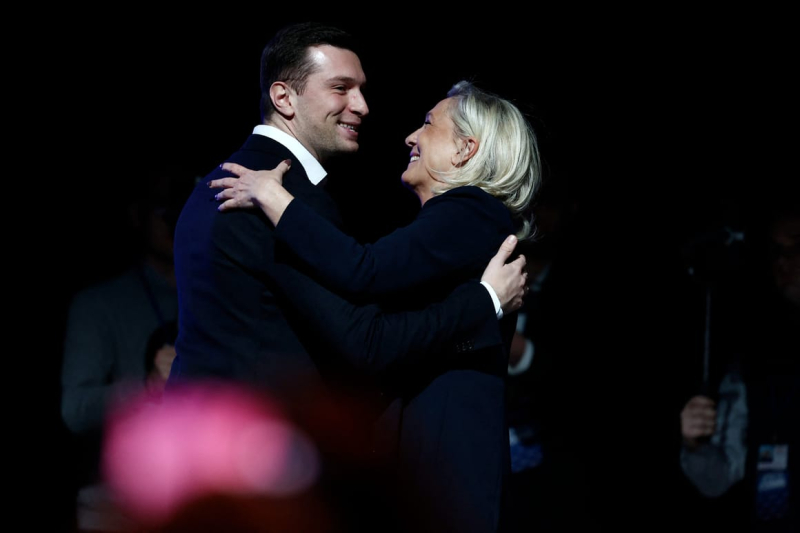

Marine Le Pen and Jordan Bardella struck an upbeat tone in the land of sparkling wines.
CHÂLONS-EN-CHAMPAGNE, France — In rural Champagne, the National Rally is finding the momentum and enthusiasm it needs to believe that it can win the French presidency in 2027.
The first round of local elections on Sunday delivered mixed results for the far-right party, highlighting how a decisive breakthrough still eludes Marine Le Pen, Jordan Bardella and their allies in France’s biggest cities.
Despite strong performances in key southern cities like Marseille and Toulon, where the National Rally scored 35 percent and 42 percent of the vote respectively, the runoff this Sunday likely won’t be an emphatic victory given how other movements have teamed up against the National Rally.
But the party’s leadership is relishing its growing popularity in Champagne and other areas of France’s heartland where the moderate right formerly prevailed.
The National Rally candidate in the famed Champagne capital of Epernay garnered 31 percent of the vote, doubling the party’s score from the previous local elections in 2020 partly thanks to higher turnout. And in the bucolic town of Châlons-en-Champagne, 45 kilometers from the region’s largest city, Reims, the far-right candidate came just a few hundred votes short of the first-place finisher, incumbent Mayor Benoist Apparu, a minister under former President Nicolas Sarkozy.
The dream is that combining growing rural support with the surging number of far-right voters in the French sunbelt in addition to the National Rally’s northern strongholds will be enough to deliver the poll-topping party their big prize in the 2027 presidential election.
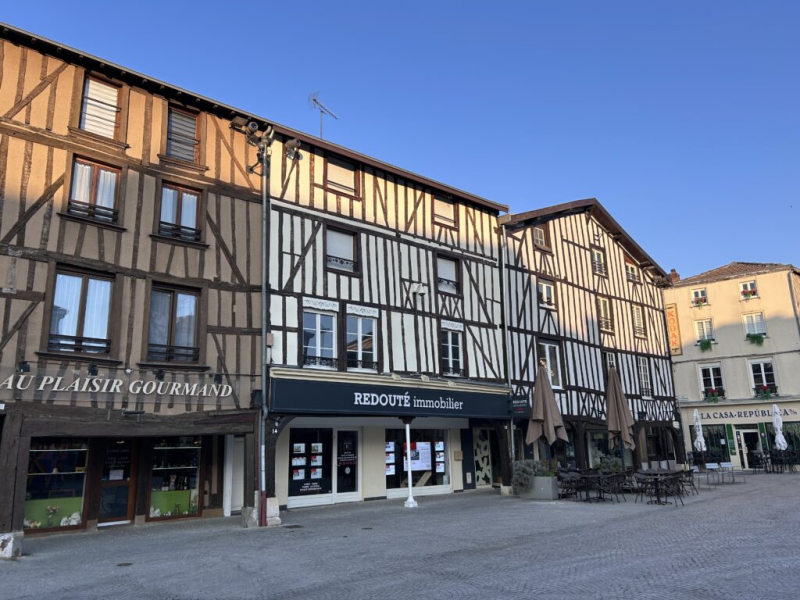
“It is through these [local] roots that we will rebuild France, town by town,” Le Pen said at a rally Wednesday on the outskirts of Châlons-en-Champagne. “The great victory we are preparing for next year will not be handed to us, it will be conquered.”
Speaking to a crowd of about 2,000 people in a mid-sized convention center, Le Pen and other National Rally heavyweights framed the upcoming runoffs as another example of President Emmanuel Macron and his allies trying to “ignore, if not shut down people’s voice.” Many of the cross-party alliances that emerged after the first round of the contest look poised to again block the party from winning control of major cities in the runoffs this Sunday.
Lawmaker Laurent Jacobelli elicited cheers in the crowd when he slammed those strategic partnerships as a “ménage à trois between Macronism, Socialism and the fake right” on stage.
Ahead of the rally, a small gathering in the city’s historic center on Wednesday gathered around 300 people protesting the National Rally’s presence, but they were stopped by police before they could reach the rally’s venue.
Unite the right
In Reims, the National Rally landed a symbolic win this week when its candidate, Anne-Sophie Frigout, merged with a center-right candidate, Stéphane Lang from Les Républicains ahead of the runoff.
Such alliances, now openly called for by Bardella, used to be anathema for centrist parties who have pledged to keep the National Rally at arm’s length.
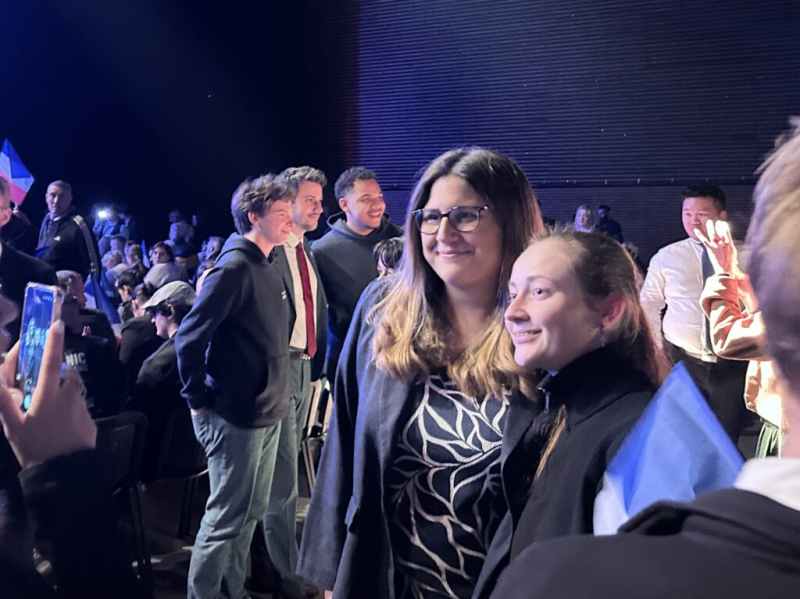
“I am sure that this alliance is going to reproduce itself everywhere in the weeks and months to come,” Frigout told POLITICO at the rally between two selfies with local supporters. “This is what our voters are asking for here.”
The Reims merger is being touted by the National Rally and comes amid increasing support for a union on the right. But whether the merger is indicative of a greater trend within the ranks of Les Républicains remains to be seen.
Lang, who failed to qualify for the runoff, was immediately expelled from his party for the rogue move. And given he and Frigout together scored 28.7 percent of the vote in the first round, the alliance is unlikely to lead to victory.
Historically, the complex dynamic of ad hoc, last-minute alliances that shape local elections in France’s two-round system has worked against the National Rally, with the far right accusing the rest of the political class of conspiring to keep it out of power.
But its leaders now hope they can break that glass ceiling ahead of next year’s presidential race.
During his speech at the rally, Bardella’s message to France’s conservative party was simple: “Join us,” he said.
“We are facing a wall that is being built against us,” Jacobelli told POLITICO on the sidelines of the rally. “It is not a glass ceiling, it is a reflex of self-preservation” from other parties.
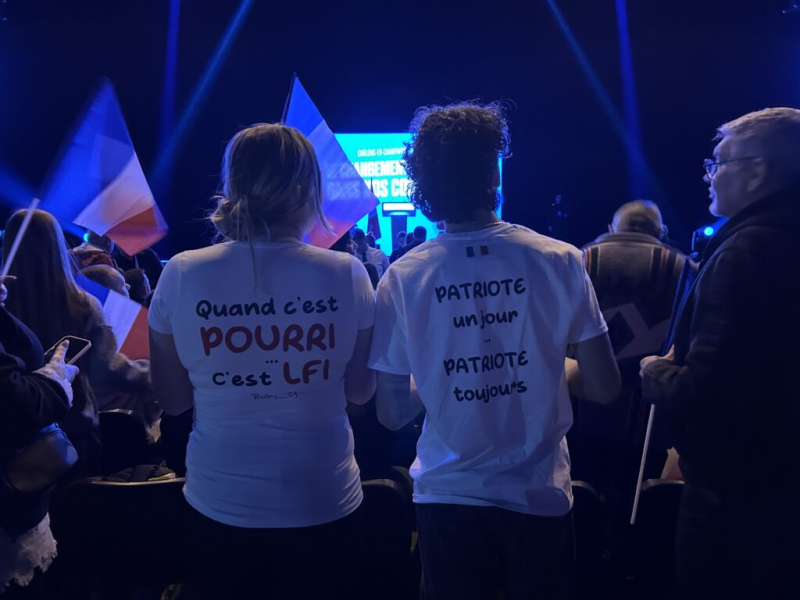
During Bardella’s speech, a small group overcome by enthusiasm chanted “Jor-dan president, Jor-dan president” — forgetting for the moment that Marine Le Pen, who had a front row seat to the scene, is still supposed to be their presidential candidate pending a decision in her appeal of a five-year election ban.
In the crowd, supporters vigorously approved both leaders’ odes to the working class and their chastising of leftist firebrand Jean-Luc Mélenchon.
“If Mélenchon goes through, we lose France forever,” Jordan Delvallée, a blue-eyed, 22-year-old mechanic who came to the rally with a younger friend. “There is no better party than [the National Rally],” he said, even if “everybody is against them.”
“The French get cold feet at second round because they are scared, but one shouldn’t be afraid of change.”