
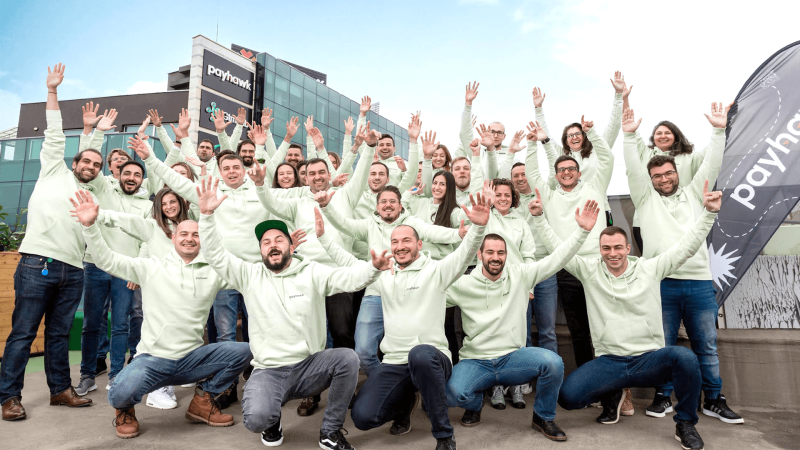

The new funding round doubles Payhawk's valuation to $2bn.
Payhawk, the Bulgaria-founded spend management platform, has raised a $280m Series C funding round, led by new investor Goldman Sachs, as it looks to build the finance operating system for the AI era.
The funding round values London-headquartered Payhawk at $2bn, doubling its valuation from its last public funding round in 2022 when it raised $215m and became a unicorn.
The funding round features existing investors including QED, Greenoaks, Lightspeed, Hedosophia and Bek Ventures, alongside new investors Galdana Ventures, Cogito Capital, Invus and Inveready, and angels including Nord Security co-founder Tomas Okmanas and Spanish entrepreneur Tomas Okmanas.
It takes Payhawk’s total funding to more than $515m.
Payhawk, which became Bulgaria’s first-ever unicorn in 2022, offers enterprises spend management services, so employees can manage their spending lifecycle, from company card to bills and invoices in one.
It competes against the likes of Ramp, Brex, Pleo and Spendesk. Payhawk says it will use the funding to move beyond its core spend management offering and build a global finance operating system, where AI agents, payments and enterprise controls run finance together.
Hristo Borisov, co-founder and CEO of Payhawk, said: “The role of the finance team is rapidly moving away from manual checks, lengthy reconciliations and labour-intensive work towards becoming more strategic. While most companies use AI to speed up existing processes, we built AI agents to fundamentally rethink how finance operates.
“Through our technology, finance departments can benefit from ‘zero-touch finance’, where neither the finance professional nor the employee deals with any admin work. 77 per cent of our customers use our agents daily across financial control, procurement, travel and reporting to save time and money for their businesses. But AI alone cannot deliver this transformation, it must be combined with a robust payment infrastructure and enterprise controls to truly unlock the potential of every enterprise in the new AI era.”