
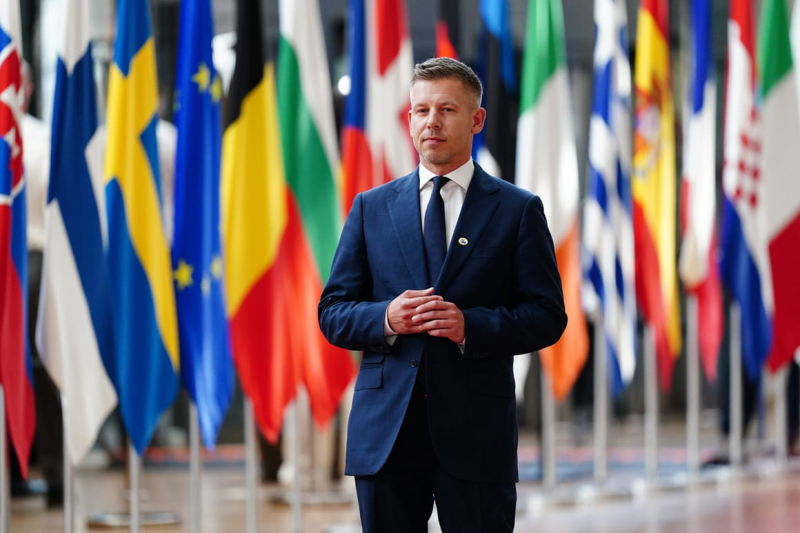

Budapest has delayed a move to open all formal negotiating chapters for Ukraine and Moldova.
BRUSSELS — Hungary has delayed a key procedural step needed to push forward the EU membership bids of Ukraine and Moldova, according to two EU diplomats.
Kyiv and Chisinau reached a milestone on their path into the bloc when EU countries unanimously approved, on June 15, the opening of the first formal negotiating chapter for both countries. The move had been blocked for years by former Hungarian Prime Minister Viktor Orbán, who opposed Ukraine’s EU membership. (Ukraine and Moldova’s bids are politically linked, so one could not advance without the other).
The two countries now hope to quickly progress through the EU’s accession process, with Ukraine’s Deputy Prime Minister Taras Kachka telling POLITICO earlier this month that Kyiv is aiming to open all six negotiating clusters (groups of formal chapters) by mid-July.
But that timeline is now at risk after Hungary on Tuesday opposed sending a letter to the European Council and Commission, on behalf of the bloc’s 27 members, that spells out the joint position of EU capitals. Hungary was the only country to oppose the move, which requires unanimous approval from all 27 and will be discussed again next week, the diplomats said.
A spokesperson for the Hungarian Permanent Representation in Brussels did not reply to a request for comment.
The move is in keeping with Prime Minister Péter Magyar’s cool stance toward Ukraine’s membership.
While Magyar did not oppose opening a first cluster for Ukraine, his government insisted on deleting the words “as soon as possible” regarding Kyiv’s EU membership from the written conclusions of a gathering of EU leaders in Brussels last week, according to one of the diplomats.
Both diplomats were granted anonymity because they are not allowed to speak on the record about closed-door procedures.
During a news conference at the end of the European Council meeting last week, Magyar doubled down, telling reporters: “There are six clusters in total, and we don’t think opening them all at once is a good idea — partly because the ink on the first one isn’t even dry yet, and partly because it would send the wrong message to the countries of the Western Balkans — Serbia, Albania, Montenegro, and North Macedonia — [which] have spent years working toward EU membership.”