

The German robotics company will integrate the autonomous transport system into its shared AI infrastructure for mobile, industrial, and humanoid robots.
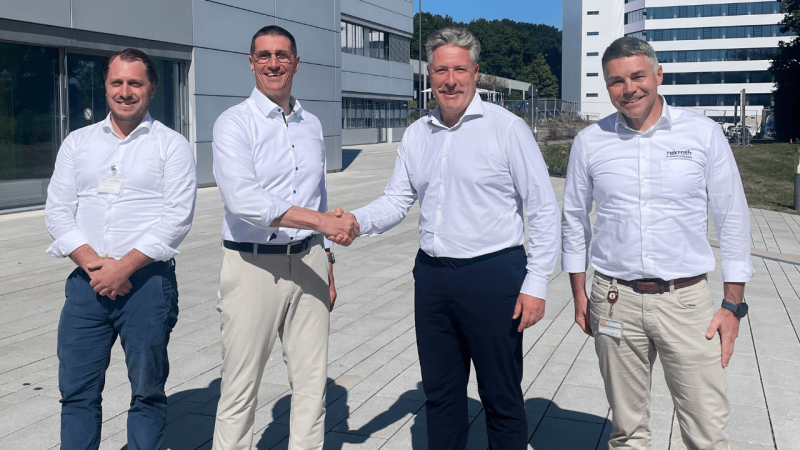
German robotics company NEURA Robotics will acquire the ACTIVE Shuttle driverless transport system from Bosch Rexroth effective October 1, 2026.
The ACTIVE Shuttle has established itself in numerous industrial companies as a field-proven solution for automated material handling, from supplying assembly workstations to transporting small load carriers in production and logistics.
NEURA Mobile Robots is acquiring the ACTIVE Shuttle’s hardware and software and will also offer service to customers in the future. At the same time, the platform is entering its next development phase.
NEURA plans to gradually integrate the ACTIVE Shuttle into its Physical AI ecosystem and expand it with AI functionalities and interfaces to the NEURA Group’s technologies. The goal is to transform what is already a high-performance autonomous transport solution into an even more intelligent and interconnected platform in the long term.
The company raised up to $1.4 billion in Series C funding in June to accelerate the development of its physical AI platform.
Within the NEURA Group, NEURA Mobile Robots consolidates expertise in autonomous intralogistics and driverless transport systems.
NEURA Robotics aims to connect different types of robots — from mobile platforms and industrial robots to humanoids — through a shared physical AI infrastructure. Instead of developing intelligence separately for each robot, the company is building a common technology layer that allows robots to perceive their environment, navigate autonomously, learn and apply new skills, and coordinate with other machines.
According to David Reger, founder and CEO of NEURA Robotics, Europe possesses an incredible amount of robotics and industrial expertise.
“Our task now is to bring these technologies together and build something bigger.
Our aim is an open ecosystem where mobile robots, industrial robots, and humanoids can collaborate on a shared infrastructure. For me, this is precisely where the future of robotics lies.”