

Contents
What was intended as a way to refresh the look of the currency and new anti-counterfeit measure has developed into a full-blown culture war.
Paul Dallison writes Declassified, a weekly satirical column.
The Bank of England’s announcement that historical figures will be replaced with wildlife on the next set of banknotes went down about as well as the phrase “I hope Germany win the World Cup” in an East End of London pub on a Friday night.
The Bank held a public consultation on banknote imagery last year and the majority of respondents wanted nature on their notes (King Charles III will remain on the other side). On the current crop of notes are former Prime Minister Sir Winston Churchill (£5), author Jane Austen (£10), painter J.M.W. Turner (£20), and mathematician and computer scientist Alan Turing (£50).
What was intended as a way to refresh the look of the currency while also bringing in new anti-counterfeit measures has developed into a full-blown culture war. On the BBC’s “Question Time” politics debate show, one audience member blamed the Greens for wanting to ditch wartime leader Winston Churchill, even though it has nothing to do with any political party. The issue even brought together political rivals Nigel Farage of Reform and Ed Davey of the Liberal Democrats, who both slammed the move, as did countless other “everything’s woke these days” talking heads.
But what should really be on the Bank of England’s notes? What do English and Welsh people (the good folk of Scotland and Northern Ireland have their money issued separately, even if it’s all legal currency throughout the U.K.) want on their notes?
Here’s what everyone can surely agree on and what the illustrations on the notes will look like (please send complaints to the Bank of England, Threadneedle Street, London)…
A nice cup of tea
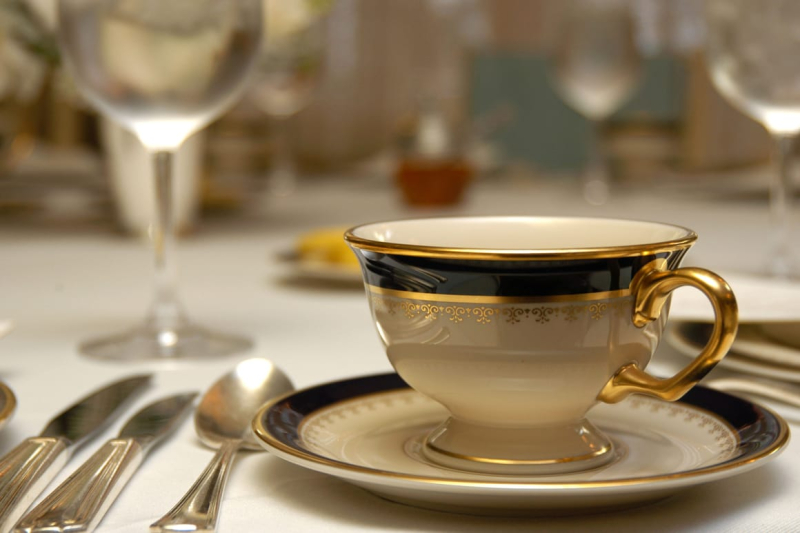
Everyone loves a cup (or mug) of tea — and that’s English Breakfast Tea (or tea, as Brits call it) with milk, not Earl Grey or matcha or, heaven forbid, coffee. The only option available is sugar. The illustration on the notes will be a cup of tea served on a saucer with a spoon on one side and a biscuit (not a cookie!) on the other side for dunking.
A list of when the bins go out
Nothing unites British people more than complaining about how infrequently the rubbish (or garbage, if you will) is collected. While a logistical challenge for the Bank of England (as every local authority has its own refuse rules), a list of what day you are supposed to put out your regular bin, your glass recycling bin and your garden waste would be a tremendous public service, accompanied by a drawing of some wheelie bins, one of which has been knocked over.
David Attenborough
The perfect link between the historical figures camp and the wildlife camp, everyone in the U.K. loves David Attenborough, the 99-year-old biologist and TV presenter whose programs are a byword for quality. The illustration would feature Attenborough holding delicately in his hands one of the U.K.’s most common types of wildlife, a pigeon with one leg and a parasitic skin condition.
Queuing to see the queen
There’s been no better example of Britishness in recent years than people forming an orderly queue to pay their respects to the late Queen Elizabeth II. At its longest, the wait time was more than 24 hours, and when two TV presenters — Phillip Schofield and Holly Willoughby — were seen accused of skipping the line, they faced a backlash from which they will never recover. The illustration would feature the queen lying in state with an enormous link snaking through London, ideally with people grumbling about the manners of their fellow queuers.
Chicken tikka masala
Yes, British people love fish and chips and various types of brown stew, but nothing says multicultural more than a mild curry believed to have been invented by a Pakistani-Scottish chef to appease a customer who complained that his food was too dry. The Illustration will be a curry with rice, naan and 18 pints of fizzy lager.