

The U.S. rejected the Russian proposal, which has nonetheless sparked concerns in Europe amid growing transatlantic tensions.
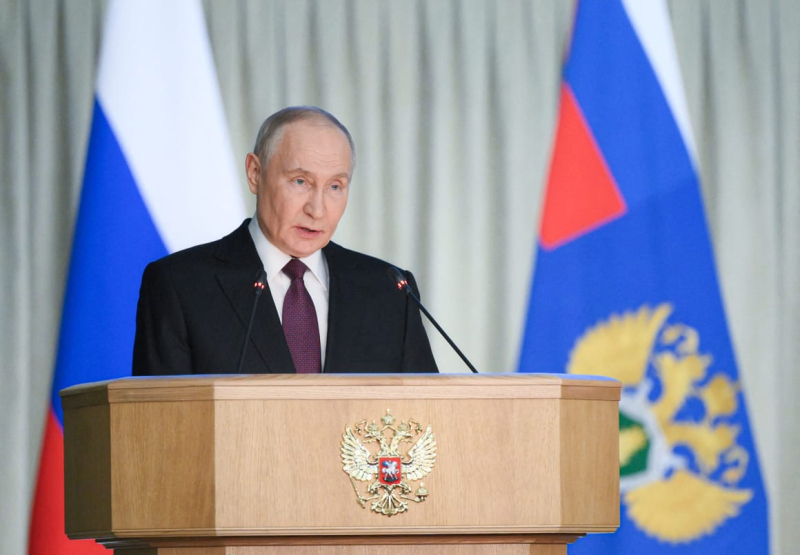
Moscow proposed a quid pro quo to the U.S. under which the Kremlin would stop sharing intelligence information with Iran, such as the precise coordinates of U.S. military assets in the Middle East, if Washington ceased supplying Ukraine with intel about Russia.
Two people familiar with the U.S.-Russia negotiations said that such a proposal was made by Russian envoy Kirill Dmitriev to Trump administration envoys Steve Witkoff and Jared Kushner during their meeting last week in Miami.
The U.S. rejected the proposal, the people added. They, like all other officials cited in this article, were granted anonymity due to the sensitivity of the discussions.
Dmitriev labeled the report of the proposal as “fake” in a post on X.
Nevertheless, the sheer existence of such a proposal has sparked concern among European diplomats, who worry Moscow is trying to drive a wedge between Europe and the U.S. at a critical moment for transatlantic relations.
U.S. President Donald Trump has voiced anger over the refusal of allies to send warships in the Strait of Hormuz. On Friday, he lambasted his NATO allies as “COWARDS“ and said: “we will REMEMBER!”
The White House declined to comment. The Russian Embassy in Washington did not respond to a request for comment.
One EU diplomat called the Russian proposal “outrageous.” The suggested deal is likely to fuel growing suspicions in Europe that the Witkoff-Dmitriev meetings are not delivering concrete progress toward a peace agreement in Ukraine, but are instead seen by Moscow as a chance to lure Washington into a deal between the two powers that leaves Europe on the sidelines.
On Thursday, the Kremlin said that the U.S.-mediated Ukraine peace talks were “on hold.”
Russia has made various proposals about Iran to the U.S., which has rejected them all, another person familiar with the discussions said. This person said the U.S. also rejected a proposal to move Iran’s enriched uranium to Russia, which was first reported by Axios.
Russia has expanded intelligence-sharing and military cooperation with Iran since the war started, a person briefed on the intelligence said. The Wall Street Journal first reported the increase and wrote that Moscow is providing satellite imagery and drone technology to help Tehran target U.S. forces in the region. The Kremlin called that report “fake news.”
Trump hinted at a link between the intelligence-sharing with Iran and Ukraine during a recent interview with Fox News, saying that Russian President Vladimir Putin “might be helping them [Iran] a little bit, yeah, I guess, and he probably thinks we’re helping Ukraine, right?”
The U.S. continues to share intelligence with Ukraine, even as it has reduced other support. Washington briefly paused the exchanges last year after a disastrous Oval Office meeting between Trump and Ukrainian President Volodymyr Zelenskyy. That abrupt halt to U.S. intelligence sharing triggered a chaotic scramble among allies and exposed deep tensions in the partnership with Kyiv.
One European diplomat sought to downplay the risk of the Russian proposal, noting that French President Emmanuel Macron had said in January that “two-thirds” of military intelligence for Ukraine is now provided by France.
Still, intelligence-sharing remains a last crucial pillar of American support for Ukraine after the Trump administration stopped most of its financial and military aid for Kyiv last year. Washington is still delivering weapons to Ukraine but under a NATO-led program where allies pay the U.S. for arms. Deliveries of critical air defense munitions, however, are under strain amid the U.S.-Israel war with Iran.
Most recently, the Trump administration decided to ease sanctions on Russian oil to alleviate pressure on oil markets, causing strong concern and criticism from European leaders like German Chancellor Friedrich Merz.
This article has been updated.
Hans von der Burchard reported from Berlin, Felicia Schwartz and Diana Nerozzi from Washington and Jacopo Barigazzi from Brussels.