

Lacking influence with the White House and with Israel, Brussels has been relegated to the role of spectator.
BRUSSELS — The EU doesn’t want to be dragged into the U.S.-Israeli war with Iran. It might not have a choice.
With a drone striking a British airbase in Cyprus, Europe’s geographic proximity to the conflict might override many of its governments’ initial skepticism about Donald Trump’s decision to, as he put it on Monday, “eliminate the grave threat posted to America by this terrible terrorist regime.”
So far, the EU’s response has been focused narrowly on the impact on EU citizens in the Middle East — especially as Tehran has launched a wave of counter-strikes across the region — and the spillover effects of increased energy prices, disruption to air and sea transport, and a potential influx of refugees.
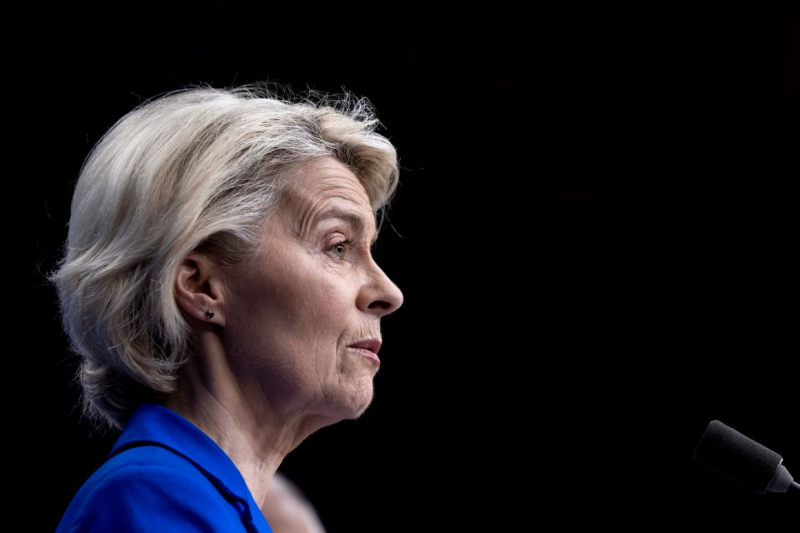
As if to illustrate how Brussels sees its limited role in the crisis, European Commission President Ursula von der Leyen described on Monday the range of fields she was focusing on “from energy to nuclear, from transport to migration to security.” She said: “We must be prepared for the fallout.”
In the absence of leverage with the Israelis or Trump, von der Leyen convened a “security college” on Monday: a less-common formation of commissioners where several of them provide updates to their colleagues on issues related to the current crisis. After the meeting, the Commission said in a statement that it planned to respond to the Iran conflict by supporting EU countries and protecting Europeans from its “adverse consequences.”
The EU is “exchanging information on what is happening and monitoring the situation,” said an EU diplomat with knowledge of the discussions, granted anonymity to discuss the confidential talks. “We should have, in normal times, been talking to the American administration. We should have had an adult conversation with the Israelis. None of that seems to be possible … The EU finds itself limited to a side role.”
In practice, the Commission’s aims amount to helping capitals evacuate their citizens from the region and monitoring any disruptions to air traffic and key maritime routes such as the Strait of Hormuz, through which shipments of oil and liquefied natural gas from Gulf states pass.
Intelligence assessments point toward a heightened risk of Iran mounting terror attacks in Europe, a second EU diplomat said.
Defense clause
The EU will also monitor prices and supply levels of energy. The Commission is to convene an energy task force with EU countries, liaising with the International Energy Agency, with a first meeting expected this week.
But the EU has yet to publicly address the topic of how to bolster Cyprus’ defenses. Nicosia has not activated the EU’s 42.7 collective defense clause ― similar to NATO’s Article 5 where all members come to the assistance of one of their allies ― as France did in the wake of the Bataclan terror attacks in Paris in 2015. If Cyprus did so, the move could signal the bloc becoming a party to the war.
It was left to Greece to respond to the threats to Cyprus, with Athens sending two frigates and a pair of F-16 fighter jets to the island, which is less than 500 kilometers from Israel.
Cyprus, which holds the six-month rotating presidency of the Council of the EU, will on Tuesday host a meeting of the Integrated Political Crisis Response (IPCR) group to “look into the implications of the evolving situation,” according to a third EU diplomat aware of the preparations. The IPCR was previously convened to respond to the Covid pandemic and Russia’s full-scale invasion of Ukraine, among other crises.
The uncomfortable truth is that the EU doesn’t have enough leverage in the region to make any meaningful moves.
“This is something the U.S. and Israel have been gearing up for against their arch nemesis Iran. The EU was not prepared in the run-up to it,” said the first EU diplomat. “We now sit there like spectators because we are not an active player in this war.”
Gabriel Gavin contributed reporting.