

Trump and Macron play up their friendship in front of the cameras, but the simmering diplomatic tensions between the two countries aren’t going away.
PARIS — The United States is dragging its feet on approving President Emmanuel Macron’s pick for French ambassador to Washington amid a spat over human rights at the United Nations, according to three people familiar with the dispute.
Macron may have charmed U.S. President Donald Trump with pleasantries and fine dining at Versailles Palace during his June visit to France, but the delay in approving the new envoy reveals that diplomatic tensions between the two countries are still simmering.
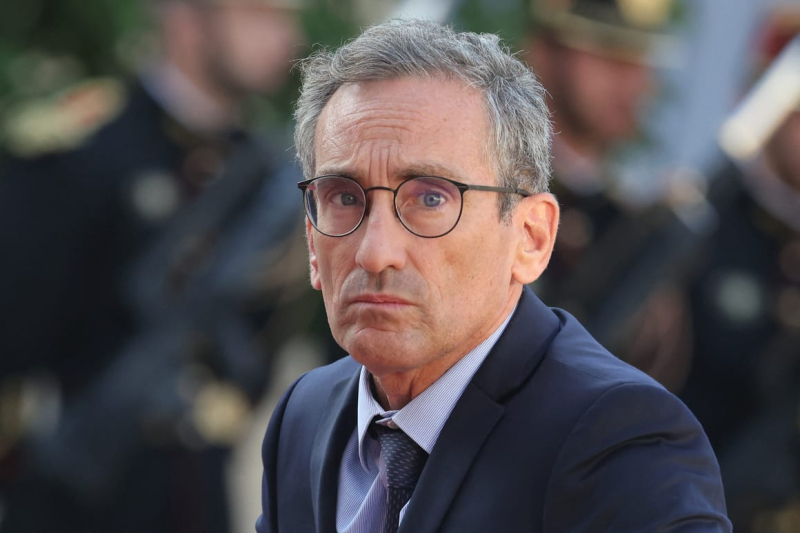
Aurélien Lechevallier, a longtime Macron ally, was expected to take office next month but his posting is yet to be approved by the U.S. Department of State — a process that is usually a formality between allied countries.
According to two people familiar with the matter, the Trump administration took offense at a social media post from France’s mission to the U.N. in Geneva that criticized Washington’s decision to side with Russia and North Korea against the renewal of U.N. High Commissioner for Human Rights Volker Türk’s mandate.
“The U.S. used to be a beacon of human rights. Not anymore,” wrote the French mission on X last month. “And the world no longer listens to it.” The post prompted the U.S. delegation to walk out of a U.N. Security Council meeting in protest.
“The United States is very disappointed in the irresponsible and disrespectful rhetoric from the French,” said an official from the Department of State in response to a written question about Lechevallier’s clearance process. “We are responding appropriately to their comments.”
Türk, an Austrian national who has been high commissioner since 2022, has drawn U.S. ire for his criticism of the country’s immigration policy and Israel’s war in Gaza.
Two of the individuals also expressed hope that the dispute, which was first reported by Reuters, would blow over and Washington would not block Lechevallier’s appointment.
Love-hate relationship
The spat illustrates the volatile relationship between the U.S. and its oldest ally France. While Macron and Trump have shared moments of camaraderie in front of the cameras, they have polar opposite world views and regularly spar over NATO, Ukraine and trade relations.
Trump’s participation in the June G7 summit in Evian was praised as a high point in the relationship, with the U.S. president showing signs of support for Ukraine and prolonging his visit to France to join Macron and his wife for dinner at the gilded Versailles Palace.
“We have our ups and downs in our relationship with the U.S.,” said a former French official, who has kept informed of the transatlantic relationship. Macron is capable of challenging America’s bullying at the Economic Forum of Davos, but “can also hug President Trump and invite him to sign his Iran deal in Versailles.”
The hold-up in Lechevallier’s approval process will end up being “an anecdote,” said the former official, who, like others quoted here, was granted anonymity to discuss a sensitive topic. “But it confirms we are not afraid of a confrontation” with Washington, they added.
For a senior figure from Macron’s Renaissance party, however, the U.S. targeting a senior French diplomat is “staggering.” Lechevallier is currently chief of staff to Foreign Minister Jean-Noël Barrot and was Macron’s classmate at the elite ENA graduate school.
“We’ve been extremely cooperative, even considerate, on Iran … We’ve been polite and diplomatic. And we’re faced with something that is a bit humiliating,” said the official.
Diplomatic tensions
The French foreign ministry declined to comment on Lechevallier’s stalled approval procedure and has not protested publicly. But Paris has not rowed back its criticism of the U.S. human rights record either.
“Our position was known. We supported the renewal of the high commissioner’s mandate,” said a French diplomat. “Differences of opinion over a [U.N.] vote do not call into question the strength of our relationship or our ability to work together.” Last month, the U.S. voted against the renewal of Türk’s term, accusing him of leading the U.N. human rights system “to its deathbed.”
Despite the personal relationship between Trump and Macron, the dispute comes at a time of simmering diplomatic tensions with the U.S. Barrot has sharply criticized Washington over its military intervention in Venezuela, as well as its threats against Greenland. He also vowed France would never give in to U.S. “blackmail” over trade tariffs.
Relations with U.S. Ambassador to France Charles Kushner have also soured over his perceived lecturing on the fight against antisemitism in France and his alleged interference in French political life. Kushner, the father of Trump’s son-in-law Jared, was twice summoned to the foreign ministry.
“Kushner had problems [with the French foreign ministry] … He was humiliated. Maybe this is also payback,” said the former French diplomat.
Jerry Wu contributed reporting.