
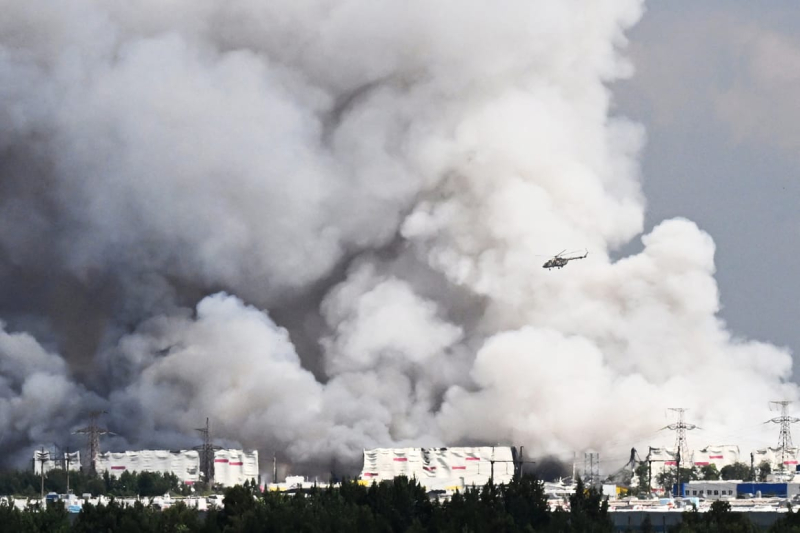

Deep strikes inside Russia aim to raise pressure on Vladimir Putin as Kyiv braces for another punishing winter.
Volodymyr Zelenskyy is gambling that taking the fight deeper into Russia will put enough pressure on Vladimir Putin to force him to get serious about peace talks.
For much of the war, the Russian president has been able to shield ordinary Russians from the worst of the conflict. The Ukrainian leader is now trying to break that insulation — disrupting air travel and striking refineries, factories, warehouses and other targets deep inside Russia.
The logic is brutal but simple: Raise the economic and political cost of the war for Russians faster than Putin can raise the military and civilian costs for Ukrainians with his escalating air assaults.
With that aim in mind, Ukraine mounted in August one of its heaviest waves of strikes on Russia since the war started more than four years ago.
The campaign expanded quickly to target not just conventional military facilities but also oil refineries, factories, and the vast warehouses of Russia’s online retail behemoths, Wildberries and Ozon. And ordinary Russians have expressed frustration at the domestic fuel shortages, the disruption of air travel and the upending of Russian e-commerce. Ukraine has scaled up domestic production of its attack drones as it tries to make the war unsustainable for Moscow.
But there is little evidence yet that the disruption poses any serious threat to Putin’s hold on power. Coups have been forecast before. European spymasters, Ukrainian officials and Russian exiles have issued numerous predictions that Putin’s days are numbered, that Russians will turn on him or he’ll be ousted in a Kremlin uprising by oligarchs and Russia’s elite.
Nonetheless, Putin has endured.
What Ukraine’s air campaign does appear to have done is make the war harder for ordinary Russians to ignore. That’s significant given how the Kremlin has succeeded largely in silencing public dissent and has Russian-based media on a tight leash.
“I don’t think the authorities’ approval rating can fail to decline when people go outside and see a huge column of smoke rising over the city, or when they arrive to a gas station and there’s no fuel, while on television they’re being told that Russia is a great oil power,” said Ian Matveev, a Russian political analyst and an associate of the late Russian dissident Alexei Navalny.
Matveev added that Zelenskyy’s air campaign has exposed how the Russian military can’t fully protect the country.
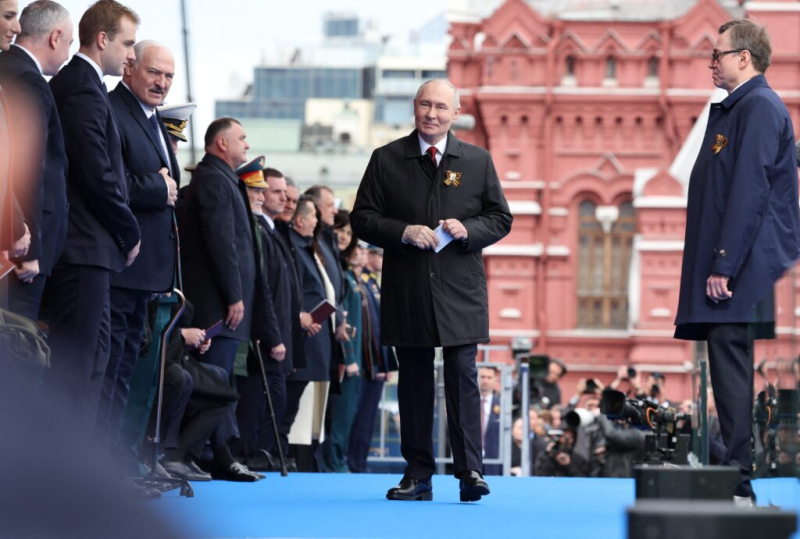
That was underscored in May when the Kremlin reluctantly pared back the Victory Day jamboree celebrating the Red Army’s defeat of Nazi Germany.
Shortly after, in June, Ukraine repeatedly struck Russian oil refineries and fuel infrastructure, including around Moscow. In July, Ukrainian drones reached the Omsk refinery in Siberia, Russia’s largest, about 2,700 kilometers from Ukrainian-controlled territory, reportedly using an upgraded drone.
By then, Ukrainian strikes had hit many of Russia’s major refineries, oil terminals and fuel-storage facilities. At the same time, Ukraine launched an operation against Russia’s so-called shadow fleet in the Black and Azov seas, targeting more than 200 vessels, according to Ukrainian officials.
The Russian media has reported on the impact of the strikes at Wildberries and Ozon warehouses on small businesses, with sellers of clothing and electronics lamenting that they’ve lost years of work, even their livelihoods. Pro-war military bloggers have not held back on their criticism, faulting the Russian armed forces for ineffectiveness.
But are these complaints enough to alarm Putin and prompt him to stop the war?
The strikes are clearly embarrassing the Russian autocrat, said John Lough, a former NATO official who is now at the New Eurasian Strategies Centre, a think tank founded by exiled Russian businessman and prominent opposition figure Mikhail Khodorkovsky.
“These attacks are damaging for Putin — more in terms of his credibility with the elites than with the population at large,” Lough said. “They can see increasingly that the war is not winnable on the terms advertised and that he has damaged rather than improved Russia’s security.”
Lough said he doesn’t see a revolution or coup around the corner. “But if the fuel problems continue and more warehouses burn down, there will be more questions from the population about how long this is all going to last and why it started in the first place,” he added.
To ramp up the pressure, Zelenskyy and his tacticians are now eager to make Russia’s commercial airspace increasingly difficult to use.
“Russian airspace will effectively be closing,” the Ukrainian leader said last week. He warned foreign airlines to stay clear as the skies over Russia would become increasingly unsafe because of Ukraine’s drone operations. “There will simply be drones in Russia’s skies on a scale that has to be taken into account,” he added.
Tim Willasey-Wilsey, a former British diplomat, described Ukraine’s air campaign as “ very, very successful.” But Ukraine’s position as it enters into another wartime winter is more desperate than Russia’s, he feared.
“I think Kyiv is terrified about going into another winter, and this time without any means to defend itself against ramped up Russia’s ballistic missile attacks,” he said.
Putin is unlikely to have missed that vulnerability. Nor have Ukraine’s allies.
During a meeting with Zelenskyy and top security officials from Britain, Germany and France last week, much of the focus was not on the peace deal recently proposed by a U.S. delegation fresh from a visit to Moscow.
It was, according to a senior Ukrainian official who spoke to the AP, on “how to get through the winter.”