

Contents
Leaders will discuss Europe’s AI ambitions. But who speaks for Europe in Ukraine talks, how to fund Kyiv, and who replaces Christine Lagarde are also in play.
DUBLIN— It’s becoming a familiar pattern at European Council summits: EU leaders are summoned to discuss one big strategic issue, only for another political crisis to steal the show.
Friday’s gathering in Dublin appears unlikely to break that trend.
While EU leaders are ostensibly meeting for their first dedicated discussion on artificial intelligence, the agenda is already crowded with more immediate fights over Ukraine, the ongoing splits over the bloc’s next budget, and who will take the helm at the European Central Bank.
Formal talks begin at 9:45 a.m. followed by lunch around 1 p.m. and a press conference provisionally scheduled for 4:15 p.m.
Here are the five issues that really matter — and what to watch for.
1. AI: Can Europe compete at the frontier?
Leaders will debate how Europe can build its own AI capacity, from computing power and cloud infrastructure to chips and models. European Council President António Costa framed the discussion around sovereignty, asking leaders to consider “how Europe can become a leading and sovereign player” across the AI value chain.
The central question is whether Europe should build frontier models to rival U.S. and Chinese developers, or focus on applications built on those models. Finland’s Petteri Orpo and Estonia’s Kristen Michal have argued that Europe “can compete at the frontier” and must aim beyond merely adopting AI.
The obstacle, however, is money. Leaders will discuss how to fund the computing capacity needed to turn European research into products. They will also hear from the CEO of French AI company Mistral, Arthur Mensch, who has railed against abandoning the frontier, and AI pioneer Geoffrey Hinton about global rules for the technology. The EU’s position is that its AI Act already provides a regulatory framework.
What to watch: Whether leaders back frontier AI development — and commit money to it.
2. Ukraine talks: Who speaks for Europe?
One of the most consequential discussions of the day will be who should represent the EU in future Ukraine peace talks, with European officials continuing to squabble over the matter.
Europeans will invited to the next round of negotiations, U.S. envoy Steve Witkoff said Thursday after meeting Russian President Vladimir Putin in Moscow — a longstanding demand from the EU.
But Europe needs to choose a single person to represent them, ideally by the end of this month, Ukrainian President Volodymyr Zelenskyy said earlier this week.
That’s a challenge for the bloc, which remains deeply divided over the choice.
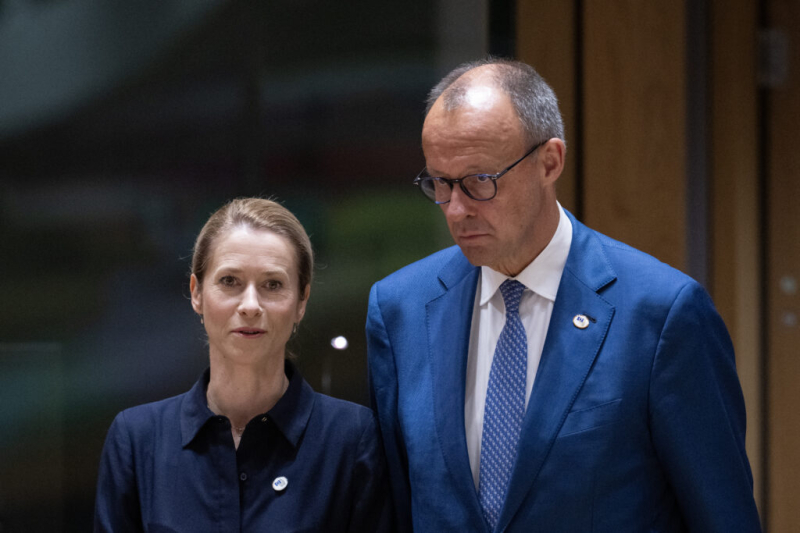
Costa wants greater clarity on European representation and a coherent message from the bloc’s 27 members. EU foreign policy chief Kaja Kallas argues that the treaties already provide an answer: She and Costa should represent the bloc. Estonian PM Kristen Michal backed that position in an interview with POLITICO.
France and Germany disagree, however. President Emmanuel Macron said Thursday that Europe must first agree on its proposals and security vision. Chancellor Friedrich Merz backed the E3 (Germany, France and the U.K.) as “a well-established format,” adding: “I don’t see any problem at all with things staying that way.”
What to watch: Whether leaders clarify who speaks for Europe, or leave competing channels in place.
3. Ukraine financing: The €70 billion shortfall
Leaders are also expected to address Ukraine’s funding needs, as Kyiv faces a €70 billion shortfall next year.
Merz linked Ukraine funding to negotiations on the EU’s next long-term budget in a letter to Costa, drawing resistance from governments wary of further commitments. He said that Germany, the bloc’s biggest budget contributor, can’t accept free-riders on Ukraine and European security.
The funding debate is also tied to Europe’s leverage in any eventual settlement. Some lawmakers want frozen Russian assets placed in an EU-controlled structure, arguing in a letter sent Thursday that the funds should not be available for a deal struck without Europe.
The question of funding for Ukraine will likely resurface at the Nov. 26-27 summit.
What to watch: Whether peace talks shift the funding debate — and whether governments can narrow their differences before the November summit.
4. The EU budget: Deal-making, not a deal
The 2028-2034 EU budget is not formally on Friday’s agenda, but leaders are expected to discuss it on the sidelines. A new negotiating document, setting out possible compromises, is expected around Nov. 21 ahead of the summit.
No breakthrough is expected in Dublin. Merz has signaled he will use the gathering for bilateral talks, including with Macron.
What to watch: Signs that major contributors and governments threatening to block a deal are narrowing their differences.
5. The ECB race: A wider jobs bargain
After a first chat on Thursday in Dublin, Macron and Merz are expected to discuss the race to replace European Central Bank President Christine Lagarde. Spain’s Pablo Hernández de Cos and former Dutch central banker Klaas Knot are the leading contenders.
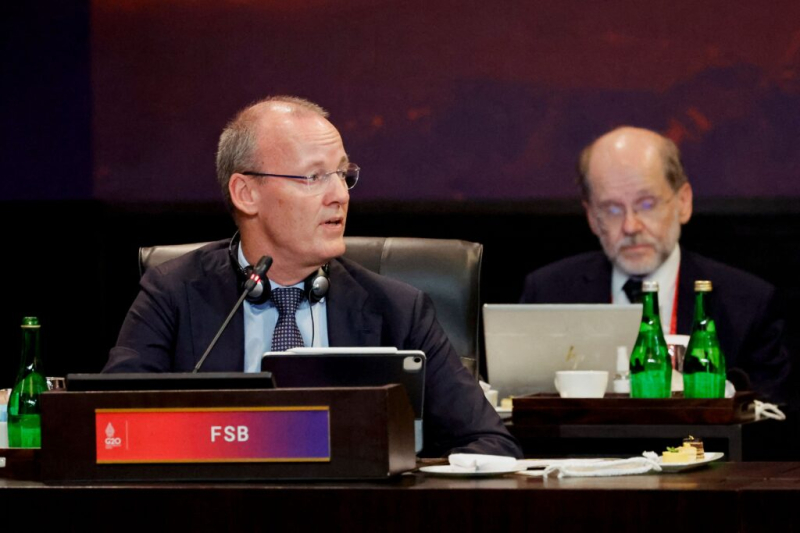
The presidency is part of a broader contest over three senior appointments, with Germany’s Isabel Schnabel and Ireland’s Philip Lane also due to leave the ECB’s Executive Board in 2027. Paris and Berlin both want the chief economist post, according to two officials briefed on the discussions. One suggested Germany could secure it by backing Hernández de Cos, who is seen as less hawkish than Knot.
A deal is expected at the Nov. 26-27 summit. Spanish PM Pedro Sánchez and Dutch leader Rob Jetten — both backing their country’s candidates — will miss Dublin amid domestic political pressures.
What to watch: Whether Macron and Merz begin trading support for the ECB’s top jobs ahead of November.
Hans von der Burchard, Giorgio Leali and Seb Starcevic contributed to this report.