
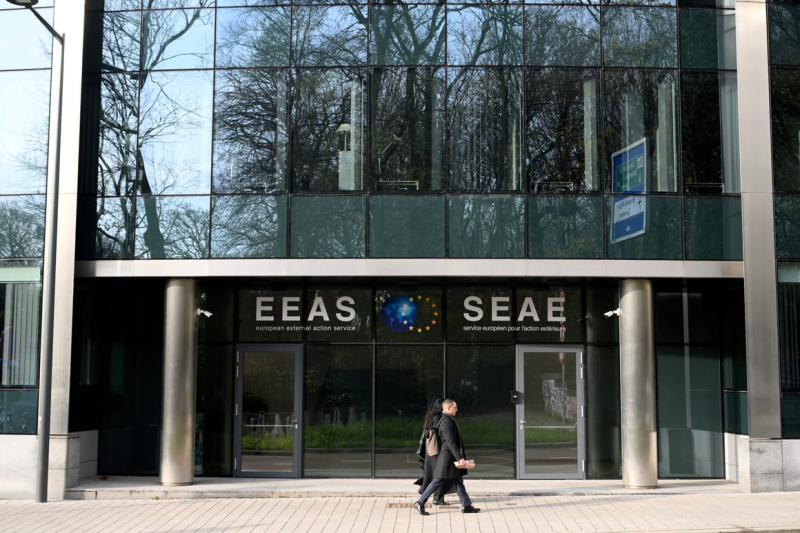

Belén Martínez Carbonell’s departure has intensified fears that the EU’s diplomatic arm is losing influence as geopolitical crises intensify.
BRUSSELS — The departure of one of the EU’s most senior diplomatic officials has sparked a search for a successor who can “rescue” the bloc’s foreign service.
Spanish envoy Belén Martínez Carbonell, secretary-general of the European External Action Service (EEAS), will take up a post leading the EU’s delegation in Mexico after only two years in her current role, officials told POLITICO’s Brussels Playbook.
The EEAS is locked in a turf war with the European Commission, which, under President Ursula von der Leyen, is increasingly taking the lead on geopolitical issues. Founded in 2010 to supervise relations between Brussels and the rest of the world, the EEAS oversees more than 145 ambassadors and representative offices around the globe.
The last time the service had a major vacancy, its head, High Representative for Foreign Affairs and Security Policy Kaja Kallas, told POLITICO it was essential to appoint “a strong person” to help oversee the EEAS to ensure “Europe is a geopolitical power.”
But, according to one senior diplomat, the EEAS “has an issue because everyone sees now the structure doesn’t bring the added value it was expected to bring. And the Commission of course has a huge gravity to attract some part of the staff and competences of the EEAS.”
“This has become existential,” said the diplomat, who was granted anonymity to speak openly about the issue, as were others in this report. “Either we rescue it and work out what we want it to do or it will crash.”
A senior EU official, meanwhile, warned that “there is an alienation between member states and the EEAS,” making it difficult to work with capitals. The service convenes regular meetings of EU foreign affairs ministers, with one such meeting this week brokering a compromise on sanctioning violent Israeli settlers in the West Bank.
A second senior EU official insisted that the EEAS “has delivered 20 rounds of sanctions, deals with Gulf countries, a new normal with Armenia, a voice on the world stage. It’s delivering, not failing.”
Internal affairs
Others, however, point to problems within the organization itself as a reason for its struggles.
According to a third official, “the amount of people [in the EEAS] in senior positions who have moved to the Commission or are trying to move to the Commission shows there’s something very wrong … and it’s not the secretary-general.”
In October, Kallas’ team moved to cut key responsibilities, including managing relations with member countries’ ambassadors, out of the secretary-general’s role and hand them to a deputy.
They initially planned to appoint controversial German bureaucrat Martin Selmayr to that deputy role, but opposition from capitals and the Commission sank the bid. Kallas then handed the job to fellow Estonian Matti Maasikas on a temporary basis.
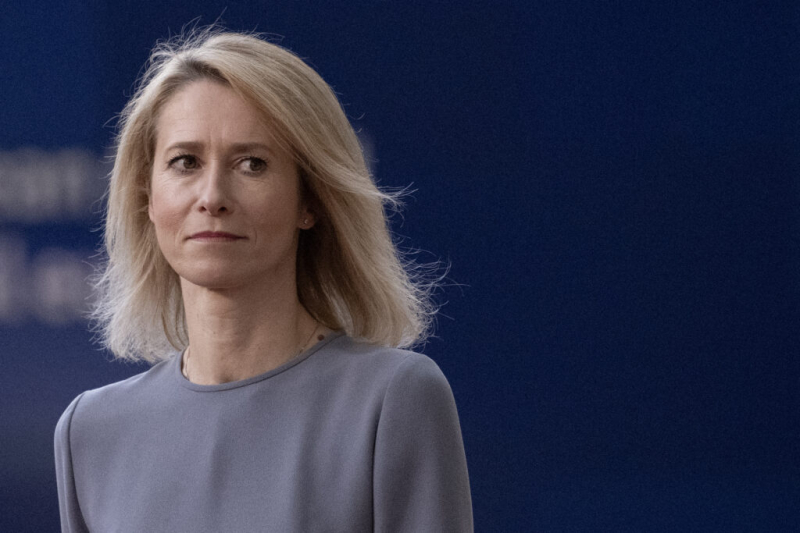
The Selmayr move was widely interpreted as a way to put von der Leyen on the back foot, attempting to bring back a former Commission secretary-general who had earned the nickname “the Monster of the Berlaymont.”
Runners and riders
While Carbonell’s exit date is not yet confirmed and no formal vacancy has been posted, the process of choosing her successor has already begun in earnest.
One veteran figure with the credentials to apply for the job is Simon Mordue — a British-Irish official who served as chief diplomatic adviser to former European Council President Charles Michel and most recently was deputy secretary-general of the EEAS.
However, in a sign of the problems facing the service, Mordue has since left for the Commission, taking on an influential role as von der Leyen’s top diplomatic aide, and there is no indication he would consider a move now.
Others floated as potential candidates are Patrick Child, deputy director-general of the Commission’s environmental service, who previously held senior roles at the EEAS, and Koen Doens, currently director-general overseeing international partnerships. None has yet declared their candidacy for the job, and a person familiar with the issue said Doens is not interested in the post.
Charles Fries, the current EEAS deputy secretary-general, would be in pole position, but the appointment of a French bureaucrat could raise eyebrows among countries that fear Paris already wields too much influence in the EU institutions.
However, Jean-Noël Barrot, France’s foreign minister, has emerged as one of the most high-profile advocates for the EEAS, speaking out in favor of the service in front of Kallas and von der Leyen during a conference of ambassadors in March.
That’s left some hoping France can shoulder the mantle of “saving” the service, said the first EU official.