
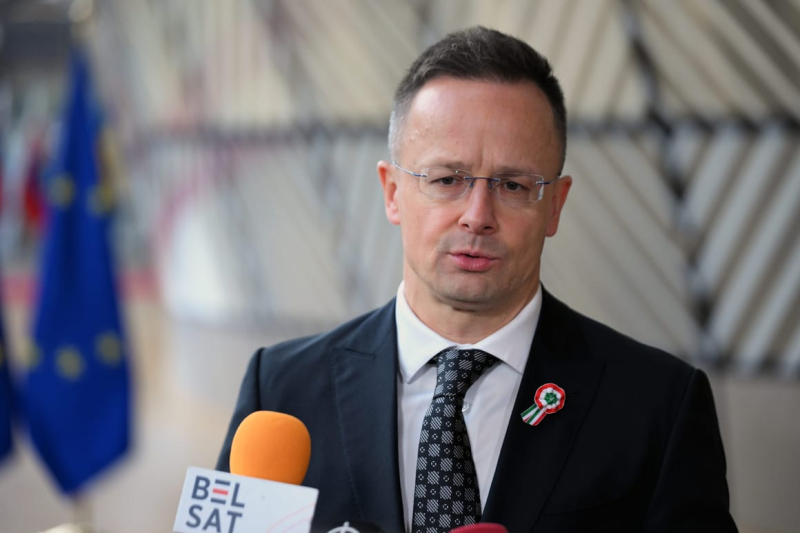

Reports of Hungary updating the Kremlin are “greatly concerning,” European Commission spokesperson says.
BRUSSELS — The European Commission wants Budapest to explain explosive allegations that the Hungarian foreign minister shared information from confidential talks with other EU member countries with Moscow.
The reports are “greatly concerning” as trust between member countries and the bloc’s institutions is fundamental to the EU’s functioning, Commission foreign affairs spokesperson Anitta Hipper said Monday. The Commission is waiting for “clarifications” from the Hungarian government, she added.
A report over the weekend by the Washington Post claimed Budapest maintained close contacts with the Kremlin throughout the war in Ukraine and that Hungarian Foreign Minister Péter Szijjártó even used breaks during meetings with other EU countries to update his Russian counterpart.
Szijjártó has denied the report. Hungary’s Europe Minister János Bóka told POLITICO: “It is fake news that is now being spread as a desperate reaction to [Hungarian Prime Minister Viktor Orbán’s] Fidesz gaining momentum in the election campaign. But the Hungarian people won’t be deceived.” Hungarians head to the polls for a crunch election on April 12.
Commission President Ursula von der Leyen has not yet commented on the claims. Asked whether von der Leyen was aware, Commission’s Deputy Chief Spokesperson Arianna Podestà said: “The president is in Australia, so I’m not sure she’s seen reports yet.” Von der Leyen is visiting Australia to shore up a long-awaited trade deal.
Polish Prime Minister Donald Tusk said the allegations “shouldn’t come as a surprise to anyone.”
“We’ve had our suspicions about that for a long time,” he wrote on X on Sunday. “That’s one reason why I take the floor only when strictly necessary and say just as much as necessary.”
Former Lithuanian Foreign Minister Gabrielius Landsbergis, who frequently attended Council meetings where Szijjártó was present, told POLITICO he was warned as early as 2024 that the Hungarian side could be passing on information to the Kremlin.
Suspicion of leaks has driven the proliferation of other talking formats that exclude Budapest, five European officials and diplomats told POLITICO.
“This has been a given for a while,” said a sixth official, who, like the others, was afforded anonymity to discuss the sensitive claims.
Nicholas Vinocur, Gabriel Gavin and Gerardo Fortuna contributed to this story.