
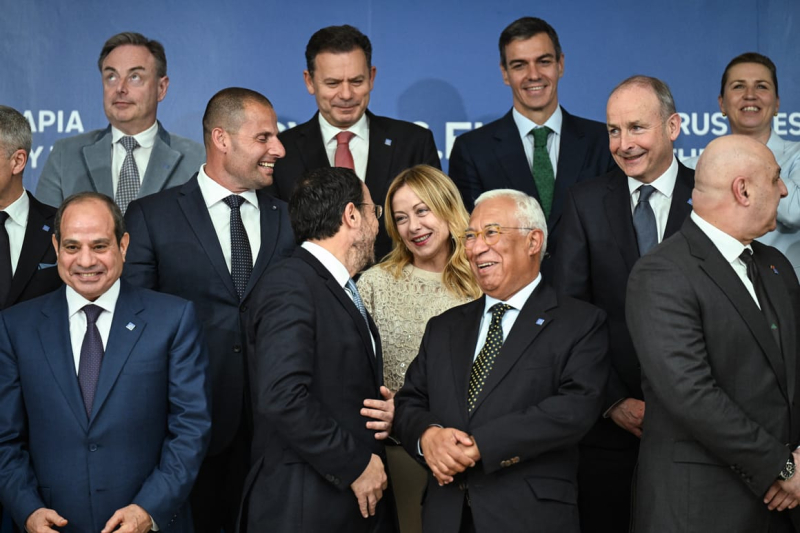

It’s an “extremely difficult negotiation,” says Italian PM Giorgia Meloni at EU summit in Cyprus.
NICOSIA, Cyprus — EU leaders finally got serious about the bloc’s €1.8 trillion budget at their summit on Friday. The problem: They still don’t agree on what it should do, how big it should be, or who should pay for it.
So while talks on the 2028-2034 common cashpot stepped up a gear in Cyprus, there is still a very long way to go — and a lot to settle if, as many governments say they hope, they are to land a deal by the end of the year.
It is an “extremely difficult negotiation,” Italian Prime Minister Giorgia Meloni told reporters on the sidelines of the meeting. The talks showed just how far apart EU countries remain on the key elements of the deal, officials said.
Leaders know they need to inject momentum. The energy crisis triggered by the war in the Middle East has renewed a push for more EU spending as a way to support the economy. The EU is also eager to wrap up the negotiations before next year’s French presidential election, where the far-right National Rally is topping polls. European officials think the vote could make an agreement between the 27 governments — the necessary step before that deal gets negotiated with the European Parliament — almost impossible.
“This was the first real discussion about the MFF,” said one EU official, using the formal name for the seven-year budget: the multiannual financial framework. The official, like other diplomats, was granted anonymity to speak about confidential conversations.
During the discussion, some countries like Poland pushed for a bigger budget. Others, notably those of Germany and the Netherlands, argued it should be smaller than the European Commission’s initial proposal.
After the meeting, Dutch Prime Minister Rob Jetten told reporters it was “unacceptable,” and the “size of the budget needs to substantially go down.”
German Chancellor Friedrich Merz made the same point.
“At a time when nearly all member states are undertaking the most rigorous fiscal consolidation efforts at home, a massive increase in the EU budget, as proposed by the Commission, does not fit the picture,” Merz told reporters, calling for cuts across all areas to make the Commission’s proposal more digestible.
Raising taxes
But EU institutions and countries such as France are calling for a more ambitious package, arguing the bloc needs to invest in strategic sectors and compete with its Asian and American rivals.
For them, a bigger budget does not necessarily mean asking EU countries with strained public finances to pay more. Instead, they argue, the bloc should raise taxes that flow directly into the European budget, known in EU jargon as “own resources.”
In July, the Commission proposed levies on carbon-intensive imported goods through the Carbon Border Adjustment Mechanism (CBAM), emissions through the ETS, non-recycled electronic waste, tobacco consumption and corporate profits. Together, they would raise €66 billion per year, the EU says.
But those proposals, apart from CBAM, have previously received a cold reception from most EU countries.
This time, even if no clear consensus has emerged, the discussion made progress. “The mood was constructive, there was openness to look into it,” said the EU official quoted above.
And European Commission President Ursula von der Leyen wasn’t discouraged. “Own resources are indispensable,” she said at the end of the summit.
“Without them, the choice is stark,” she said. “It’s either higher national contributions or it’s lower spending capacity. That’s the only options that are there. In other words, lower spending capacities would mean less Europe ― exactly when more Europe is needed.”
Nette Nöstlinger contributed to this report from Berlin, Gabriel Gavin and Jacopo Barigazzi contributed from Nicosia.