
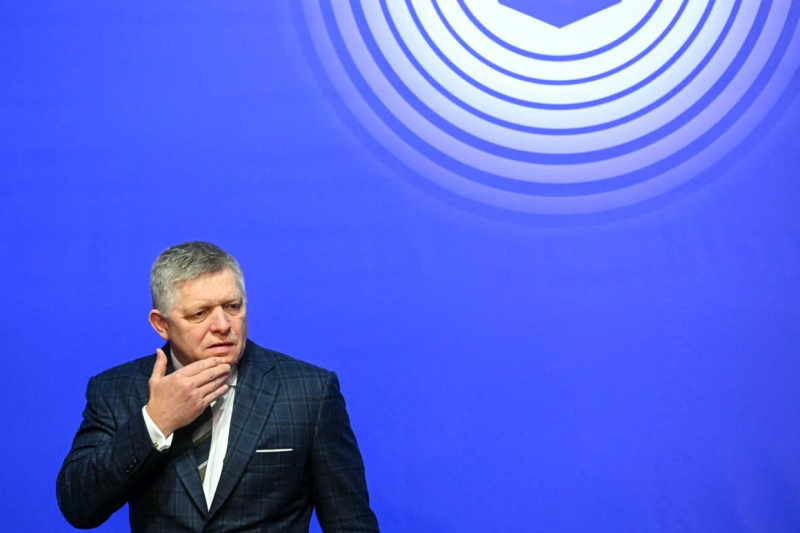

Slovakia’s prime minister said he will halt emergency electricity exports to Ukraine unless oil flows resume, joining Hungary in escalating an energy standoff with Kyiv.
Slovak Prime Minister Robert Fico on Saturday threatened to cut off emergency electricity supplies to Ukraine if Kyiv does not restore oil flows to Slovakia by Monday, escalating a deepening energy dispute in Central Europe.
“If the Ukrainian president does not resume oil supplies to Slovakia on Monday, on that same day I will ask the relevant Slovak companies to stop emergency electricity supplies to Ukraine,” Fico wrote on social media.
Fico said he would instruct SEPS, Slovakia’s state-owned grid operator, to halt the emergency power exports that have helped stabilize Ukraine’s energy system amid repeated Russian attacks. In January alone, the volume of emergency supplies needed to support Ukraine’s grid was twice as high as during the whole of 2025, he said.
Oil transit to Slovakia and Hungary has been disrupted since late January after a Russian strike hit the Druzhba pipeline, a key route carrying Russian crude to Central Europe. Ukraine’s pipeline operator said this week that the Jan. 27 attack damaged critical infrastructure and that repair works are ongoing.
In a letter to the European Commission, Ukraine’s embassy to the EU proposed using the Odesa–Brody pipeline or maritime routes as temporary alternatives to supply Hungary and Slovakia while repairs are completed.
Fico accused Ukrainian President Volodymyr Zelenskyy of treating Slovakia as a “hostile country,” saying Kyiv first halted gas flows, costing Slovakia €500 million annually, and has now stopped oil supplies, causing further losses. He also defended his decision to refuse Slovakia’s participation in the EU’s planned €90 billion military loan for Ukraine.
On Friday, Hungarian Prime Minister Viktor Orbán similarly accused Ukraine of halting Russian energy transit for political reasons and threatened to block the EU loan until oil flows resume.
Ukraine rejected the claims, arguing that Russian strikes damaged energy infrastructure.