

Contents
On World Cancer Day, we look at the companies accelerating breakthroughs across the cancer pipeline, from screening to recovery.
Today, February 4, is World Cancer Day. Cancer kills around 10 million people each year — more than HIV/AIDS, malaria, and tuberculosis combined.
Fortunately, European startups are accelerating innovation across the cancer care pipeline, from early detection to post-treatment recovery. Here’s just some of the startups to watch:
Aerion Bioscience (Luxembourg)
Aerion Bioscience is developing a blood test for early lung cancer detection based on a specific pattern of proteins circulating in the bloodstream.
Current lung cancer detection relies heavily on CT scans and biopsies, which are expensive, involve radiation, and are not widely used as population screening tools. A reliable blood-based test could be performed during regular check-ups and flag high-risk patients earlier, when treatment is far more effective.
Aerion’s work builds on biomarker research originally developed at the Luxembourg Institute of Health, translating academic discovery into a practical diagnostic platform designed for clinical labs rather than experimental settings.
The Blue Box
The Blue Box is a deep-tech biomedical startup developing an AI-powered, non-invasive screening solution for breast cancer that uses a simple urine sample instead of traditional mammography. Their device combines a proprietary electronic nose to detect cancer-related volatile biomarkers in urine. Then a machine-learning algorithm recognises subtle patterns linked to early-stage disease.
This pain-free, low-cost, radiation-free diagnostic tool has the potential to outperform mammograms, particularly in women with dense breast tissue. and make reliable screening more accessible through clinics and future at-home solutions.
Captain T Cell (Germany)
Captain T Cell is developing next-generation T cell therapies to treat solid tumours, a class of cancers where existing immunotherapies often fall short.
The company engineers tumour-specific T cells that express optimised T-cell receptors (TCRs) with enhanced persistence and the ability to survive and attack cancer cells even within the hostile tumour microenvironment. Its proprietary platform supports both personalised (autologous) therapies and “off-the-shelf” allogeneic products, ready for use in multiple patients.
Concr (UK)
Concr is a London-based biotech company tackling cancer’s 96 per cent drug failure rate by applying astrophysics-derived technology to predict which treatments will work for individual patients.
Its FarrSight platform creates digital twins, simulations of a patient’s molecular biology, to predict the most effective therapies for them and to help drug developers design better clinical trials. The startup works with partners including the NHS, Roche, and the Institute of Cancer Research.
Luminate Medical (Ireland)
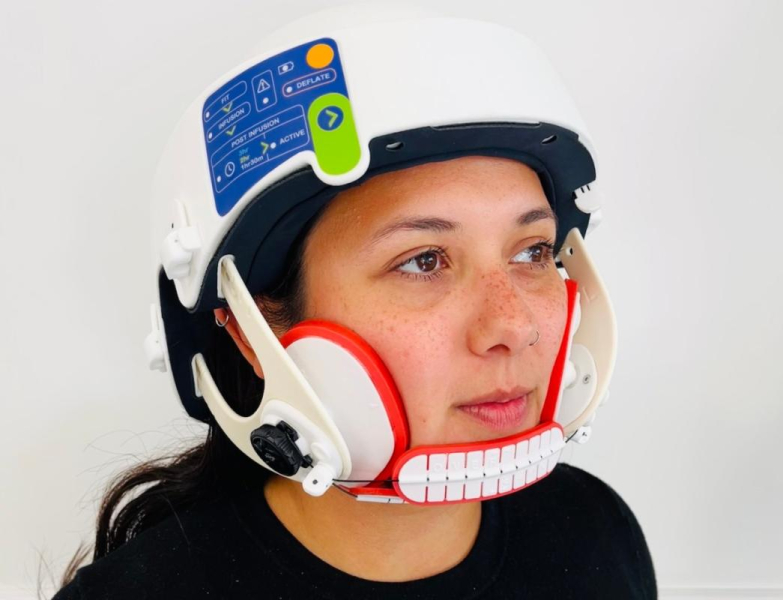
Image: helmet designed to reduce hair loss from chemotherapy.
Luminate Medical develops wearable medical devices designed to reduce some of the most distressing side effects of chemotherapy, including hair loss and nerve damage.
Its flagship products use targeted compression technology to limit how much chemotherapy reaches certain parts of the body, helping protect hair follicles and peripheral nerves without interfering with the treatment’s effectiveness.
Beyond reducing side effects, the company is also working to shift parts of cancer care out of hospitals and into patients’ homes. Luminate is developing infusion and monitoring systems that allow certain low-risk treatments to be delivered remotely under clinical supervision.
SPARK Microgravity (Germany)
SPARK Microgravity is developing what it describes as Europe’s first dedicated commercial orbital cancer lab, to enable life scientists and pharmaceutical researchers to perform experiments in the microgravity environment of low Earth orbit.
They aim to make space-based research — especially advanced cancer biology, 3D tumour growth models, drug screening and personalised oncology studies — accessible without researchers needing to manage their own space missions, with the goal of revealing biological behaviours and therapeutic targets that are hard or impossible to study on Earth due to gravity’s influence.