

With major EU migration reforms under way, “it’s the right time” to phase out controls, migration commissioner says.
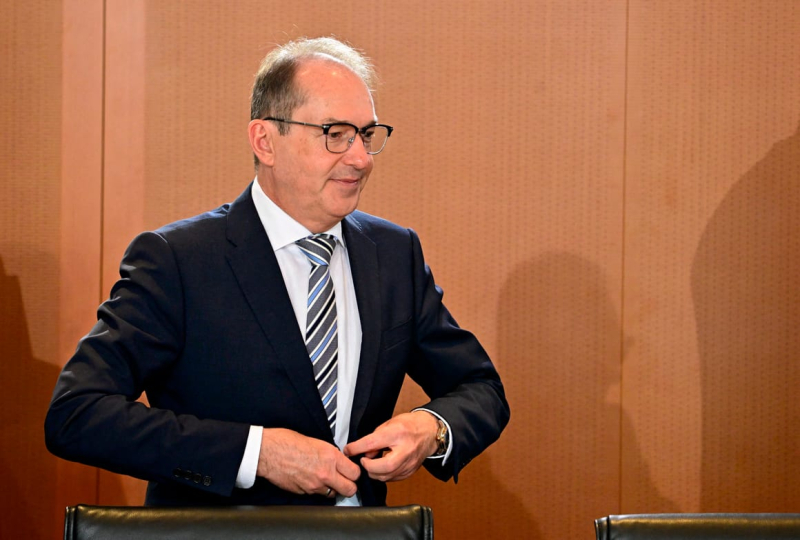
LUXEMBOURG — German Interior Minister Alexander Dobrindt pushed back Thursday against a European Commission request that Germany drop its internal border checks.
The Commission said the checks would no longer be needed because of sweeping changes to the bloc’s migration policies. The EU has agreed on measures to boost control over who crosses into the bloc, including by strengthening screening procedures and providing more support for the countries that receive the most migrants. These provisions will be rolled out next week.
Currently, 10 EU countries have checks on internal borders, and seven of them mention migration in their justification to the Commission. These controls are supposed to be temporary, but some countries have had them in place for years.
Earlier this week, the Commission told Austria, Denmark, France, Germany, Italy, the Netherlands, non-EU Norway, Slovenia and Sweden to gradually lift their border controls. The 10th country is Poland, which was not asked by the Commission to lift its border controls.
“[Illegal migration] numbers … are going down. We’re on the right track. The reforms have been done. The external borders are better protected. The returns regulation has been decided. … It’s the right time to gradually phase out these border controls,” Commissioner Magnus Brunner said Thursday ahead of a meeting with home affairs ministers in Luxembourg.
The visa-free Schengen area “must work, it is one of the European Union’s greatest achievements,” he argued.
But Dobrindt said Germany’s border checks are “working” and “remain necessary.”
The German minister said the bloc’s external border protection “must be significantly improved.” He added that the countries in which migrants first arrive must take back people who traveled to other countries in the bloc, and in return, the new mechanism to send support to countries that receive the most migrants must be up and running quickly.
“All of that must work together. They all influence one another,” Dobrindt said.
“We have seen in recent months how effective our measures really are in curbing illegal migration,” he said, arguing they had reduced Germany’s “pull factor” and also helped combat smuggling.
Luxembourg last year submitted a complaint against German checks on their shared border, and controls were softened — but not lifted — last month.
Luxembourg’s Home Affairs Minister Léon Gloden welcomed the Commission’s push for countries to remove border checks, but also said it was “nine months late” and countries had not been given a clear deadline to do so.