
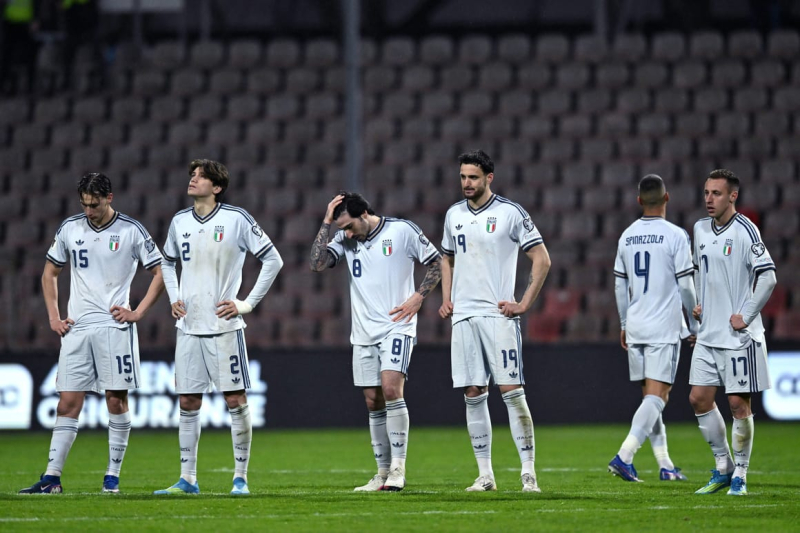

Giorgia Meloni’s government is keen to extend control over Italian football as fans mourn a third consecutive World Cup debacle.
ROME — Italy’s football crisis is turning into a test of Giorgia Meloni’s reach.
Failure to qualify for the FIFA men’s World Cup for the third consecutive time triggered a major political and public outcry in the football-obsessed country that has now morphed into a bitter fight over who controls the sport.
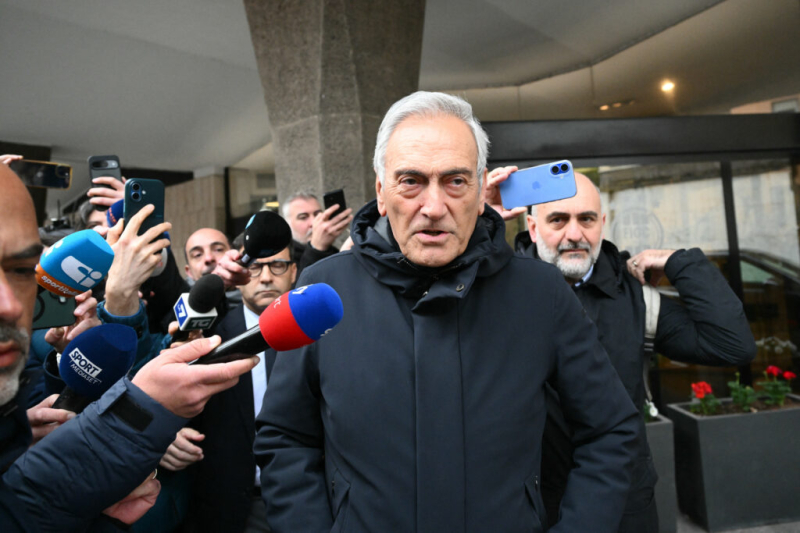
Meloni’s Brothers of Italy party leaped to propose curtailing the power of the country’s football association — the Federazione Italiana Giuoco Calcio (FIGC) — after its president, the 72-year-old Gabriele Gravina, resigned in April under heavy pressure following a World Cup playoff defeat to Bosnia-Herzegovina.
With new elections to run the FIGC slated for June 22, Meloni’s allies are pushing to call off the vote and place the body under special administration — an emergency procedure used in the past for the sport to overcome major corruption scandals.
In a country where football carries outsized cultural weight, Italy’s World Cup embarrassment has become a proxy battle over governance, reforms, investment and the Meloni administration’s willingness to extend political influence into independent institutions.
“The first concern should not be new elections; it is not through elections that you create the conditions for a rebound,” Italian Sports Minister Andrea Abodi said in an interview with POLITICO.
Football officials have denounced the government intervention as a power play to block the heavy favorite, Giovanni Malagò, a former president of the Italian Olympic Committee (CONI) who is disliked by Meloni’s party.
“The idea of placing it [the FIGC] under administration, to me, only suggests an occupation [by the government]; it offers no kind of perspective for the future,” Gravina told POLITICO from his Rome office, adorned by two twinkling World Cup trophies and other relics from a bygone era of glory. “The idea of taking over the football world has been circulating for far too long now,” he added.
Opposition parties have accused Meloni of centralizing control, stifling dissent and putting acolytes in positions of power, a pattern they observe in Italy’s state-owned television network, financial markets supervisor and judicial system.
But the government rejects that it wants to extend its reach to the FIGC. “It is a pathetic and baseless claim. There is no element that could be seen as an attempt by politics to take over this domain,” Abodi said.
The fall of the House of Italy
Since it last won the FIFA World Cup in 2006, on a balmy night in Berlin against archrival France, Italy has gradually declined from global football powerhouse to second-tier team, mirroring the country’s wider economic stagnation.
Like the country’s broader establishment, Italy’s football leadership is aging and its attempts to carry out reforms have been undermined by vested interests and resistance from both bigger clubs and lower divisions.
“It’s a very close-minded world, and they rarely come up with any innovative ideas,” said a former Italian football official who was granted anonymity to speak freely for this report.
In an echo of the mechanisms that sometimes slow down EU decision-making, the FIGC’s constituent bodies — representing amateur football, players, managers and referees among others — can each wield veto power and block systemic changes.
With these rules, “you can’t start any reform process,” Gravina complained. He added that plans to cut the number of yearly promotions and relegations, and reduce the clubs in the Serie A elite football league from 20 to 18 — a proposal designed to improve financial stability and raise the Serie A’s level of on-field quality — were rejected 17 times by the lower divisions.
After Bosnia, any broader Italian reckoning with the structural causes of its decline — such as crumbling stadiums and underuse of young Italian players in the Serie A — was soon overshadowed by the fight over appointing its new football chief.
Clubs from the Serie A — which have the financial firepower but only account for 18 percent of the votes — immediately swung behind the 67-year-old Malagò, who is widely seen as an effective operator and a people person. Football players and managers followed suit, bringing his expected support above the required threshold.
His rival for the post, Giancarlo Abete — another white-haired sports official who previously held the FIGC top job when Italy last played at a men’s World Cup in 2014 — is unlikely to pose a major threat.
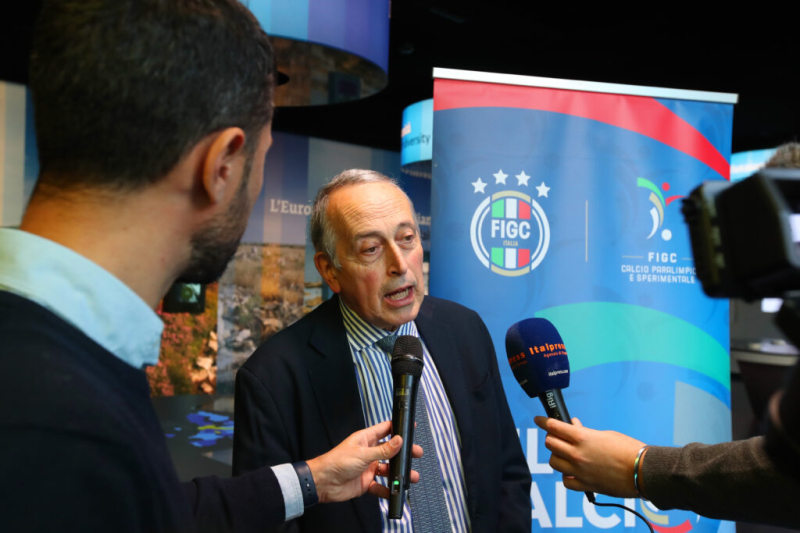
Malagò’s march to power came as a setback for Abodi and football-loving Finance Minister Giancarlo Giorgetti, with whom he clashed in 2018 over a controversial reform to curtail the financial firepower of the Olympic Committee.
Abodi, the sports minister, could barely conceal his misgivings about Malagò. He hinted that his role as the organizer of the Milan Cortina Winter Olympics earlier this year — which was recently subject to a judicial probe that did not directly involve Malagò — and his short-lived experience in football politics could play against him. He also frowned about Malagò’s remarks that he was approached to lead the FIGC before the fateful game against Bosnia.
However, the minister signaled willingness to work with Malagò if he wins the election. “We will cooperate with whoever is legitimately elected as president,” provided they commit to undertake necessary reforms, Abodi added.
Not everyone is convinced. “If they could, they would shoot Malagò between the eyes,” joked a second former Italian sports official.
Last-ditch plot
With less than a week to go until the election, the government’s dream of placing the FIGC under administration is losing steam.
Formally, the authority to do so rests with CONI, not with the government. Besides, the conditions that warrant such a move — such as serious misconduct or the disruption to the smooth running of football tournaments — haven’t been met.
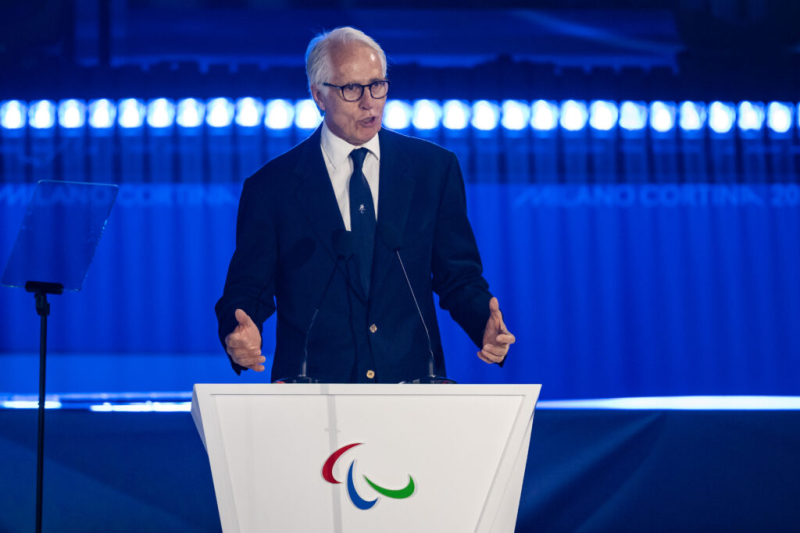
Abodi encouraged the FIGC to spontaneously call for a special administration after “having acknowledged the system’s inability to reform itself.” But that’s unlikely to happen.
The government’s last resort to block Malagò’s bid is a legal review into whether his appointment breaches conflict of interest rules due to his previous, recent experience at CONI.
Meloni’s administration has tasked an independent anti-corruption body and the Olympic Committee to look into the matter before the June 22 election, but the two former football officials said the challenge is unlikely to succeed.
In a world, though, where political friendship often matters more than individual merit, Malagò’s strained relationship with the Meloni government risks being a major liability going forward.
“Whoever wins, I hope that relations with politics will not be a handicap for them, as they have been for me,” Gravina sighed.