
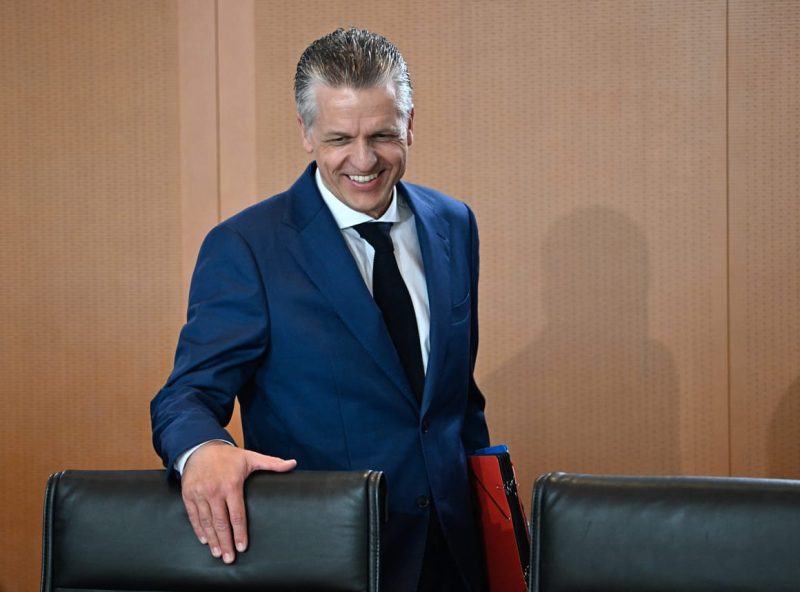

Thorsten Frei was elected with 91.9 percent of votes cast.
Lawmakers from German Chancellor Friedrich Merz’s conservative bloc on Wednesday elected Thorsten Frei as their new parliamentary group leader.
MPs from the conservative bloc, which consists of the Christian Democratic Union and the Christian Social Union in Bavaria, interrupted their summer vacations to elect Frei as their leader with 91.9 percent support.
“We won’t be praised simply for implementing a coalition agreement,” Frei said in a press conference after the meeting, reacting to poor polling. “We will only earn the public’s trust and support if we succeed in improving people’s everyday lives.”
The new leader previously served as the head of Merz’s Chancellery and is a popular figure within the conservative bloc.
Bavarian Premier Markus Söder congratulated Frei in a post on X: “He has the same compass as the CSU, is deeply engaged in the issues, and is a good communicator … These are the best premises,” Söder wrote.
Frei succeeds Jens Spahn, who stepped down amid a controversy over his use of a surrogate to have a child. The resignation prompted Merz to launch a broader cabinet reshuffle.
Earlier on Wednesday, German President Frank-Walter Steinmeier appointed three new CDU ministers proposed by the chancellor.
Former CDU Secretary-General Carsten Linnemann took office as health minister, replacing Nina Warken, who became the head of the Chancellery. Steffen Bilger was appointed transport minister, replacing Patrick Schnieder.
“Reshuffling governments is nothing unusual in the history of the Federal Republic. There have always been cabinet reshuffles during an ongoing legislative term,” Steinmeier said ahead of the appointments in a speech supporting Merz.
Merz himself took to X to welcome Frei: “Dear Thorsten, our parliamentary group is gaining an experienced and responsible leader in you. Congratulations on your convincing election. I look forward to continuing our successful work together for the Union and for our country!”
Speaking at a press conference following the meeting of conservative MPs, Merz explained: “My impression is that the parliamentary group understood and accepted the rationale behind [my personnel decisions] … I am very confident that this parliamentary group meeting will provide fresh momentum, new energy and renewed determination for all of us to govern this country well and lead it toward a successful future.”
He also confirmed he was not planning any further changes other than those previously announced. Merz is still looking for a new state minister of sport in the Chancellery.
Söder, meanwhile, stated: “There was no reason for any changes on the CSU side. On the contrary, we are very satisfied with our team.”
The new ministers have formally taken office but must still be sworn in by the Bundestag, Germany’s parliament. Officials decided to postpone the oaths until September, when the parliament holds its first session after the summer recess, to avoid recalling lawmakers from their summer breaks, fearing the added costs could spark public criticism ahead of crucial regional elections.
Maximilian Stascheit contributed to this report from Berlin.
This article has been updated.