

But some EU countries are pushing back on Trump’s threat to NATO if they don’t help clear the strait.
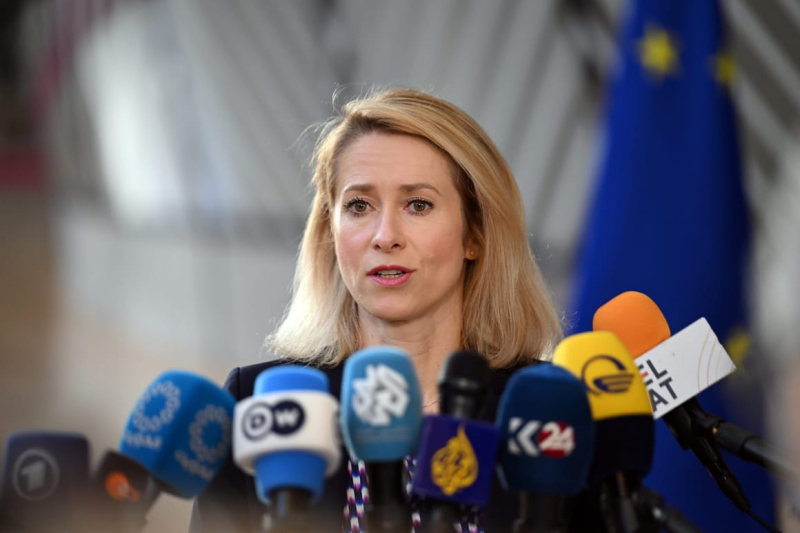
The EU is exploring options to protect the Strait of Hormuz including by changing the mandate of its naval missions in the region, top EU diplomat Kaja Kallas said Monday after U.S. President Donald Trump threatened NATO allies if they don’t help.
But some EU states are already pushing back, with Luxembourg’s Deputy Prime Minister Xavier Bettel saying that his country would not give in to “blackmail” from the United States to participate in the Iran war.
“With satellites, with communications, we are very happy to be useful. But don’t ask us with troops and with machines,” Bettel, who is also foreign minister, said on his way into a gathering of foreign envoys in Brussels on Monday.
“Blackmail is also not what I wish for,” Bettel added.
The EU is under growing pressure from Washington to help secure freedom of navigation in the Strait of Hormuz, with Trump telling the Financial Times over the weekend that it would “very bad for the future of NATO” if European allies fail to respond to his appeals or refuse to participate.
“It is in our interest to keep the Strait of Hormuz open,” Kallas told journalists. “That’s why we are also discussing what we can do from the EU side. We have been in touch with the U.S. on many levels, but of course the situation is very volatile.”
Among the options, Kallas said she was discussing with United Nations Secretary-General António Guterres whether the U.N. and the EU could work together on a plan to secure navigation through the strait, a vital artery for trade through which 20 percent of the world’s oil transits.
The mission could echo the Black Sea Grain Initiative between Turkey, Russia, Ukraine and the U.N. to allow Ukrainian crops to be safely exported despite an ongoing war, she added.
Aspides and Atalanta
Kallas also said that EU foreign ministers would look into changing the mandate of two ongoing EU-backed naval protection missions — Operations Aspides and Atalanta — so that they could help to open the Strait of Hormuz.
Currently those missions — originally conceived to protect EU commercial vessels from attacks by Houthi rebels in Yemen — are not operating in the strait and are bound by rules of engagement that would limit their effectiveness, a senior EU diplomat said.
“We will discuss with the member states whether it’s possible to really change the mandate of this mission,” said Kallas. “We have proposals on the table … The point is whether the member states are willing to use this mission.”
“If the member states are not doing anything with this then of course it’s their decision, but we have to discuss to show we help to keep the Strait of Hormuz open,” Kallas said.
In her remarks, Kallas blasted Trump’s decision to lift sanctions on Russian oil exports as a “dangerous precedent,” saying it was important that the ongoing war in the Middle East did not overshadow Russia’s invasion of Ukraine. Washington lifted the sanctions on Rosneft and Lukoil exports for one month to alleviate pressure on global oil markets amid a surge in the price of oil to more than $100 per barrel following the attacks on Iran.
Even so, the top EU diplomat underscored European efforts to help clear the Strait of Hormuz. Another possibility, she said, was to use a so-called coalition of the willing to secure the strait. This refers to a group of countries rather than the entire 27-member bloc.
“But of course you can see it’s difficult,” she said.
Indeed, no sooner had Kallas spoken than EU foreign ministers started pouring cold water on the idea of joining any mission to clear the strait, with Romania’s foreign minister arguing that NATO was a defensive alliance that had no immediate duty to act in the Middle Eastern war.
Italian Foreign Minister Antonio Tajani, speaking on Sunday to Sky TG 24, said that “none of the European countries” had thus far accepted Trump’s request to help clear the Strait of Hormuz.
“We are trying to work in synchronization with European countries; there is already an agreement that our Prime Minister [Giorgia] Meloni has made with Macron, Merz and Starmer regarding coordination on defense, security and political initiatives,” Tajani said. “We have sent a ship from our Navy to protect Cyprus, because it’s European territory, but this is a different matter.”
Milena Wälde and Hannah Roberts contributed to this report.