

Kyiv is pushing for tougher checks on neutral status, a ban on Kremlin-linked symbols and funding cuts for sports bodies that let Russians compete.
BRUSSELS — Kyiv is stepping up its bid to keep Russian athletes out of global sports tournaments.
“We cannot allow international sport to become the weak link in the democratic world,” Ukrainian Minister of Youth and Sports Matvii Bidnyi told POLITICO from Brussels, where he met EU sports ministers, as legal and political momentum builds for Russian competitors to return.
International Olympic Committee President Kirsty Coventry has said athletes should not pay for governmental actions; top sporting organizations have eased restrictions instituted in 2022 after the Kremlin’s full-scale invasion began; and a Court of Arbitration for Sport ruling overturned ice hockey’s ban on Russian teams.
Ukraine has near-unanimous EU backing for keeping Russian athletes out of European sport, and wants the bloc’s new visa ban on Moscow’s combatants also applied to soldiers who compete on national teams, Bidnyi added.
With the Los Angeles 2028 Olympics on the horizon, the dispute is becoming a test of who’ll shape Russia’s return to world sport: governments, or federations and courts. Kyiv is desperate for Europe to coordinate its response before more restrictions are lifted.
Bidnyi said he presented three demands to EU sports ministers on Nov. 20: a ban on Russian symbols; verified neutral status for athletes; and funding cuts for federations that let Russians compete. He added that the proposals found “wide support.”
“I have heard no voice against it,” Bidnyi said. Asked whether all 27 EU countries are on board, he said that “almost all of them” had expressed willingness to make it a common position.
No propaganda in sport
On Monday, the European Commission proposed barring Russian teams and athletes from competing in the EU, which would also restrict financial flows from Russian sponsors to European sports and cultural associations. The sanctions package needs the approval of all 27 member countries.
In addition, seven EU countries had written to European Council President António Costa and Commission President Ursula von der Leyen before the sanctions package was presented asking for tougher visa rules on Russian nationals.
The countries wanted the Commission’s guidelines on visa applications by Russians to prevent nonessential travel, including to sporting events, rather than wait for a revised Visa Code that is not expected before the first quarter of 2027. They also encouraged fellow EU countries not to grant visas to Russian or Belarusian athletes.
Bidnyi said his three points are designed to stop Russia from using sport for propaganda, while Moscow maintains a relentless bombing campaign against Ukrainian cities and critical infrastructure.
The first measure is a ban on Russian symbols, such as flags or the national anthem. “It’s unacceptable that the anthem of a country that kills peaceful people in Europe today sounds in such a cheerful manner in European arenas,” he said.
The second is to make “neutral athlete” status something that is actually verified. “The neutral status should be maintained by detailed checking,” Bidnyi said. “We must check all aspects.”
The third is money. Bidnyi pointed to the new EU restriction on Erasmus+ funding — the bloc’s main program for education, training, youth and sport — for organizations that allow Russian state symbols, calling it a “first concrete result.” He wants the same model widened to organizations that let Russians use sport as a “tool of propaganda,” whether or not symbols are involved.
Bidnyi also raised the issue of soldiers that have become athletes, which touches the EU’s newest migration measures. The Commission’s visa guidelines, published this week alongside the sanctions package, tell national authorities to refuse visas to anyone who has served in Russia’s armed forces and fought in the war.
Bidnyi said the International Paralympic Committee has tolerated combatants taking part in its events, and that Russia is now trying to put soldiers who fought in Ukraine on its Paralympic teams. He called that “absolutely unacceptable.” Europe, he said, already refuses visas to combatants, and “it should be like this.”
The IPC said it has no rules barring former soldiers from competing, pointing to the movement’s origins in rehabilitating injured war veterans after World War II.
Nor is it its role, the IPC added, “to make moral judgments on which injured soldiers should or should not be allowed to compete.” It said former soldiers from countries including the U.S., Britain, Iraq, Bosnia and Iran have competed, and that it expects more at the 2028 Los Angeles Games.
The IPC said its responsibility is to decide which national Paralympic committees and athletes are eligible and to enforce its conduct rules. It said accreditation for the Games is the final decision of the organizing committee and national authorities, which handle security and background checks. Their organization’s answer did not mention Russia or Ukraine.
Russia’s sports minister, who the EU has also sanctioned, stated in September that more than 70 war veterans were already on national teams. Bidnyi also alleged that the Russian Union of Martial Arts recruits on behalf of units fighting in Ukraine and trains drone operators, and said that should be prohibited.
The Kremlin did not immediately respond to a request for comment about Bidnyi’s assertions about Russia’s military recruitment and wider propaganda strategy.
Ice hockey backlash
Sporting institutions, however, are gradually moving toward Russian reinstatement.
On one side of the confrontation, Bidnyi said, are governing bodies, courts and federations, which are “gradually opening the door to Russians hiding behind claims of neutrality.”
His primary example is the Oct. 30 decision by the Court of Arbitration for Sport (CAS) to overturn the International Ice Hockey Federation’s ban on Russian teams for the 2026-27 season. “The hockey case is the most outrageous example of Russian influence,” Bidnyi said.
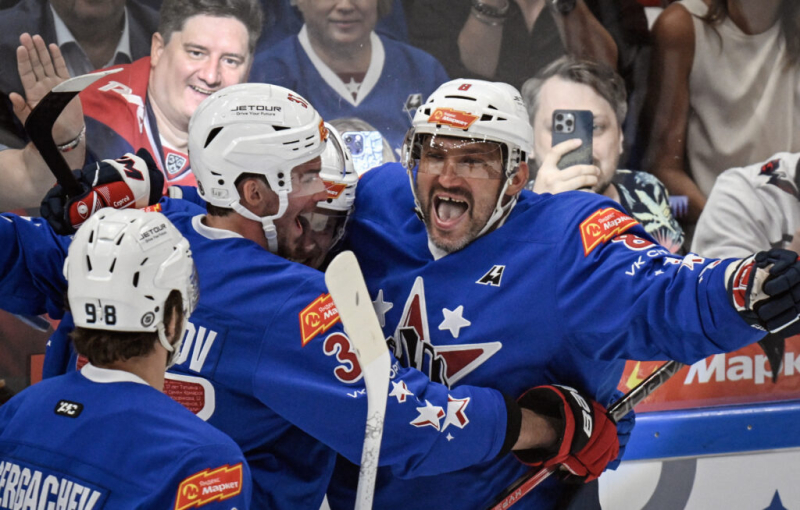
Asked for comment, CAS said that the case, brought by the Russian Ice Hockey Federation against the IIHF, “was decided on a strictly legal basis” and that it is not aware of any circumstance that could have affected the panel’s independence.
Ultimately, that ruling set off a backlash. Finland, Sweden, Czechia, Norway, Austria, Denmark and Latvia have said they will play at next May’s men’s world championship in Germany but not against Russia — which means almost half of the 16 teams are refusing to face Russia. Canada’s government said Russia will not be allowed to play at the world juniors there next month.
Sponsors are also balking, with Skoda, the tournament’s main sponsor, saying it will reassess its backing. The IIHF says it still disagrees with the ruling.
Sanctions have also been lifted in gymnastics, weightlifting and chess, and the international ski federation has cleared more than 400 Russian and Belarusian athletes and support staff to compete as neutrals this season.
Bidnyi expects more of the same. The IOC’s decision to reinstate the Russian Olympic Committee, he said, “has set a dangerous precedent. International federations may now begin lifting restrictions one after another, hiding behind the autonomy of sport.”
Moscow, Bidnyi said, will keep going back to CAS and present every readmission as a propaganda win, with Putin personally overseeing the effort.
On the other side, he said, are governments, which can take a “principled stand” and refuse to let Russian representatives or the symbols of an aggressor state onto their territory. Russian participation “has long ceased to be merely a matter of sporting regulations,” he said. “It is a question of national security.”
The next chance to build a common position is a meeting of sports ministers in Tallinn in January. Bidnyi said it could bring in non-EU countries such as Canada and Norway, which have already taken firm action.