

Unlike Moscow, Kyiv has not deliberately tried to kill civilians.
For most of Russia’s years-long war against Ukraine, Russian civilians have been relatively insulated from Kyiv’s attacks. That is changing.
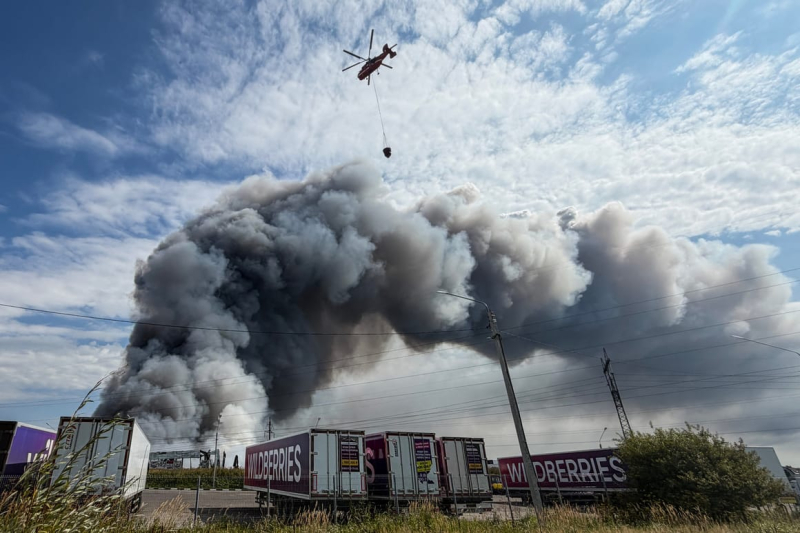
Since July, Kyiv has broadened its long-range drone campaign beyond conventional military targets, intensifying strikes on Russia’s oil and gas industry and hitting the vast warehouses of Wildberries, Russia’s answer to Amazon.
While these are primarily intended to cause economic damage, in the words of Volodymyr Zelenskyy, “to bring the war back home – to Russia,” they also mark another important shift. Ukrainian authorities are increasingly seeing Russian civilian casualties as a price they are prepared to pay for taking the war deeper into enemy territory.
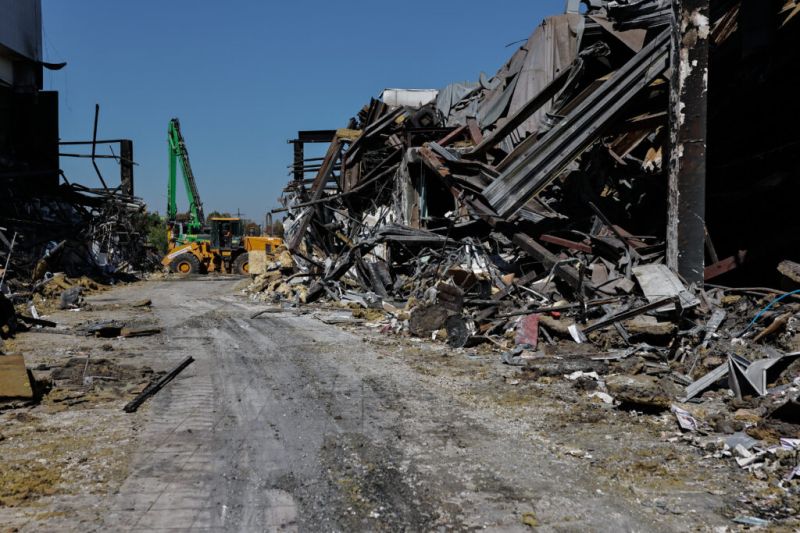
The numbers help illustrate the change. In 2025, Ukrainian attacks inside Russia killed 253 civilians, according to the United Nations, which says it was not able to independently verify the numbers. This year, in the month of July alone, Russian authorities reported that 79 civilians were killed and 601 injured, a marked increase in the casualty rate.
Zelenskyy has said that Wildberries is a legitimate target because it has been “used by the aggressor to ensure the supply of sanctioned components for the production of drones and navigation equipment.” Russian soldiers supplement their equipment by purchasing items from Wildberries.
Maryana Bezuhla, a Ukrainian lawmaker and one of the most outspoken critics of Zelenskyy and Ukraine’s military leadership, is unapologetic about the increased risk to civilians. “Russia’s logistics system is used to wage the war of aggression against Ukraine,” she told POLITICO. “Russia has been targeting Ukrainian civilians all the years of the war.”
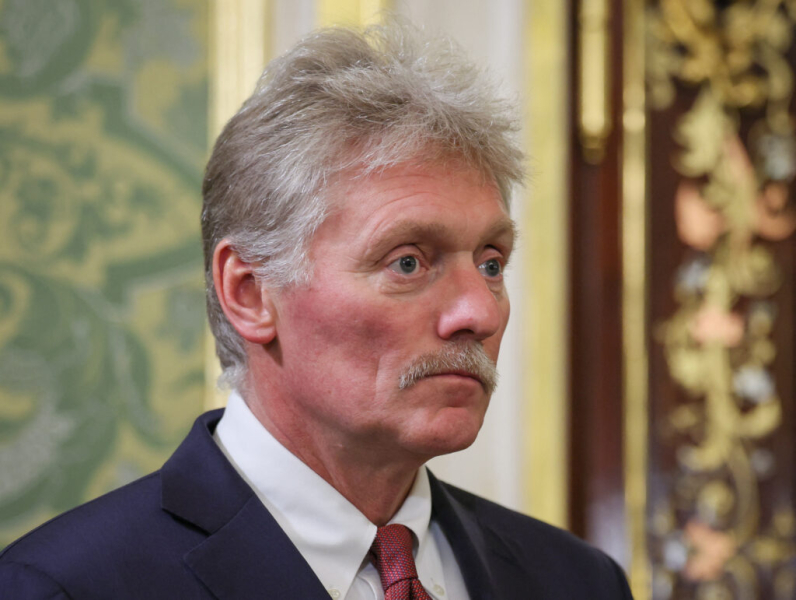
Kremlin spokesman Dmitry Peskov has denied accusations from Ukraine that Wildberries handles military supplies but conceded to journalists that “the situation is indeed difficult” for the company.
There is no indication that Ukraine is deliberately targeting civilians — even as Russia continues to hit apartment buildings, hospitals, schools and other civilian infrastructure with ballistic missiles and drones. And yet, there is no indication that the rising civilian toll in Russia is causing Kyiv to reconsider its approach.
“It is a very important thing to stress from the outset, that any civilian casualties resulting from Ukrainian attacks are collateral damage,” said Jaroslava Barbieri, Ukraine expert at Britain’s Chatham House. “No Ukrainian strikes have deliberately targeted civilian districts.”
“But we know that Russia has been systematically targeting Ukraine’s critical energy infrastructure and civilian districts with the deliberate intent to cause civilian casualties,” she added. “That’s an important underlying distinction to draw.”
On Friday, a Russian drone attack on a busy shopping mall in Kryvyi Rih, Zelenskyy’s hometown, left 16 people dead and more than a 130 wounded, including children. The strike was a double-tap — that’s when second attack on a target is conducted around half-an-hour later and is designed to catch first responders, a tactic used frequently in northern Syria.
Since the war began, Russian officials have consistently denied their forces intentionally target civilians and Russian foreign minister Sergei Lavrov has instead accused Ukraine of deploying troops and heavy weapons close to civilian infrastructure.
Russia has “a clear pattern” of targeting Kyiv and other urban centers with large civilian populations, Rosemary DiCarlo, the U.N. under-secretary-general for political and peacebuilding affairs, told the U.N. Security Council in July.
The U.N. has verified that at least 16,874 Ukrainian civilians, including 820 children, have been killed since Russian President Vladimir Putin launched his full-scale assault on the country in 2022. Ukrainians believe the toll is likely higher, arguing there are many unrecorded deaths near the front lines and on territory occupied by Russian forces.
DiCarlo also expressed concerns about Ukraine’s drone attacks. “Any attacks against civilians and civilian infrastructure, wherever they occur, are a clear violation of international humanitarian law,” she said.
It is an argument that infuriates Ukrainian officials, who bristle when asked about the risks to Russian civilians with the tactical switch. Even asking the question triggers accusations of echoing Moscow propagandists. “You are helping Russia by pushing this civilian stuff,” a presidential aide said. He declined to answer when asked whether Ukrainian commanders adhere to any pre-strike procedures to assess risks to civilians.
The change in tactics has alarmed some European officials, according to Adrian Karatnycky, a senior fellow at the Atlantic Council’s Eurasia Center and author of Battleground Ukraine, who regularly meets with senior European officials and diplomats. “They have always been low-risk and fearful of Russian escalation,” he said.
The shift, he added, has been enabled by Ukraine’s growing ability to manufacture its own long-range drones and by cuts in U.S. assistance that have reduced Washington’s leverage over Kyiv. “There will be noncombatant casualties, but in an existential war you can’t fight with a hand tied behind your back,” Karatnycky said. “Ukraine’s ability to counterpunch is a relatively new phenomenon.”
How will the Ukrainian attacks play out in Russia — will they weaken Putin politically? Tim Willasey-Wilsey, a former U.K. diplomat now at the Royal United Services Institute, a defense think tank in London with close ties to Ukraine’s defense ministry, said Kyiv must try to minimize civilian casualties with the long-range drone campaign.
“There are some risks,” he said. “As we know from the history of warfare, the bombing of civilians tends to actually harden people’s resistance rather than weaken it. Just think of the London Blitz, but also Ukraine now. And second, there is a danger of losing what still is a remarkable degree of Western support for Ukraine.”
“But you cannot wage war without casualties,” he added.