
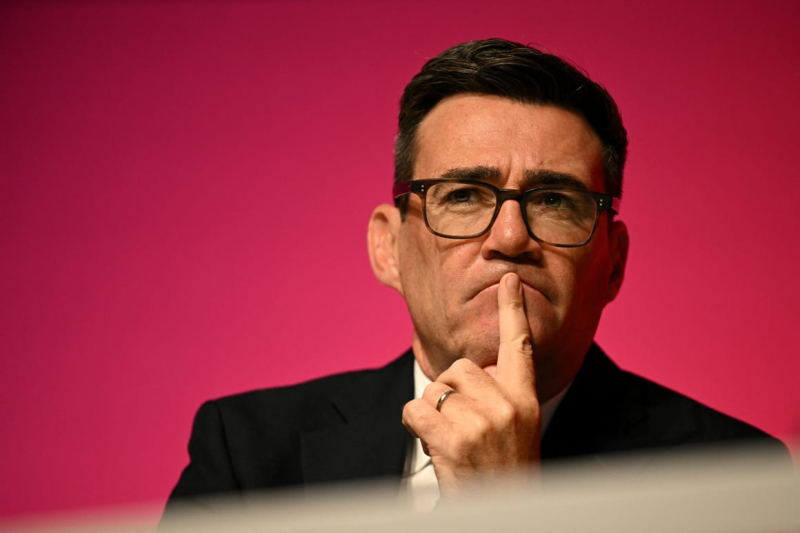

The blue tsunami is prompting calls for Britain’s prime minister to double down on “the politics of trying.”
LONDON — Democratic wins across the U.S. brought a brief rush of excitement to Britain’s left-wing establishment last week — but they also contained warnings for Prime Minister Andy Burnham’s government.
Labour insiders privately cheered the midterm results, interpreting the outcome as a damning verdict on Donald Trump’s politics and a win for Democrats’ unifying strategy of focusing on living standards, despite ideological differences across their slate of candidates.
It’s left Burnham’s followers cautiously optimistic about his approach so far as prime minister, which has included incremental measures to lower costs, such as reducing food tariffs and offering money off energy bills.
A Labour MP, granted anonymity like others in this article to speak frankly, said their own engagement with Democratic New York Mayor Zohran Mamdani’s team had hammered home “the politics of trying.”
“If people think you’re not even trying, which obviously is what they thought about Trump, then you’re just going to get blown away,” they said. By making small adjustments, the MP argued, Burnham has begun to “develop a coherent argument — which is actually voters have to see you trying on the cost of living.”
Yet beyond this apparent vindication of the PM’s basic strategy, members of his party see clear warning signs for the incumbent British government in the U.S. political shift. An administration only just coming out of a dire stretch in public opinion polls, they worry, could take the wrong lessons from the Dems’ triumph across the pond if they don’t heed the deep anti-incumbent sentiment that drove it.
Reasons to be fearful
Burnham has badged his fledgling administration as a “cost of living government” since he replaced Keir Starmer at the top of Labour earlier this year.
Yet he has faced criticism from some quarters that a government-wide budget unveiled last month lacked real ambition — and now the pressure is on to deliver before a general election, due by 2029.
Claire Ainsley, a former adviser to Starmer who works for the Progressive Policy Institute think tank on both sides of the Atlantic, told POLITICO that, despite arguments about the future direction of the Democratic Party, “what they’ve all had in common is a real focus on affordability.”
“They’ve really focused on bread-and-butter issues for everyday Americans, and clearly that’s the path to be building and hopefully winning in 2028,” she said.
Ainsley highlighted striking moves by a host of prominent Democratic politicians, including Mamdani, who has offered childcare support to New Yorkers, and New Jersey’s Mikie Sherrill — who declared “a state of emergency” on utility bills. Virginia’s Abigail Spanberger has targeted the cost of prescriptions.
“You’ve still got people who are worried here and wouldn’t necessarily say the cost of living is being relieved,” Ainsley warned. “You’ve got interest rates going up and there are lots of warning signs on our dashboard.”
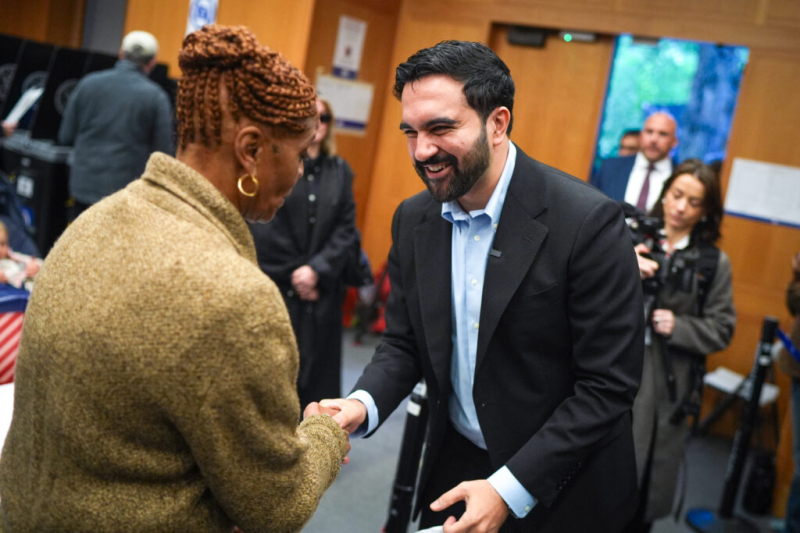
Adam Terry, executive director of the Future Governance Forum think tank, argued likewise that Burnham’s action on the “little things” was part of the answer — but that he has not yet tackled “the big structural questions, namely: why is the economy so sluggish?”
That need to provide deeper solutions to Britain’s woes only raises the stakes for Burnham’s promised ten-year plan and his broader strategy for rewiring the British state, Terry said.
The same Labour MP quoted at the top of the piece — while broadly positive about Burnham’s impact so far — said: “It’s not a coincidence that basically every government in Britain since Brexit has failed usually within 18 months — and I would include in that Keir Starmer’s. Clearly systemic change is definitely required.”
Deborah Mattinson, a Labour member of the House of Lords and pollster who has worked in both the U.S. and U.K., cautioned progressives against believing the age of Trump-style politics is over, “because until things that encourage Trumpism are fixed, it won’t happen.
She added that in the U.S. — and in Germany and France, too — “working people feel the contract that they made with the state has fallen down.”
“The U.K. needs to be really mindful that if you don’t fix those fundamental grievances that people have, then you continue to be in a bind,” Mattinson added.
Up against it
Even those at the top of Labour sense that the PM is up against it if he is to buck the anti-incumbency trend demonstrated by the punishment of Republicans right across the United States.
A senior Labour aide observed that the midterm results strengthened the Democrats as they begin to target the White House in 2028 — but in the meantime they face a similar dilemma of delivery as Burnham.
No.10 Downing Street knows it needs to improve people’s lives, the aide said — but it remains “very difficult” to pull one lever that makes a substantial difference without upsetting financial markets.
Burnham has already been quick to draw a direct line between the U.S. electoral shift and politics closer to home. “I can’t get people’s cost of living pressures down until the conflict in the Middle East is resolved,” he said last week — while urging world leaders to “unite” around efforts to wind down the war.
Here, too, the prime minister may be testing the limits of his own country’s ability to shift the diplomatic dial — while few expect a calmer international picture in which Burnham can really bear down on costs.
Britain will stick to a steady drumbeat of quiet diplomacy for the rest of the year, two people inside government said, including talks with G7 and G20 partners, ongoing contact with Gulf allies, and a bid to maximize the U.K.’s G20 presidency starting in January.
But a minister in Burnham’s government predicted that when it comes to international relations, and especially military action, Trump’s election drubbing “will not make much difference” to his mindset.
Anxiety in London over Trump’s next move has certainly not been quelled by initial post-election ripples within the White House, either. Ministers and aides are watching nervously for further news of Secretary of State Marco Rubio’s future — generally seen as a reliable interlocutor with the U.K. — while one serving British diplomat said Stephen Miller’s installation as Trump’s chief of staff represented a “red flag.”
The senior party official quoted above said: “The U.S.’s relationship with every single country in the world has just been thrown into a level of uncertainty and fluidity.”