
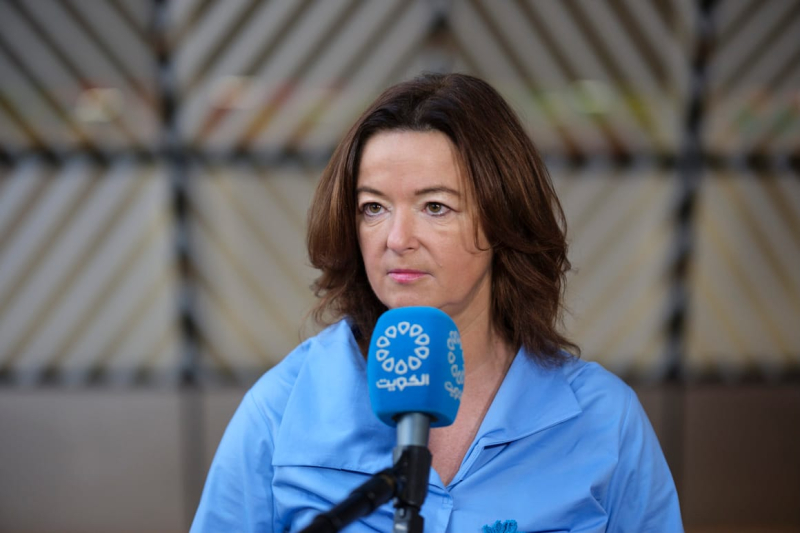

Tanja Fajon had her appointment blocked and now faces prosecution by the government of Janez Janša.
BRUSSELS — The European Commission says it followed the rules in its selection of an envoy to Africa’s troubled Sahel region, even as the person it initially tapped faces criminal charges in Slovenia because of the nomination.
The Commission’s choice of ex-Slovenian Foreign Minister Tanja Fajon — which was reversed after criticism from Prime Minister Janez Janša — risks putting the bloc on a collision course with the country’s new government.
Responding to a question from POLITICO, Commission spokesperson Anouar El Anouni said Tuesday that the selection for the Sahel envoy post had taken place “in line with the process.”
Danish diplomat Birgitte Nygaard Markussen was appointed to the role last week. Her brief oversees relations with countries across a 6,000 kilometer stretch of land running from Africa’s Atlantic coast to the Red Sea, a region roiled by war, drug trafficking and instability.
Fajon was put forward by the European External Action Service, the EU’s foreign policy wing, four people with knowledge of the discussions told POLITICO, but was withdrawn after the Slovenian government raised objections.
Since taking office in June Janša has criticized the previous Slovenian government, where Fajon served as foreign minister.
Janša has claimed that Fajon, a former MEP from the country’s center-left party, was never formally nominated and was put forward “by a secretary who reported directly to her.” The government has filed criminal charges, alleging irregularities.
Slovenia’s center-left president, Nataša Pirc Musar, took aim at the move last week, saying she was “disappointed by the government’s actions” and alleging they would lead to Slovenia being underrepresented in international roles. “The failure to appoint Tanja Fajon as the EU Special Representative for the Sahel may thus be a small victory for a certain political faction, but it is at the same time a major defeat for the country,” she claimed.
“The EU Special Representatives are appointed by the Council on a proposal from the High Representative for Foreign Affairs and Security Policy,” Commission spokesperson Guillaume Mercier said. “We do not comment on ongoing national cases.”