
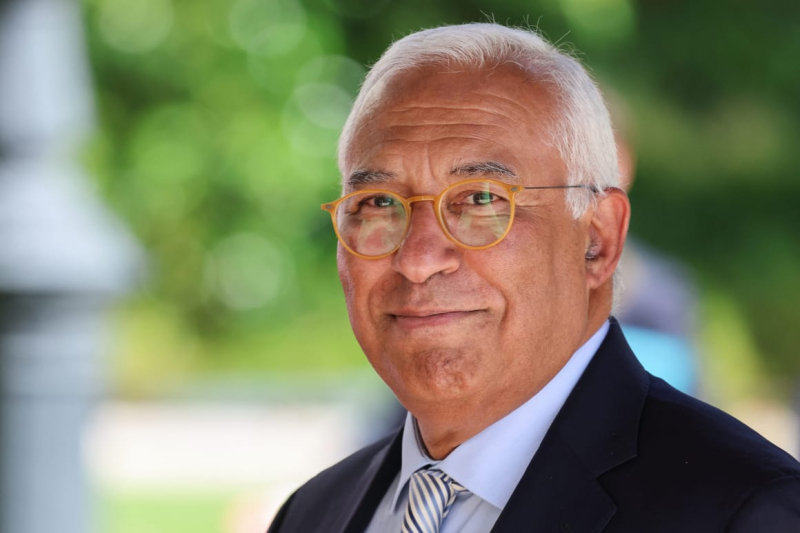

The nice guy of EU politics has angered leaders for the first time. Now comes his biggest challenge.
BRUSSELS ― Few of the EU’s current chiefs have dodged criticism as well as António Costa. But is the shine wearing off just as he gears up for re-election?
As a crucial few months loom ahead for the European Council president ― he’ll be tasked with herding the bloc’s 27 national leaders toward agreement on the EU’s next seven-year budget ― he has made his first serious misstep, according to diplomats. Often praised for his sure-footedness and ability to build consensus, the former Portuguese prime minister suddenly finds himself in the line of fire, with the heads of the bloc’s two most powerful countries among those most aggrieved.
Since he started his role in December 2024, Costa has won little but plaudits from the leaders he represents and on whose support he depends. But a current of annoyance that had started to emerge over the past few months surfaced at a summit he chaired last week: His chief of staff’s unannounced contact with Russian officials, which broke years of diplomatic silence between the EU and Moscow, caught many by surprise.
In public, leaders lined up to defend him. Spanish Prime Minister Pedro Sánchez said the Russia contact was “understandable,” while Belgium’s Bart De Wever dismissed it as “completely normal” ― even joking to Costa in front of the cameras that the EU should send him personally to Moscow. But behind the scenes the discontent was palpable, according to nine diplomats working for nine separate national leaders at the summit. They spoke to POLITICO on the basis of anonymity due to the confidential and sensitive nature of the issue.
“Costa pulled a Michel,” was perhaps the most damning assessment from one of those diplomats, a reference to Charles Michel, Costa’s predecessor and a former Belgian prime minister, whom many leaders considered to be sub-par during his time in charge from 2019 to 2024. Michel had a reputation for overplaying his hand and attempting to set policy without consulting member countries ― exactly what Costa was being accused of here.
Estonian Prime Minister Kristen Michal went the furthest in public about the dispute, calling Costa’s move “misguided” in an interview with POLITICO, and arguing that the EU can’t be both a mediator in the conflict and a backer of Ukraine. Lithuanian President Gitanas Nausėda told Bloomberg: “I don’t think right now is the right time to start negotiations with Putin.”
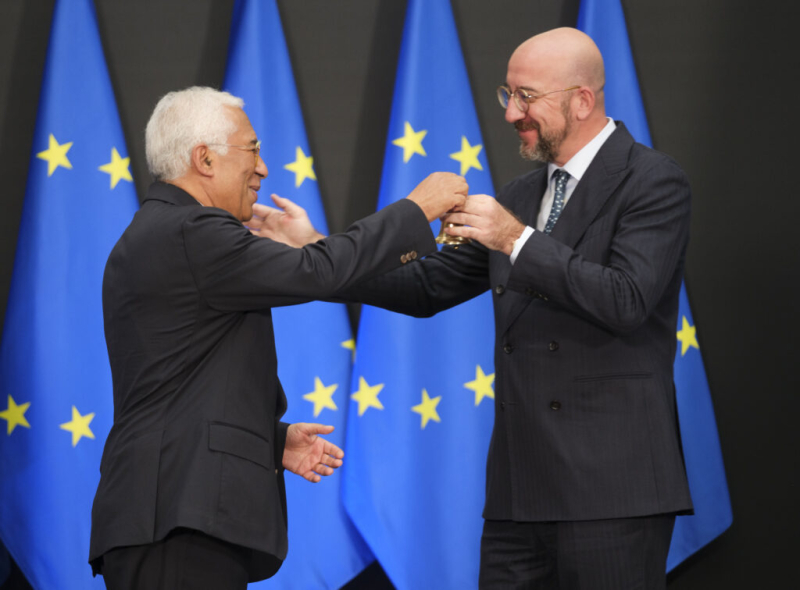
Any criticism of the European Council president from governments is significant, given that his role is to act on behalf of those leaders. While in public the discontent was restrained, in private French President Emmanuel Macron and especially German Chancellor Friedrich Merz let it be known they were unhappy. One other leader was visibly angry when talking to journalists in a private meeting.
“There are issues, no doubt,” said one of the diplomats. “But we’re not at the level of Michel.” Another called Costa’s move an unpleasant surprise.
A spokesperson for Costa declined to comment for this article. His office last week insisted the outreach to the Kremlin had not been an attempt to kick off negotiations or mediate between Russia and Ukraine, but instead to contribute to opening a channel of communication so the EU is ready if and when Russian President Vladimir Putin gets serious about peace talks.
‘Big few months’
The controversy could have a knock-on effect, not only on Costa’s prospects of returning for another two-and-a-half year term ― the leaders themselves choose who gets the job ― but also on his ability to win trust from governments just as he oversees one of the EU’s thorniest internal negotiations: the bloc’s next seven-year, €2 trillion central budget. It’s a race against time, because many in the EU believe Costa needs to strike a deal before several important elections happen in 2027, most notably April’s presidential vote in France. If that vote results in a far-right head of state, they are likely to be far less amenable to compromise.
Costa “has a big few months ahead of him,” said one of the diplomats. “He’s been quietly efficient until now. One hopes that questions about him mean he hasn’t made things more difficult for himself.”
The debate about who should represent the EU with Russia ran so long on Thursday night that leaders were two hours late to dinner and were forced to push back a planned discussion about China. The disarray exposed Costa’s weakness as he was unable to corral the bloc’s heads of government and ensure proper time allocation for various points on the agenda, one of the diplomats said.
But most warned the affair shouldn’t be exaggerated, noting Costa still had credit in the bank. One of the diplomats said they doubted he had damaged his relationship with leaders so badly that his political survival was in jeopardy.
“Not a bit,” the diplomat said when asked if Costa’s re-election was in peril, adding his Russia outreach “was backed by most countries. And everyone is on the same page in doing what is in Ukraine’s best interest.”
Costa two-and-a-half-year term expires in May 2027, and the view is widespread among governments that he will be reappointed. But any doubts on that score could change the delicate political arithmetic around the distribution of top jobs across Brussels.
The most vocal
As issues come and go, and with leaders across the political spectrum occupied with their own domestic concerns, being president of the European Council can often appear a poisoned chalice. That’s even before evaluating how the role corresponds with that of the president of the European Commission, in particular over who represents the EU on the world stage.
It fell to Slovak Prime Minister Robert Fico, often one of the bloc’s most contrary leaders, to offer Costa backing.
“I support the president of the European Council and welcome the fact that his team has moved in this direction,” Fico said of the Russia outreach. “There are several prime ministers who share this view, and I am probably one of the most vocal among them.”
Costa will welcome that support ― if not the division around the European Council table that it implies.
Camille Gijs, Jacopo Barigazzi, Gerardo Fortuna, Nicholas Vinocur, Zoya Sheftalovich and Gabriel Gavin contributed to this report.