
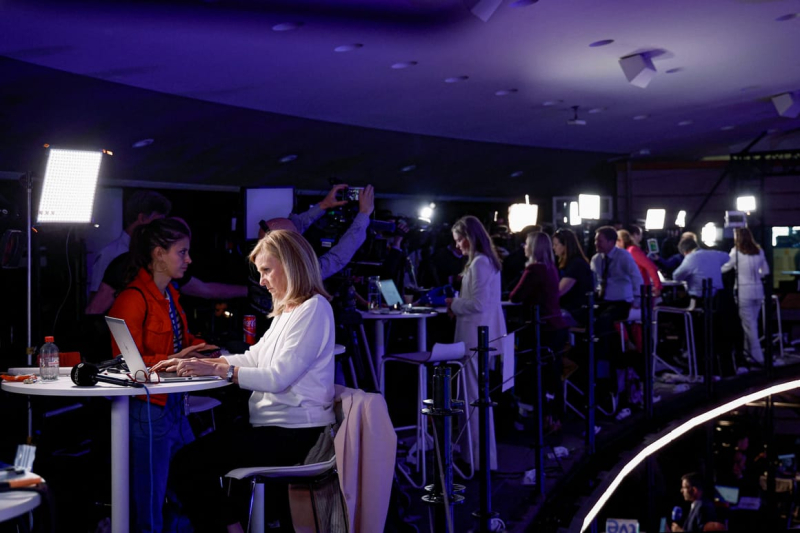

Council’s plan to invite influencers to summits had caused consternation.
BRUSSELS — Influencers attending high-level EU meetings of ministers and leaders will not be replacing journalists, a content creator working with the Council of the EU said.
Pietro Valetto, a 27-year-old influencer, has been invited to the Council next week for what was dubbed an “exclusive experience” in which creators will get to see behind the scenes at the EU institution. From July, influencers will also be invited to EU leaders’ summits in Brussels as well as certain ministerial meetings, as POLITICO reported earlier this month.
That announcement prompted pushback from journalists who cover these summits and meetings. But Valetto said influencers won’t undermine the work of accredited reporters.
“It’s a separate thing from journalists,” Valetto said. “It’s not like what the U.S is doing, where the White House invites specific creators to cover them,” he continued.
Any content creators invited to EU summits will be able to attend press conferences and doorsteps, but won’t be allowed to ask questions, under plans by the Council presented to diplomats earlier this month.
“Content creators will be accompanied at all times and will not be treated as media, including when it comes to accreditation or access to media opportunities,” a Council official said.
Dafydd ab Iago, president of the Brussels-based foreign correspondent association, API, has criticized the move.
“Clicks, views and impressions are great on TikTok and Instagram. But the basic fact remains: influencers in press conferences and at summits will not have to disclose who pays them,” he said.
“By contrast, EU-accredited journalists are not expected to accept payment in return for writing nice stories. It’s sort of called journalistic ethics.”
Valetto maintains that the role of influencers will be different, describing himself as a “disseminator” of information.
“It’s more like showing off the institution because at the moment it’s suffering a lot compared to the Commission and Parliament,” he said. “People don’t really know what the Council is.”
But he said that the influencers — who are not being paid — who are invited to visit the Council can decide what they want to highlight, with no “deliverables” required by the Council in exchange for access.
The Council’s move follows similar pitches by the other two main EU institutions to welcome content creators in a bid to find new audiences.
As part of a recent European Commission campaign, Protect What Matters, focusing on security, democracy and peace, the EU executive selected 50 creators to work on the campaign.
“They are not being paid and have full editorial freedom to decide if and how to support the campaign,” the Commission spokesperson said.
The Parliament “makes the biggest use” of creators, Valetto said, pointing to food bloggers and fashion influencers who have been invited to events in Brussels or plenaries in Strasbourg.
“That’s because they want to reach new audiences,” he said. “Maybe they [the Parliament] get three or four days of coverage in front of an audience that doesn’t normally consider it.”