
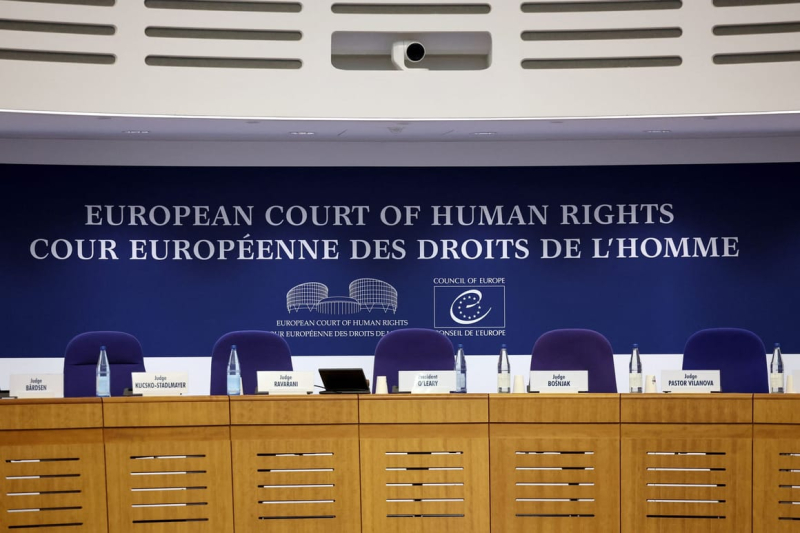

The update comes amid public debate in European countries about the convention’s effect on deciding migration cases — and threats by some parties to withdraw.
CHIȘINĂU, Moldova — European governments have agreed to “clarify” how the European Convention on Human Rights applies in migration cases — in a bid to fend of populist attacks on the 75-year-old agreement.
At a meeting in the Moldovan capital Chișinău on Friday, the 46 member countries of the Council of Europe published a declaration giving the green light to national courts to set a “high” bar for the application of some rights.
It comes amid public debate in some European countries about the convention’s effect on deciding migration cases — and threats by some parties to withdraw.
The new declaration, agreed by consensus at a session on Friday, warns that failure to address the concerns would “weaken public confidence in the Convention system.”
One of the countries pushing for the change was the U.K. — where two major opposition parties, Reform UK and the Conservatives, have both said they will leave the ECHR if elected in 2029.
Ahead of the meeting, U.K. Foreign Secretary Yvette Cooper said the declaration would “ensure that immigration systems can’t be unfairly gamed to prevent foreign criminals or those accused of crimes abroad being lawfully returned” and “reflect the realities of today.”
Speaking on the doorstep of the Chișinău summit, Cooper said the agreement was “an example of how the partnerships that we build abroad make us stronger at home.”
The country’s chief legal adviser, Attorney General Richard Hermer, meanwhile said the clarification would ensure the convention “endures for another 75 years and beyond.”
Hermer told POLITICO on the sidelines of the Chișinău meeting that the U.K.’s Labour government was “using our partnerships” with allies cross Europe to pursue Britain’s interests.
“Contrast that with both Conservatives and Reform — who simply want to walk away from our allies,” he said.
“They said, indeed hoped, that this Political Declaration wouldn’t happen because it undermines their argument – change is possible, as we have shown.”
He added: “Leaving the ECHR — as both the Conservatives and Reform advocate — would not solve any of our challenges.
“It would simply mean the U.K. joined Russia and Belarus as the two European countries outside of the Council of Europe, isolating us on the world stage and offering false promises to the British people.”
Balancing act
Key points in Friday’s declaration include a statement that the bar for something to be considered “inhuman or degrading treatment” under Article 3 should be “high and consistent.”
It also notes that the Article 8 right to family life must be applied with the right “balance” struck between individual rights and “public interests.”
The document states that it has been drafted with a view to “avoiding unnecessary constraints on decisions to extradite, or to expel foreign nationals.”
The declaration does not change the wording of the actual Convention rights but seeks to influence their application through domestic courts and their interpretation by national governments.
“Parties have the undeniable sovereign right to decide on and control foreign nationals’ entry into and residence in their territory,” the declaration says.
“They have the right to establish their own immigration policies, potentially in the context of bilateral or regional co-operation, and pursue immigration control as a public interest. However, these rights must be exercised in accordance with the provisions of the Convention.”
Alain Berset, secretary general of the Council of Europe, which oversees the treaty, said: “We have been able to bring together countries across Europe, with different views and experiences, to agree a common position on how the system should work best, notably in the challenging context of migration.
“Looking ahead, this will help to guide our own work as well as that of national authorities and domestic courts.”