

Following U.S. budget cuts, the city’s international neighborhood faces decline.
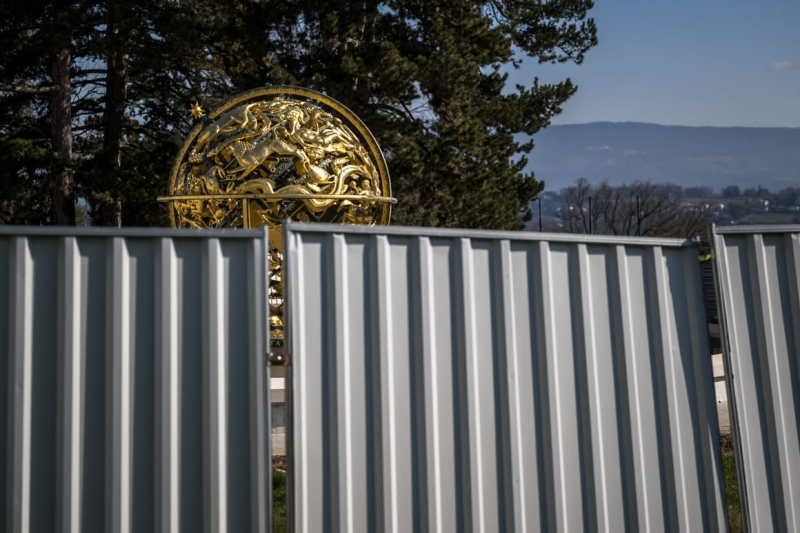
On a cold morning in the once-bustling International Geneva neighborhood, the square in front of the Palace of Nations stands empty. The many gray buildings are still, the lights in the windows few, the conference rooms eerily silent.
Geneva is among the world’s few select cities, like Brussels and Nairobi, where international organizations make up a substantial proportion of the local economy. It is a hub for about three dozen United Nations agencies and more than 400 nongovernmental organizations under the aegis of the U.N. Secretariat — all gathered within a 1.7 square-mile radius. In 2024, it was home to more than 36,000 international staff, generating nearly 7 billion Swiss francs in spending.
For a city of only about 210,000 residents, these institutions were a symbol of economic and multilateral prosperity. But that affluence is now under threat.
The sweeping shift away from multilateralism that has marked U.S. President Donald Trump’s second term and triggered significant budget cuts is now hollowing out Geneva’s international community.
“Business as usual is over. Over 80 years, the U.N. has grown bloated, unfocused, too often ineffective,” said U.S. Ambassador to the U.N. Jeff Bartos in October 2025, setting the tone for what was to come.
In late December 2025, the U.N. voted on a budget of $3.45 billion — 7 percent lower than the previous year. On Jan. 7, 2026 Trump issued a presidential memorandum withdrawing the U.S. from 66 U.N. organizations and international entities, more than 10 of which had headquarters in and around Geneva. And by the end of the month, Secretary-General António Guterres was already warning of a potential “imminent financial collapse” as early as July.
“Every organization is now considering the same idea: outsource or relocate,” said Laura Johnson, executive secretary of the U.N. Office at Geneva Staff Union.
Indeed, the layoffs have already begun. In 2024, Geneva hosted about 12,000 of the U.N.’s 131,000 employees — around 9.3 percent of the organization’s staff. Now, the World Health Organization has announced plans to cut more than 800 jobs in its Geneva headquarters through June 2026. Gavi, the Vaccine Alliance, reduced its staff by about one-third in 2025. UNICEF announced the transfer of 290 posts — a majority of its Geneva staff — to Rome. And UNAIDS cut its Geneva workforce from about 127 to roughly 19.
“No one feels untouched,” said Johnson. “The mood is heavy. Everything is highly uncertain.”
Walking the neighborhood after that first wave of cuts, expecting to see the usual crowd of U.N. staff wearing their signature light-blue lanyards, that uncertainty hangs in the air — and it’s likely just the beginning.
A shrinking workforce
The consequences of the funding shift carry an institutional toll — one that collides with a cost-of-living crisis that was already plaguing the U.N. hub. Meanwhile, for its affected workforce, the human implications extend far beyond job loss.
U.N. staff who lose their positions cannot remain in Switzerland because their work permits are directly tied to their U.N. status, and they must leave the country within two months. For employees with disabilities or families with school-aged children, that timeline is devastating. And for those left standing, there is the harsh reality of mounting uncertainty.
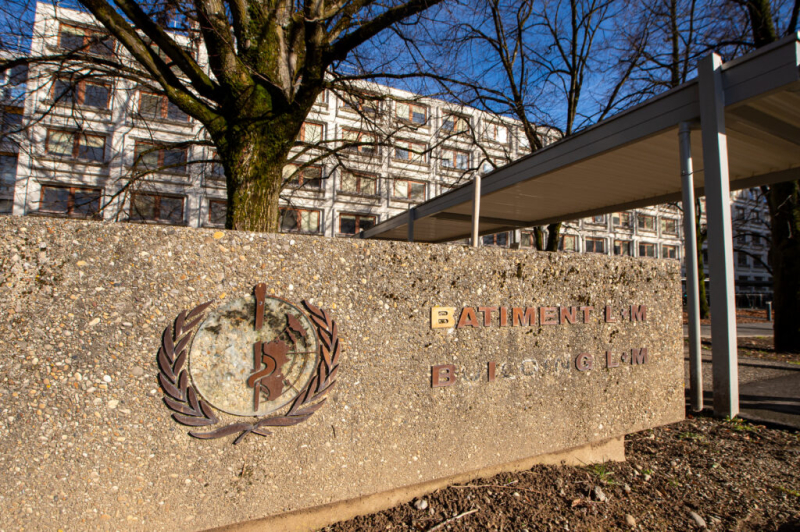
“The work environments from colleagues that are still working throughout last year became extremely toxic,” said Emily Siu, describing the atmosphere preceding her departure from the International Organization of Migration after her contract wasn’t renewed in February 2025 — less than a month after Trump’s first announcements on international funding cuts.
“Colleagues didn’t know on a month-to-month basis whether they would stay or whether they would go. There was a lot of what felt like backstabbing — trying to remove certain projects from some colleagues … in order to better position oneself so as not to lose their job.”
There is no financial safety net either. At the time of her dismissal, Siu had been contributing to Swiss unemployment insurance for four years. But upon losing her job, she was told she could not draw from it. International staff, as U.N. employees, are exempt from Swiss social security law, which means they are also excluded from its protections.
Veronica Forin, an Italian citizen who was also laid off in February 2025, had been working at the International Catholic Migration Commission for nine years and living in Geneva for 12.
“The United Nations always had this motto: ‘Leave no one behind.’ Well, not only have they left everyone behind, but now they are [left] behind themselves,” she said. Forin has since found another position in Geneva, allowing her to stay.
Most organizations, Johnson noted, are trying to reduce forced layoffs through voluntary departures and early retirement programs, but that still won’t be enough to balance the budget. The deeper issue, she said, is structural: The U.N.’s official budget has never reflected its actual cash flow because member countries consistently fail to pay in full and on time. So, cutting the theoretical budget doesn’t fix the funding gap.
“We used to receive 80 percent of a higher amount; now we will receive 80 percent of a reduced amount. It’s useless,” she said.
Speaking to me in his Geneva office, U.S. Ambassador to the U.N. Mike Waltz questioned the model directly: “Why should the main U.N. offices be located in the world’s most expensive cities? In a modern, interconnected world, the physical location of employees is less relevant.”
According to Numbeo’s 2026 index, the city has the second-highest cost of living in the world behind Zurich — which is why U.N. officials there are well paid.
Each staff member receives a tax-free base salary, identical worldwide for equivalent positions, plus a post adjustment for local cost of living. In Geneva, that adjustment adds 93.8 percent on top of the base salary. In Rome that number is 31.5 percent; in Nairobi it is 39.6 percent.
According to a 2024 study by the Foundation pour Genève, salaries represent approximately 60 percent of the total spending of Geneva’s international organizations. Moving an employee to Rome, for example, would save them roughly 30 percent of that salary.
But defenders of International Geneva counter with what officials call “institutional density.” With agencies, missions, NGOs and financial organizations clustered within walking distance of each other, the proximity, they argue, accelerates expert-driven negotiations that produce international standards.
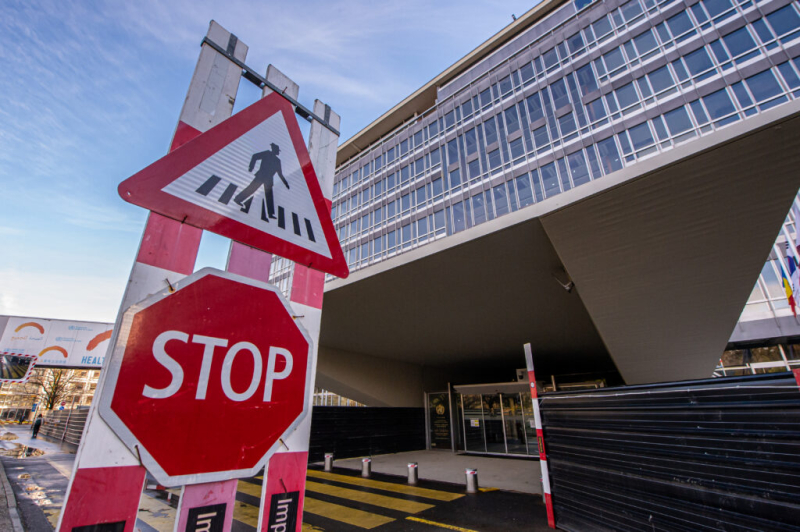
Switzerland’s newly appointed Ambassador to the U.N. Thomas Gürber, for example, acknowledged the financial logic of relocation but cautioned against it: “The first thought that must have crossed the minds of the heads of all these organizations — and of their chief financial officers — was probably that if they relocate certain positions or even entire entities, it will immediately reduce their expenses.”
But, he explained, fragmenting “opportunities for collaboration and synergies is a strategy that will prove very costly over time.” Plus, financial calculations must account for factors like security costs and immediate access to a highly skilled workforce. He noted, too, that the U.S. hasn’t withdrawn from the U.N. in general.
The fate of the neighborhood
Geneva’s rise as the world’s diplomatic capital was deliberate and slow.
First, it was Switzerland’s neutrality that made it a convenient host: The Red Cross was founded here in 1863, and the first Geneva Convention signed the following year. The League of Nations arrived in 1920, and when it collapsed after World War II, the U.N. Secretariat inherited its infrastructure. Many agencies and NGOs followed, like bees gathering around a queen, forming a dense international hub. And for decades, this hub buzzed year-round.
Today, however, it is contracting. And the move away from Geneva has consequences that reach well beyond the neighborhood and into the city itself.
The diplomatic pole of the local economy represents about 11.4 percent of Geneva’s GDP. “There is an entire local economy built around Geneva that is tied to this. It’s a massive loss of earnings because you have thousands of families leaving — the impact is both enormous and negative,” said Fanny Badache, a postdoctoral fellow at the Center for International Studies at Sciences Po Paris.
Outgoing Geneva Mayor Alfonso Gomez is worried as well. When international employees leave the city, other jobs unrelated to the cuts are also lost, he said: “Several thousand jobs at some point risk disappearing directly. So, it will, of course, also have repercussions in terms of indirect employment.”
It’s not all bad news though, as the move away from Geneva may ease one long-standing pressure: housing. The canton’s vacancy rate stands at 0.34 percent — that’s four empty units for every 1,000 homes. For comparison, Brussels’ vacancy rate stands between 1.5 and 3 percent. High salaries in both the international and finance sectors, coupled with strong demand, have driven prices up.
But the city’s more pressing real-estate concern is office oversupply. And if the international pole continues to shrink, significant volumes of office space will be left vacant — especially in the nonresidential International Geneva.
“There is an economic dynamism that, for now, is still very much present and that we hope will remain so. For us, what matters is avoiding a situation where certain neighborhoods become ghost areas,” said Gomez.
In response to the situation, the canton voted to create the Foundation for the Adaptation of International Geneva (FAIG) in May 2025, allocating 50 million Swiss francs — half from the Swiss government, half from the Hans Wilsdorf Foundation that owns Rolex — to help modernize organizations and develop joint capabilities between them. The foundation has already approved support for nine projects, with planned contributions reaching nearly 13.5 million Swiss francs, according to FAIG president Martine Brunschwig Graf.
“If everything collapses, then it collapses,” said Brunschwig Graf. “But we are nowhere near that point. I believe deeply in the resilience of institutions.”
That resilience is harder to see on the ground. Alan Giannastasio, the owner of the Japanese-Peruvian fusion restaurant Lima Nikkei whose clientele is mainly international staff, said he has already sensed a decline in frequency from regulars since mid-November. “I’m worried. And I hear the clients talking with each other about the Geneva decline,” he said.
Still, Ambassador Gürber remains optimistic about the future — though measured: “The international cooperation hub of Geneva will probably be slightly smaller, more compact and perhaps also more agile,” he said. “More innovative, ideally, and no less attractive.”