

The mayor of Genoa is staying coy on whether she will make a big push into national politics before a general election expected next year.
GENOA, Italy — Italy’s fragmented left has found a new figurehead, and she’s rapidly turning into a potential challenger to right-wing Prime Minister Giorgia Meloni.
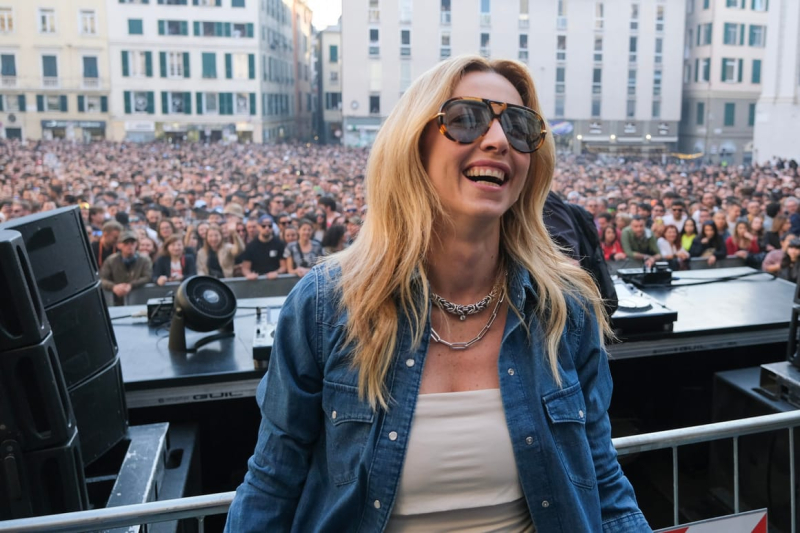
Former Olympic hammer thrower Silvia Salis, now mayor of Genoa, seized the national spotlight earlier this month when she hosted a giant techno party in the northern port city’s Piazza Matteotti. Images of her at the DJ’s mixing decks spread rapidly across social media.
The contrast with Meloni, whose first act in office was to crack down on illegal raves, was impossible to miss.
Her timing to burst onto Italy’s political stage could hardly be better. Meloni’s government suffered a stinging defeat in a referendum on justice reforms in March, inspiring a fresh confidence among opposition parties, who suddenly felt they had a chance of winning the next general election, which must be held before the end of next year.
But before that, the left will need an electable candidate.
The 40-year-old Salis is coy about whether that is her. In remarks to the daily newspaper La Stampa in early March, she confessed: “I would be lying if I said I wasn’t interested in pursuing [national politics] someday.” She has been more cautious since then, however, as she plans her next move against a backdrop of high expectations nationwide.
In an interview in the mayor’s 16th-century palazzo overlooking Genoa’s landmark lighthouse, she noted her followers on social media were now “continually” pressing her to make the jump to the national stage.
But for now, she’s holding fire. “The people of Genoa voted for me as mayor, so they expect me to do that,” she told POLITICO, sipping a large glass mug of milky coffee behind a desk scattered with sports memorabilia and photos of her three-year-old son.
Rising profile
Despite her caution, she’s already building momentum.
A recent poll conducted by Noto suggests that her (as yet non-existent) party list could command about 6.5 percent nationally. That’s remarkable given she does not have a party and has not declared her candidacy. It would also bring support for Italy’s leftist coalition to 45.5 percent, within a whisker of the right-wing coalition on 46.8 percent.
Right-wing newspapers are also now attacking her almost daily, in a telling sign that she is already unnerving parts of the establishment from her northern base.
For now, the two main heavyweights for a primary contest on the left are Elly Schlein, leader of the Democratic Party, and Giuseppe Conte of the populist 5Star Movement. Salis says she does not want to be part of a primary — or even vote in one — sparking speculation that her plan is to swoop in late as a potential election contender.
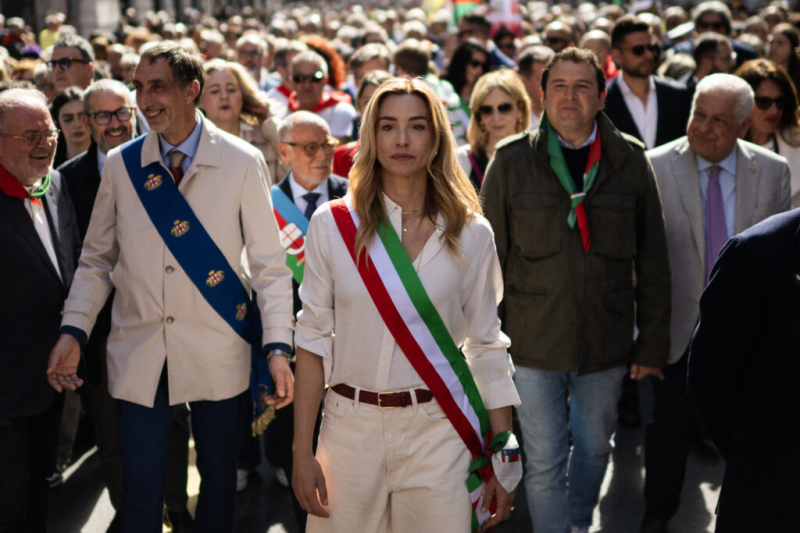
Rather than primaries, Salis argued the candidate should be chosen by agreement between the parties. When asked whether she was thinking of the precedent set by her own mayoral campaign uniting parties in Genoa, she replied: “Yes. For example.”
In her interview with POLITICO, she suggested she had what it takes to unite the left. After all, she won the mayoral race in Genoa as a moderate, securing backing from parties across the center and left.
“As an athlete, to win anything — regional, national, Olympic — you have to make sacrifices,” she said. “And the same goes for politics. To win, you have to stay united, which means compromise.”
She insisted that a lack of unity was the only thing holding the left back from mounting a serious challenge to Meloni. “It’s not a question of the leader, but of presenting yourselves united, giving that message of compactness, of a progressive force ready to govern.”
Like Meloni, she leans into a narrative of normality, presenting herself as the product of everyday Italian life. The daughter of a sports groundsman, she described a modest upbringing. “I practically grew up on an athletics field.”
As a hammer thrower, she was a 10-time national champion and two-time Olympian before an injury ended her career shortly before the Rio de Janeiro Games in 2016. She was vice president of Italy’s Olympic Committee when she was tapped for mayor as a compromise candidate, from outside politics.
Away from the athletics field, she’s still kept herself in shape over the past decade. She sports gym-toned biceps and runs on a treadmill for an hour every morning.
Meloni’s missed opportunity
Her appearance has triggered both attention and derision, with her critics mocking her influencer-style cachet. Designer clothing and a carefully curated image have become part of the political debate, with critics mocking her Bottega Veneta sunglasses and €1,200 Manolo Blahnik heels.
“Misogyny in politics is real,” she retorted when asked about the critics. “We have a song: If you’re beautiful, they throw stones at you; if you’re not, they throw them anyway.” For women, she argued, judgment is constant. “Everything moves away from competence to the personal, the private.”
Salis’ broader response to the chatter about her fashion sense is to shift the focus back to political substance, pointing to what she sees as the Meloni government’s failures on issues such as security, poverty and health care.
Then, of course, there was Meloni’s ill-fated alignment with Donald Trump.
“Let’s not forget she backed him for a Nobel Peace Prize … these things don’t age well,” she said.
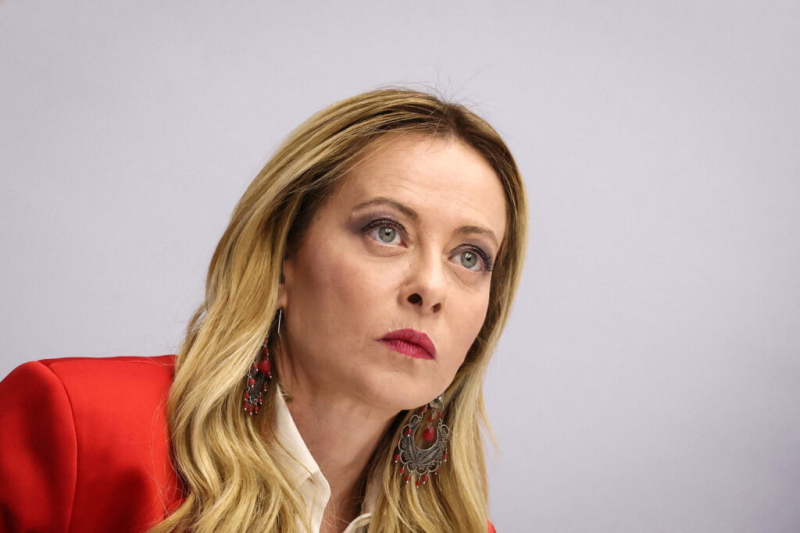
Salis also argued Meloni had failed to use her premiership to win broader gains for women.
“Being the first woman to lead the government is a missed opportunity,” she said, claiming that initiatives to support women have been rolled back. “It’s not enough that your personal career trajectory went well if you don’t give a real impulse to policies that support women.”
If she were in government herself, she insisted she would help women by funding social services such as childcare, elder care and support for vulnerable families. “When those services are underfunded, it’s always women who pay the price,” she said.
Salis’ most prominent initiatives as mayor have been progressive. Her first act was to register the births of 11 children born to lesbian couples abroad, blocked by her right-wing predecessor. She has opened a municipal office for LGBTQ+ rights and introduced a minimum wage for city contracts. She also backed pro-Palestinian causes.
Winning the center
But amid talk of a national role, she has increasingly shifted her politics toward the center, with a focus on mainstream issues surrounding health, labor, security and migration.
The left, she argued, must focus on “pragmatic, concrete” issues.
In a competitive contest on the left, Salis’ limited political experience could count against her, but she argued that she was adaptable. After all, she has taken control of one of Italy’s most important cities “by assembling a competent team and learning day by day, like anyone in a new job.”
Experience, she argued, came in different forms. She pointed to the discipline of elite sport and her work within Italy’s Olympic system, where she dealt with ministries, international partners and major events. “It exposes you to how an administrative machine works,” she said.
Italian politics is filled with mayors who seem poised for national roles, but success at the city level does not necessarily scale. Not everyone is a Matteo Renzi, who used his job as mayor of Florence as a springboard to becoming prime minister. 5Star Movement Mayor of Rome Virginia Raggi saw her credibility eroded by the realities of governing.
Italy’s left sees Salis as a candidate with a compelling personal story and a lack of political baggage, who can bridge divides and connect with younger voters.
Whether that is enough to challenge Meloni, or will simply be the latest chapter in Italy’s cycle of rising outsiders who then disappear, remains uncertain.
What is clear is that Salis is forcing a conversation the left can no longer avoid: not just on who should lead, but what it is willing to sacrifice to win.
“The left always makes just one mistake, otherwise it would govern continuously,” she said. “It always shows up divided … You have to ask yourself: Is it better for me to join the government by sacrificing a small part of my ideology, or is it more important for me to stick to my hardline, uncompromising stance and lose the election, and count for nothing as the opposition?”