

Budapest’s next government is drawing up a fast-track reform plan to claim billions in EU cash.
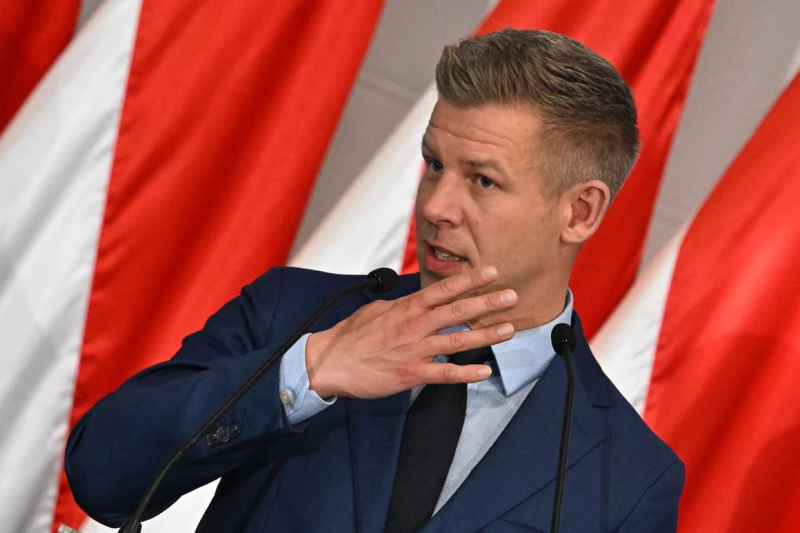
BRUSSELS — Péter Magyar is coming to Brussels to hash out with Ursula von der Leyen how Budapest can unblock Hungary’s frozen EU funds.
The incoming Hungarian prime minister will meet the Commission president on Wednesday as his team tries to identify the fastest route to releasing billions in EU cash, including €10 billion that Budapest risks losing permanently at the end of August if it fails to make the necessary reforms.
The money is part of Hungary’s EU Covid recovery allocation, which the Commission froze over concerns about corruption, judicial independence and democratic standards. Under the bloc’s pandemic recovery fund rules, national capitals must meet the required milestones to qualify for the cash by the end of August or lose it permanently.
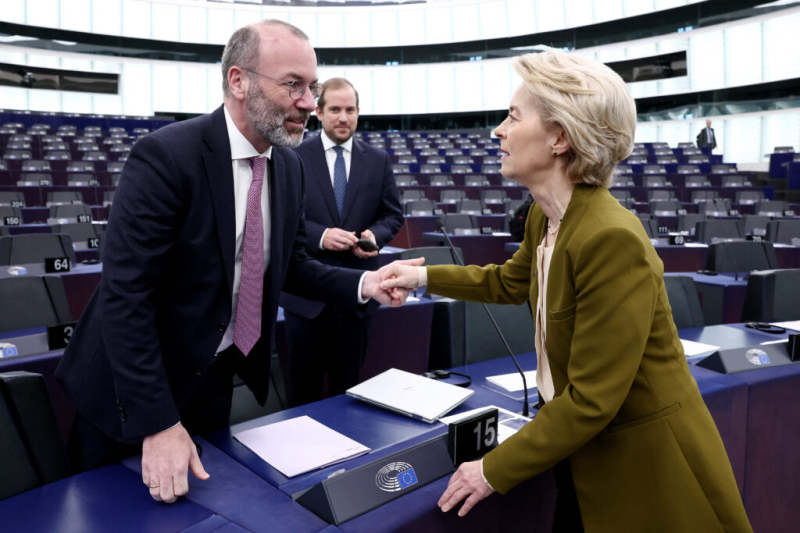
Magyar’s approach has some political backing in Brussels. The EU will “have to give a credit of trust to this new government,” Manfred Weber, leader of von der Leyen’s European People’s Party, said Tuesday. Magyar “will deliver, not because Europe is asking for this, but because the Hungarian citizens were asking for these changes. And he has a clear mandate.”
Magyar, who will be inaugurated in early May, defeated Viktor Orbán in Hungary’s April 12 parliamentary election, ending the populist leader’s 16-year grip on power and opening a new chapter in Budapest’s relations with the EU.
The meeting with von der Leyen on Wednesday will “send a signal” of goodwill toward Magyar as he moves to unwind Orbán-era policies, said an EU official familiar with the discussions, who, like several others in this article, was granted anonymity to discuss confidential plans. Magyar is also set to meet European Council President António Costa.
Race for the cash
Magyar’s conservative Tisza party intends to submit a new national recovery plan to the Commission by the end of May, according to a person familiar with the party’s preparations, replacing an Orbán-era proposal from 2021 that failed to secure the money.
The purpose of Wednesday’s meeting with von der Leyen is to brief Brussels on the work already underway, identify the most urgent targets once Magyar takes office, and determine the quickest way to get the funds disbursed, the person said.
Magyar wants to prioritize reforms and targets that can be completed before the deadline, while parking slower constitutional changes on which Tisza has promised stakeholder and public consultation.
Magyar’s team has also been working with some of his predecessor’s ministers and civil servants to advance the technical work required to make the reforms, three other officials with knowledge of the proceedings said.
András Kármán, Magyar’s nominee for finance minister, István Kapitány, tapped for economy minister, and Anita Orbán, the incoming foreign minister, met a high-level Commission delegation, including von der Leyen’s Cabinet chief Bjoern Seibert, on Saturday and prepared the ground for the Magyar-von der Leyen meeting. Before that, the teams met in Budapest on April 18 and 19.
The first step to unlocking Hungary’s recovery money is complying with 27 EU-mandated “super milestones,” covering procurement, judicial independence and academic freedom. Because Tisza has won more than two-thirds of the seats in parliament, Magyar is expected to be able to get those changes approved quickly.
The harder part is carrying out the more detailed reforms and projects needed to claim the funds before they expire. If Hungary fails to recover the full amount, it could try to extend the deadline by transferring the money to its national promotional bank.
A separate workaround under discussion would involve using post-Covid funds to finish projects already financed through regional funds, two of the officials quoted above said.
Magyar is also seeking a broader reset with Brussels, including relief from daily fines imposed in a migration dispute, Commission approval for Hungary’s request for billions in loans from the EU’s SAFE program, and a path for Hungarian universities to rejoin Erasmus after they were sidelined over academic freedom concerns.
No ‘carte blanche’
The Commission decision to grant Magyar an audience with von der Leyen before he is sworn in is unusual, though not unprecedented. Von der Leyen hosted Donald Tusk in Brussels in October 2023, 10 days after he won Poland’s election but before he had formally become prime minister.
The circumstances are similar: Both Tusk and Magyar came to Brussels promising breakthroughs in long-running disputes over democratic backsliding. But the EU is warier this time. The Commission released funds for Poland in 2024 after Tusk pledged reforms, only for many of those changes to stall. And in February, an EU court lawyer warned that funds cannot be disbursed until all required reforms have entered into force, though judges have yet to confirm that opinion.
Weber said the European Parliament should halt Article 7 proceedings against Hungary, launched in 2018 over democratic backsliding and capable — in theory — of stripping Budapest of its voting rights in the European Council.
The EPP chief said it was time for Parliament to “reconsider this decision,” adding that Europe should “help” Hungarians instead of criticizing.
But other groups oppose easing pressure for now.
“It is not in their interest at all now to just give a carte blanche,” said Terry Reintke, co-chair of the Greens group. “The super milestones have still not been implemented — it’s not just something that magically happens once Viktor Orbán is not in power anymore.”
Zoya Sheftalovich and Gregorio Sorgi reported from Brussels; Max Griera reported from Strasbourg. Gerardo Fortuna and Gabriel Gavin contributed reporting from Brussels.