

Instability is increasingly undermining the Western Balkan country’s EU ambitions.
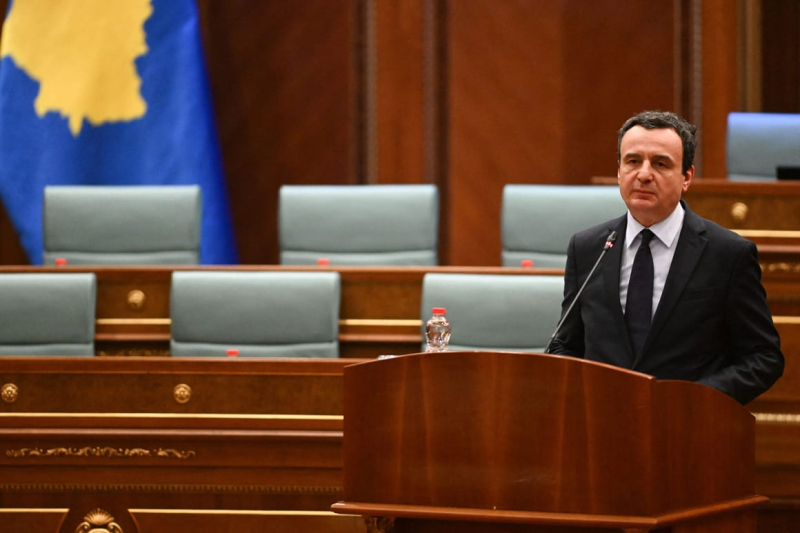
Kosovo’s parliament failed to elect a president by a midnight deadline Tuesday, triggering snap elections and deepening a monthslong political deadlock between Prime Minister Albin Kurti’s ruling party and the opposition.
Outgoing President Vjosa Osmani dissolved Kosovo’s government in March after it was unable to find a replacement, as the prime minister did not support her candidacy for a second term.
Kurti criticized the opposition for boycotting the new presidential vote, labeling them “aware that elections are not a solution. They don’t want responsibility or power — they just don’t want me to have it either. But that will be decided by the people of Kosovo.”
Kosovars will now head to the polls within the next 45 days to elect a new government.
It’s the third parliamentary election in just over a year — and Kosovo’s instability is increasingly undermining its EU ambitions and efforts to normalize its relationship with Serbia, having declared independence in 2008.
The country applied to join the bloc in 2022, but has not been granted candidate status, as that depends on the EU-brokered dialogue with Serbia and all member countries acknowledging Kosovo as a sovereign nation.
Cyprus, Spain, Slovakia, Romania and Greece currently do not recognize Kosovo.