
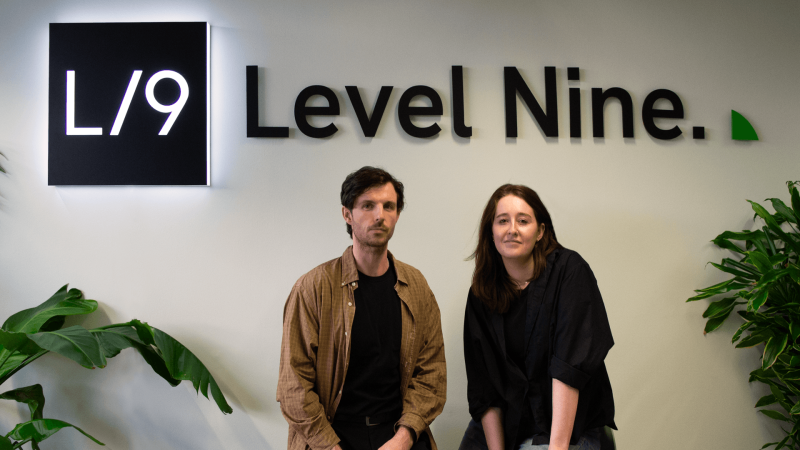

Level Nine develops advanced catalysts to enable sustainable chemical production, converting biomass and waste into renewable materials while improving efficiency and supporting industrial-scale adoption.
Berlin-based Level Nine, a deeptech company developing next-generation catalysts for more sustainable chemical production, has raised €4 million in a seed round led by Visionaries Tomorrow, bringing its total funding to €6.5 million.
Founded in 2023, the company combines bio-nanotechnology, quantum chemistry, and computational science to design synthetic catalysts, or nanozymes, that aim to overcome the limitations of both traditional catalysts and enzymes. By building catalysts from first principles, Level Nine seeks to deliver the precision of biological systems alongside the robustness required for industrial-scale use.
Its technology is focused on enabling the conversion of biomass and waste streams into renewable chemical building blocks, supporting a shift away from fossil-based inputs. The approach is designed to improve efficiency, reduce costs, and operate under milder conditions, making it better suited to complex, bio-based feedstocks.
Level Nine is positioning its platform to address structural challenges in the chemical industry, where legacy processes often struggle to adapt to alternative inputs. By developing catalysts that can process locally available, lower-cost feedstocks, the company aims to support more resilient and sustainable production across sectors such as materials, fuels, and consumer goods.
Beyond catalyst discovery, the company is building an integrated platform that takes technologies from research through to industrial deployment, working with partners to scale applications. This model is intended to bridge the gap between early-stage innovation and commercial adoption, enabling broader use of next-generation chemical processes.
Looking ahead, Level Nine plans to expand its catalyst platform across a wider range of industrial applications and further advance its technology from lab to industrial scale. The company also aims to partner with industry players to accelerate commercialisation, with a continued focus on enabling the use of biomass and waste streams in more sustainable chemical production.