
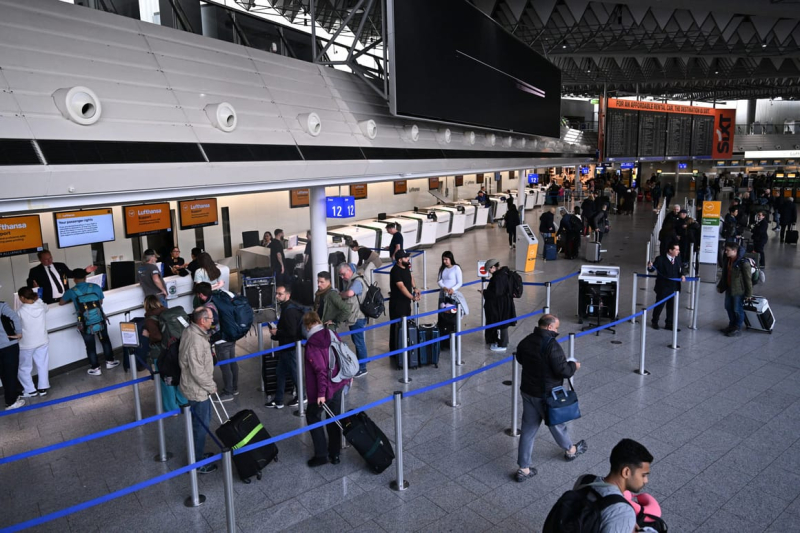

The new photograph and fingerprint requirements are designed to stop criminals and visa overstayers — but they have left thousands of visitors stuck in line.
BRUSSELS — The European Commission will launch new talks with EU member countries as part of efforts to ensure the bloc’s flagship new border checks system doesn’t cause major delays for holidaymakers throughout the summer.
In a letter sent Friday and obtained by POLITICO, EU Migration Commissioner Magnus Brunner told airport and airline bosses that the Entry/Exit System (EES), which has been phased in from October last year, is aimed at “keeping our citizens safe, without undue discomfort for visitors from outside the Schengen area.”
Trade groups including Airlines for Europe and the International Air Transport Association had written to the Commission expressing grave concerns over long queues at the border and delays for those traveling to and from the EU.
Under the rules, which were developed for eight years before taking effect, non-EU citizens are fingerprinted and photographed in lieu of traditional passport stamping. However, the rollout — which is the responsibility of national governments — has been plagued by technical problems and saw wait times spike for foreign visitors.
Brussels has previously denied widespread shortcomings with the system, but Commission President Ursula von der Leyen admitted on Friday that “technical problems” would require significant work to resolve.
While Brunner said the EES “works well” in most member states and at most EU airports, he acknowledged passengers were being forced to wait longer at certain destinations, he blamed factors like “insufficient staff or lack of adequate infrastructure.”
Currently, capitals can temporarily suspend the requirement to gather biometric data in order to speed up the process. However, the commissioner went on, “the Commission will now make additional efforts to help those Member States that still encounter issues” and officials will be working with governments to try and beat the backlogs.
According to figures shared with POLITICO, the EES has seen 43,728 people stopped from entering the EU for breaking the rules since October 2025. Some 16,383 of those were traveling without sufficient justification, 8,739 would have been overstaying their allowed time limit and more than 400 were trying to cross the border on counterfeit documents.
After a gradual rollout, the EES became mandatory for all non-EU travelers entering the Schengen free travel zone for short stays from April 10.
Tommaso Lecca contributed reporting.