

One day after the U.S. Justice Department brought charges against former president Raúl Castro, the Kremlin condemned Washington’s “gross interference” in the island’s affairs.
Russia will provide Cuba with “active support” as the U.S. increases pressure on Havana, Kremlin foreign ministry spokeswoman Maria Zakharova said Thursday.
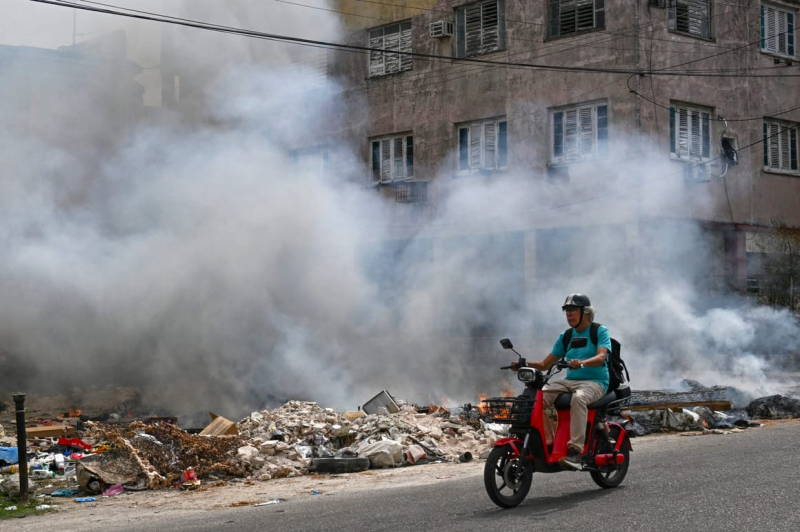
Washington’s move to cut off oil shipments from Venezuela and its threats to punish companies doing business with Cuba has caused a dire energy crisis on the island. On Wednesday, tensions between the two countries escalated further after the U.S. Justice Department announced it was bringing charges against former Cuban President Raúl Castro in connection with the 1996 killings of four people involved in civilian rescue flights.
Russia has sought to project itself as the main force resisting American-led Western hegemony, and its decades-old alliance with Cuba is among its most notable.
But Moscow’s inaction following Venezuelan President Nicolás Maduro’s capture by American forces earlier this year — and inertia during the U.S.-Israeli strikes on Russian ally Iran — raises questions about how far the Kremlin is willing to go to defend its international partners, while its army is bogged down fighting in eastern Ukraine.
During a press briefing in Moscow, Zakharova expressed “full solidarity” with Cuba in the face of “gross interference in the internal affairs of a sovereign state, intimidation, and the use of unilateral restrictive measures, threats, and blackmail.”
“Cuba continues to be the target of brutal economic pressure from the United States,” she added. “The new restrictions imposed by the White House in early May against third-country companies operating on the island of freedom are the latest round of Washington’s pressure policy, the primary goal of which is to strangle Cuba economically.”
The Kremlin’s pledge to support Havana follows Russia’s efforts to relieve the island’s energy crisis with oil shipments.
A sanctioned Russian tanker was seized by the U.S. in January, but in March Washington gave Moscow permission to dispatch an oil shipment to the Cuban port of Matanzas. Those fuel stores have since run out, and a Russian tanker sent to the island in April remains in a holding pattern in the Atlantic.
The announcement of American charges against Castro has sparked increased speculation that Washington may be planning a military intervention on the island.
The former president’s indictment is reminiscent of that of Maduro, who was charged by the U.S. with drug trafficking in 2020 and captured in a raid in Caracas carried out by U.S. forces earlier this year.
U.S. President Donald Trump has repeatedly threatened to intervene in Cuba and this week said he would have “the honor of taking Cuba.”