

Contents
From less unanimous decision-making to informal sidelining, EU countries are already weighing how to move ahead without Hungary if Viktor Orbán wins reelection.
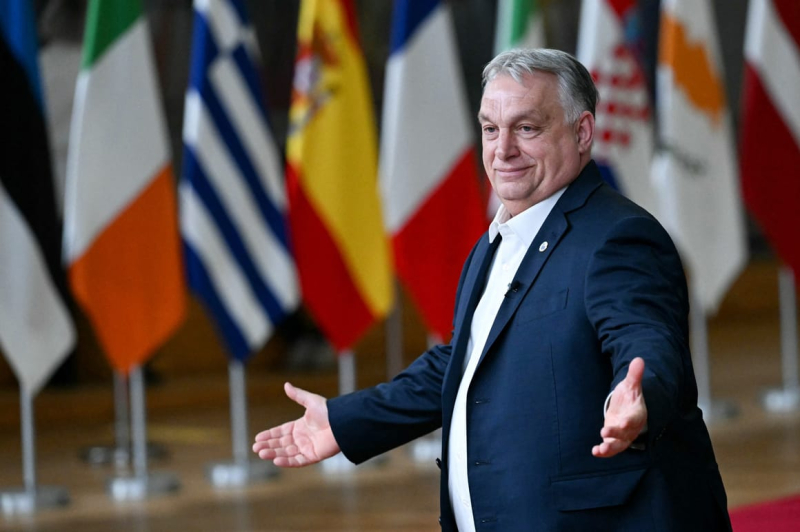
BRUSSELS — The EU is discussing contingency plans in case its longtime antagonist, Viktor Orbán, wins another term.
EU countries are floating several ideas to prevent the Hungarian prime minister — and, in some cases, any other troublesome leader — from derailing how the bloc operates, 10 EU diplomats told POLITICO. They include changing how votes are cast, withholding more funding, and even expulsion.
“Respect for the rule of law is essential for access to EU funds,” Michael McGrath, the European commissioner for democracy, justice, the rule of law and consumer protection, told POLITICO when asked about countries being hit with tougher financial penalties.
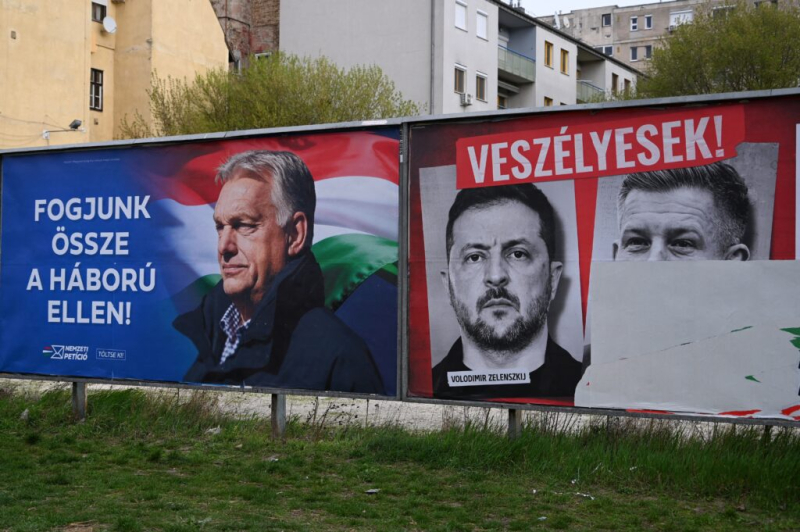
Hungary goes to the polls on April 12, and while Orbán’s Fidesz party is trailing the Tisza party of Péter Magyar by nine percentage points, according to POLITICO’s Poll of Polls, the EU is preparing for a world in which Orbán wins.
Orbán has long been a thorn in the EU’s side, most recently blocking a loan for Ukraine that he’d approved in December. For many at the EU top table, that crossed a line. “Nobody can blackmail the European Council, nobody can blackmail the European institutions,” European Council President António Costa raged to reporters. “It is completely unacceptable what Hungary is doing.”
Then came allegations that Budapest has maintained contact with Moscow throughout the war in Ukraine, and that Hungarian Foreign Minister Péter Szijjártó used breaks during EU meetings to update his Russian counterpart, Sergey Lavrov.
If Orbán wins the election, “the gloves will come off,” said one EU senior diplomat, granted anonymity to speak freely, as were others in this article.
“Many think that a red line has been crossed [with the blocking of the loan to Ukraine] and that something needs to be done — but it’s not clear what,” said a second diplomat.
“Let’s say there will be renewed and refueled discussions on how to cope with Orbán, triggering a more sincere discussion on how to handle him — and maybe more creative ways,” a third diplomat said.
If Orbán does win, opinion is divided on whether he’d change with a fresh mandate to govern. “He’s clever enough — one of the most clever politicians in the room at the European Council — to know where the limits are,” said one EU senior official.
“I don’t think” he’ll change, one diplomat said. “He’s a Trojan horse. The whole point of the EU is trust — the foundation of Europe is working together.”
Here are some of the options being discussed if Orbán is victorious next month:
1. Change how the EU votes
One option is to expand the use of qualified majority voting (QMV) — which normally requires 55 percent of member states representing 65 percent of the total EU population to vote in favor — into sensitive areas that at present need everyone on board, such as foreign policy or elements of the EU’s long-term budget, the Multiannual Financial Framework (MFF).
The EU has had to get creative with Hungary before in this regard. In 2023, when EU leaders were discussing enlargement talks with Ukraine, which Budapest opposes, then-German Chancellor Olaf Scholz proposed that Orbán leave the room (EU rules say unanimity is also fulfilled if one leader is absent).
Why it could work: Three diplomats were particularly vocal about this option, with one pointing out that there has been a growing willingness to examine ways to make the EU’s decision-making more effective by increasing the use of QMV.
Another one of the three diplomats added: “It is something we are pushing for anyway, regardless of the very concrete case [of Orbán]: If you want to react quickly, you need more decisions taken by QMV.”
Why it might not work: A move away from unanimity on more issues would be massive, as having all the EU’s countries working together is a key tenet of the bloc.
An attempt to push forward Ukraine’s application for EU membership despite Hungary’s opposition, floated last September, failed to gain sufficient support among member countries. However, two diplomats said a new Orbán mandate could provide the catalyst for revisiting such proposals.
Others remain skeptical. One diplomat pointed to the delicate balance in foreign affairs between effective decision-making and what member countries still consider an essential aspect of national sovereignty.
2. A multi-speed Europe
An option mentioned by four diplomats is greater use of flexible formats — from informal coalitions of the willing to enhanced cooperation among smaller groups of countries.
Why it could work: The coalition of the willing format “already happens, to a certain degree, especially in the context of security issues when the Brits are involved,” said one diplomat. “But it can’t substitute the EU27 as a forum to exchange information.”
European Commission President Ursula von der Leyen has floated the increased use of enhanced cooperation among willing member states to bypass unanimity in areas such as competitiveness.
Speaking at an EU leaders’ retreat in the Belgian countryside in February, she said: “Our ambition should always be to reach agreement among all 27 member states. However, where a lack of progress or ambition risks undermining Europe’s competitiveness or capacity to act, we should not shy away from using the possibilities foreseen in the treaties under enhanced cooperation.”
Why it might not work: While Hungary has opted out of Ukraine-related financial arrangements, alongside Czechia and Slovakia, it continues to block these efforts. On the Ukraine loan, for example, one of the bills that needs approval before the cash can be disbursed requires the agreement of all member countries.
“In cases of very urgent need, this can be a vehicle, but in the end it still comes back to a decision by all 27,” one senior diplomat said.
Two other diplomats were critical of these restricted formats, saying they should be exceptions rather than the new norm. “We have to look at this subject case by case, but I don’t think we have an interest in not having Hungary at the table. We are the EU, and we have to preserve unity,” one diplomat said.
3. Stronger enforcement and financial pressure
Another option is more aggressive enforcement measures, such as withholding EU cash.
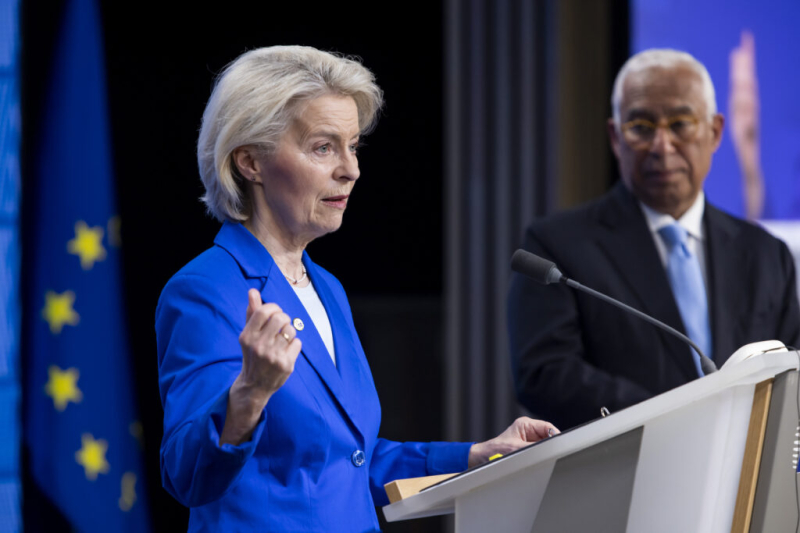
European Council President António Costa floated the idea that Orbán’s block on Ukraine’s loan had breached Article 4(3) of the EU Treaties, under which member countries have an obligation to provide “sincere cooperation.”
“Costa sent a letter about that but never followed up,” one diplomat recalled, mentioning the fear of perceived meddling during an election campaign.
A senior Commission official said the use of Article 4(3) was a possibility. Any breach could lead to an infringement procedure which, if the EU court ruled in the Commission’s favor, would result in financial penalties.
Why it could work: An extra level of what’s known in EU-speak as conditionality — when the bloc limits or suspends access to EU funds when a country breaches rule-of-law standards — is already included in the Commission’s proposal for the next long-term budget, which will be negotiated under the Irish Council presidency starting in July.
McGrath, the European commissioner, said that under the new MFF proposal, the EU budget would support reforms that strengthen the rule of law in member states.
“This means that if breaches to the rule of law were to occur, the suspension of payments or blocking of funding is now on the table,” he said, without referring to Hungary specifically.
Why it might not work: An adviser to the EU’s top court recently recommended annulling the Commission’s 2023 decision to unfreeze €10.2 billion in EU cohesion funds for Hungary. The move is also being challenged by the European Parliament, which suspects it was a quid pro quo for Hungary dropping its veto on Ukraine matters. A final ruling has yet to be issued, but it shows the issues that can arise when funds are withheld.
“Conditionality has proven quite effective in the past, but there needs to be a direct link to an abuse of EU funds. You can lock funds, but you can’t just say it’s a political issue,” said one diplomat.
Budapest has already signaled it would veto any tighter rule-of-law conditionality attached to EU funds — or even bring down the whole budget, if necessary.
“Under the new MFF, if there is a realistic possibility that we will not have access to EU funds at all, then why would we be interested in accepting such an MFF?” Hungary’s EU affairs minister, János Bóka, told POLITICO.
4. Suspending voting rights
In 2018, the European Parliament triggered Article 7 of the EU treaties, which allows for the suspension of a member state’s voting rights if it breaches the bloc’s values.
Why it could work: Former Lithuanian Foreign Minister Gabrielius Landsbergis argued that even pursuing Article 7 can have an impact. When he was in office, he said, “even pushing for Article 7 creates pressure on Hungary — they got really nervous.”
Why it might not work: The Parliament may have triggered Article 7, but the process has stalled because suspending one country’s voting rights needs the backing of the other 26 — and Slovakia won’t agree to it.
“Under Article 7 you need unanimity — it will be difficult,” said one diplomat. Another added: “There’s no real legal tool. Article 7 can strip voting rights, but all 26 others would have to agree. And I imagine at least one leader who wouldn’t,” hinting at Slovakia’s Robert Fico.
5. Expulsion from the EU
The most dramatic — and unrealistic — of the options. No country has even been kicked out of the EU and the subject remains taboo.
Why it could work: One diplomat pointed to a commentary published in a legal blog suggesting the possibility of repurposing the EU’s exit clause (Article 50, which is what the U.K. triggered when it started the Brexit process) or other legal workarounds to “walk out on Hungary.”
The diplomat said this is “not realistic but a good pitch,” adding that “a few years ago people talked hypothetically about this scenario — now it’s doing the rounds again.”
Why it might not work: “Expulsion is not in the treaties, and I don’t see our interest in doing so,” one diplomat said. “What would Hungary do in that case? It would fall into Russia’s orbit.”
Max Griera contributed reporting.