

Half-joking comments about Canada joining the bloc have become common as Ottawa adapts to its fraying relationship with the United States.
BERLIN — France’s foreign minister Jean-Noël Barrot has floated the idea that Canada could one day join the European Union, using the transatlantic ally as a striking example of the bloc’s global appeal.
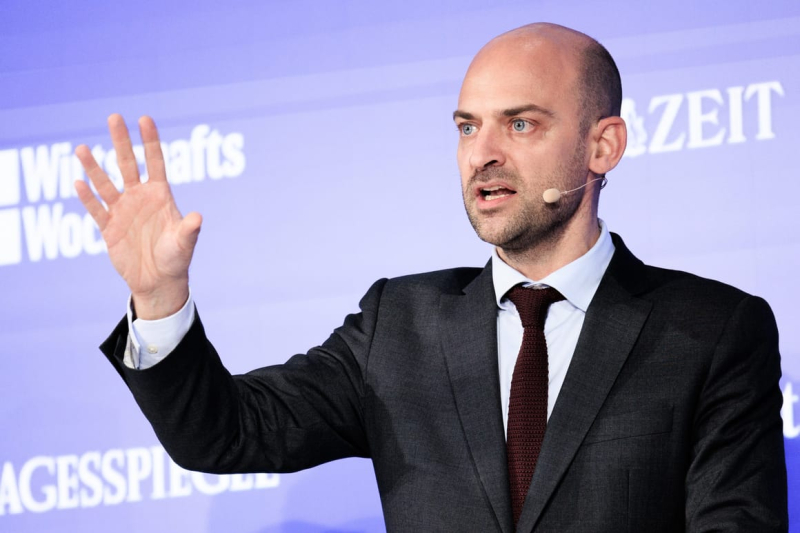
Speaking at the Europe 2026 conference in Berlin alongside his German counterpart Johann Wadephul, Barrot argued that the EU is increasingly attracting partners far beyond its borders as geopolitical tensions soar.
“Nine countries are formally candidates to EU accession today. Others might join them,” Barrot said. “Iceland in a few weeks or months. And maybe Canada at some point.”
Barrot’s Canada remark was not presented as a concrete policy proposal, but rather as part of a broader argument that the EU is emerging as a “third superpower” capable of balancing the rivalry between the United States and China.
Earlier on Tuesday, Finnish President Alexander Stubb suggested to Canadian Prime Minister Mark Carney while the pair were out running that he should “think about” joining the EU as well.
The comments come as European leaders push to strengthen the bloc’s geopolitical role amid Russia’s war in Ukraine and the U.S. war in the Middle East.
Barrot framed Europe as uniquely positioned to draw countries closer through its economic weight, democratic model and regulatory power. “Many countries around the world are willing to get closer to our union,” he said.
He also pointed to signs of renewed alignment with the United Kingdom, noting debates in London about closer ties to the single market, as well as deepening cooperation with countries like India and Switzerland.
Talk of Canada as a potential EU member has grown more common as the country struggles with an increasingly antagonistic relationship with the United States under Donald Trump, who early in his second presidency often talked about turning Canada into a “51st state.”
Those comments, too, were initially viewed as frivolous — but the laughter in Ottawa grew steadily more nervous, and has lately ceased altogether.
A poll conducted in 2025 showed that 44 percent of Canadians think the country should join the EU.
Barrot and Stubb are the most senior politicians to talk up the suggestion, with a spokesperson for European Commission President Ursula von der Leyen reacting warmly to the poll but ultimately dismissing the idea as a non-starter.
Canada has already pushed back on any suggestion of EU membership, with Carney stating there are no plans to join the bloc. “The short answer is no,” the Canadian PM said when asked about the idea at the NATO summit earlier this year. “That’s not the intent. That’s not the pathway we’re on.”
Instead, Ottawa has been pursuing closer ties short of membership, including a new strategic defense and security partnership with the EU aimed at deepening cooperation across trade, supply chains and security.
While full EU membership for Canada is unlikely in the short term, and no concrete plans to realize it are yet known to be in motion, given the increasing geopolitical turbulence it is not impossible.
Hans von der Burchard contributed to this report.