

If the EU’s Court of Justice judges agree, Hungary would need to pay back the cash.
STRASBOURG — The European Commission should reverse its decision to release €10 billion to Hungary in 2023, according to a senior legal adviser to Europe’s top court.
The Court of Justice of the EU is examining a claim by the European Parliament that the Commission breached its own rules when it unfroze funding for Hungary in December 2023 — money that had been withheld over rule-of-law concerns.
MEPs accuse the Commission of political expediency because the decision came on the eve of a crucial summit of EU leaders at which the bloc was desperate for Hungarian Prime Minister Viktor Orbán to cooperate on sending aid to Ukraine.
The legal opinion by Advocate-General Tamara Ćapeta — to annul the Commission’s decision to unfreeze the funds — will guide the judges on their final ruling, which will be delivered in a few months. Advocates-general are not judges but legal advisers who help the court in complicated or unprecedented cases.
The Commission refused to comment on the legal adviser’s opinion.
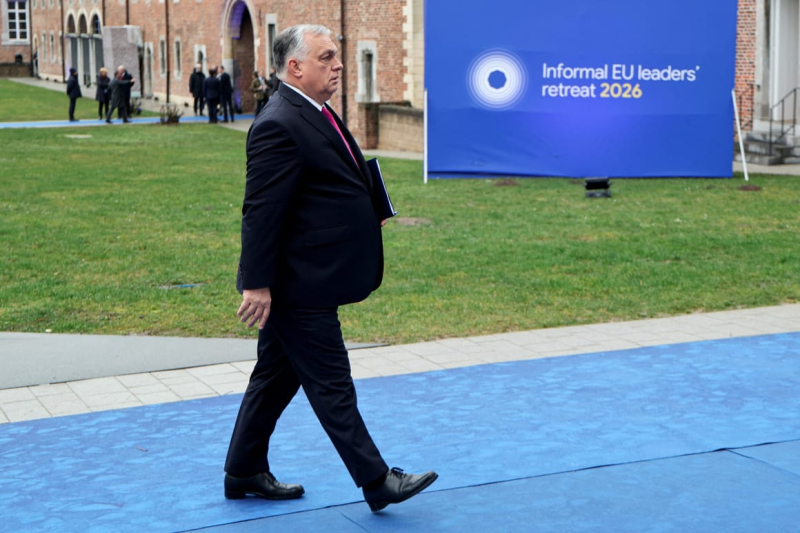
Orbán did not comment on the ruling on his way into a summit of EU leaders in the Belgian countryside.
René Repasi, a German MEP and EU law professor at Erasmus University Rotterdam and the University of Geneva, said an annulment would mean the Commission should “request the money back.”
“If Hungary does not pay back, the Commission can lower other disbursements, which Hungary is entitled to receive, by the amount Hungary is obliged to pay back,” Repasi said.
When it comes, the court’s ruling will establish a precedent regarding the extent of the Commission’s discretion when assessing rule-of-law violations by EU countries, especially in the context of the Common Provisions Regulation (CPR), which sets strict conditions relating to fundamental rights and judicial independence for the disbursement of EU funds.
The Commission defended itself during a hearing in October 2025, saying that specific pre-established technical “milestones” on addressing judicial independence concerns had been formally met by Budapest, and therefore the Commission had to release the funds.
The Parliament’s lawyers say the Commission should have taken a broader view of systemic rule-of-law deficiencies in Hungary.
Green MEP Daniel Freund said the advocate-general’s opinion “was a stinging rebuke to the Commission. Should the court follow this reasoning in its final ruling, it would mark a victory for the rule of law in Europe.”
He added that the opinion “confirms what the European Parliament has long denounced: The release of €10 billion to the Hungarian government was illegal and politically motivated. By acting as it did, the Commission has gambled away its own credibility.”
“EU funds must only be disbursed when the recipient upholds the law, European values, and the rule of law. We expect the European Commission to adhere to these principles in the future. It must stop allowing itself to be manipulated by autocrats like Viktor Orbán.”
This article is being updated