
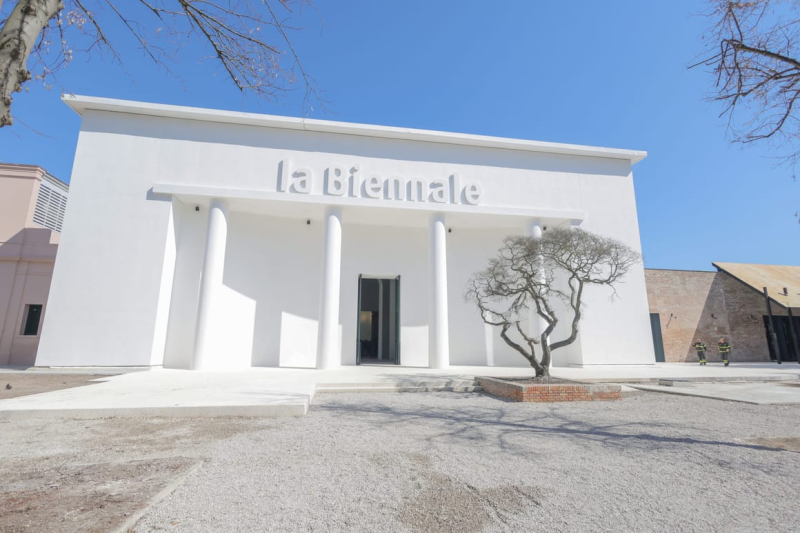

The intervention raises the stakes in a growing dispute following the Biennale’s decision to allow Russian artists to participate in its 2026 exhibition.
At least 34 members of the European Parliament are urging the EU’s top leadership to take action against the Venice Biennale’s decision to reinstate Russia, escalating the political backlash against the prestigious art exhibition set to start on May 9.
In a letter obtained by POLITICO to be sent later Thursday, lawmakers call on Brussels to suspend EU funding to the Biennale if Russia’s participation goes ahead and to impose “restrictive measures” on individuals and entities linked to the Russian pavilion.
“What is unfolding … is much more than a cultural controversy,” they wrote to European Commission President Ursula von der Leyen, EU foreign policy chief Kaja Kallas and Cypriot Foreign Minister Constantinos Kombos, describing the decision as “a test of whether the European Union means what it says — about Ukraine, about values, and about the rule of law.”
The intervention raises the stakes in a dispute that has been building since the Biennale Foundation confirmed earlier this month that Russia would return for the first time since its full-scale invasion of Ukraine in 2022.
The decision has already drawn condemnation from more than 20 European governments and prompted warnings from the European Commission that it could review — and potentially withdraw — funding for the event.
Now, MEPs are pushing for concrete measures.
They argue that EU funds — amounting to roughly €2 million over three years — should not “directly or indirectly” support a platform that could rehabilitate Russia’s international standing.
They also call for a sanctions compliance review of those involved in organizing the Russian pavilion, citing alleged links between its commissioner and Rostec, a Russian state-owned defense conglomerate, and urge targeted restrictive measures against anyone connected to the Kremlin or its war effort.
The Biennale has defended its decision by arguing that art should remain a space of dialogue, free from political exclusion.
Italy has also moved to distance itself from the foundation. Italian Culture Minister Alessandro Giuli has asked the government’s representative on the Biennale’s board, Tamara Gregoretti, to step down, citing a breakdown in trust. According to the culture ministry, she failed to inform Rome about the possible participation of the Russian Federation and later supported it despite the issue’s international sensitivity. Gregoretti has not resigned.
At the heart of the dispute is a broader question over whether cultural platforms can remain neutral in wartime. For the Biennale, the answer has been yes. For a growing number of European policymakers, that stance is no longer tenable.
“The political, moral, and legal case is clear,” the lawmakers wrote. “What is now needed is action.”