

The new funding will support the further development and deployment of the company’s platform, which equips robots with a continuous intelligence layer for operating in changing real-world environments.
Stateful Robotics, an embodied AI company spun out of the University of Oxford, has raised $4.8 million in a pre-seed funding round led by Amadeus Capital Partners and Oxford Science Enterprises (OSE), with additional participation from angel investor Stan Boland.
While advances in large language and other foundation models have significantly improved robots’ perception and contextual understanding, real-world deployments still face limitations when conditions change.
Robots often struggle with disruptions such as unexpected obstacles, shifting lighting conditions, or evolving operational requirements. These systems typically lack the ability to retain and utilise historical context, such as prior task outcomes, recurring issues, or environment-specific behaviours, which is essential for reliable long-term performance.
Stateful Robotics addresses this gap by continuously integrating real-time data, task progress, and historical performance into a unified AI model. This enables robots to recall past events, adapt to changing conditions, and plan more effectively over extended time horizons, moving beyond rigid, pre-programmed workflows.
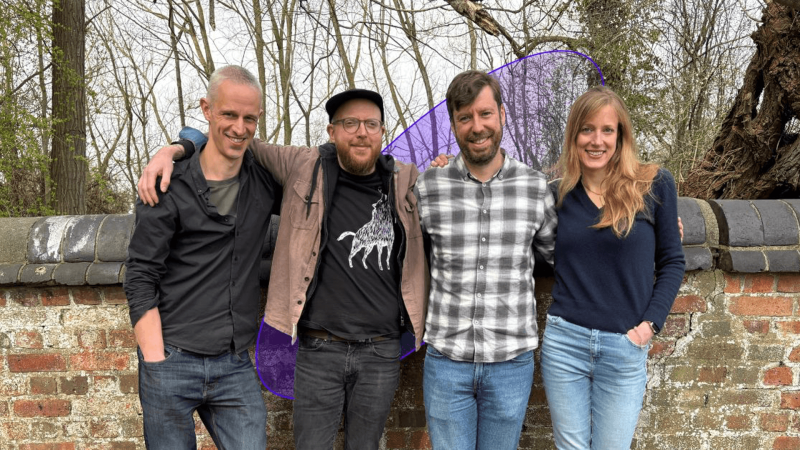
The company was co-founded by Kirsty Lloyd-Jukes (CEO), alongside Professor Nick Hawes, Professor David Parker, and Dr Bruno Lacerda. Their work builds on over a decade of research at Oxford in areas including autonomy, probabilistic verification, and decision-making under uncertainty.
Kirsty Lloyd-Jukes, CEO and co-founder, noted that while robots are typically effective at handling immediate tasks, they often face challenges when it comes to planning ahead, especially when decisions need to be made over longer periods, such as hours or days:
By maintaining a continuously updated model of each deployment, our platform enables robots and human-robot teams to operate more reliably and consistently in complex environments.
The technology is already being tested with pilot customers in sectors such as infrastructure and logistics.
The newly raised capital will be used to expand the company’s engineering team, further develop its performance engine, and accelerate go-to-market efforts with industrial partners.