
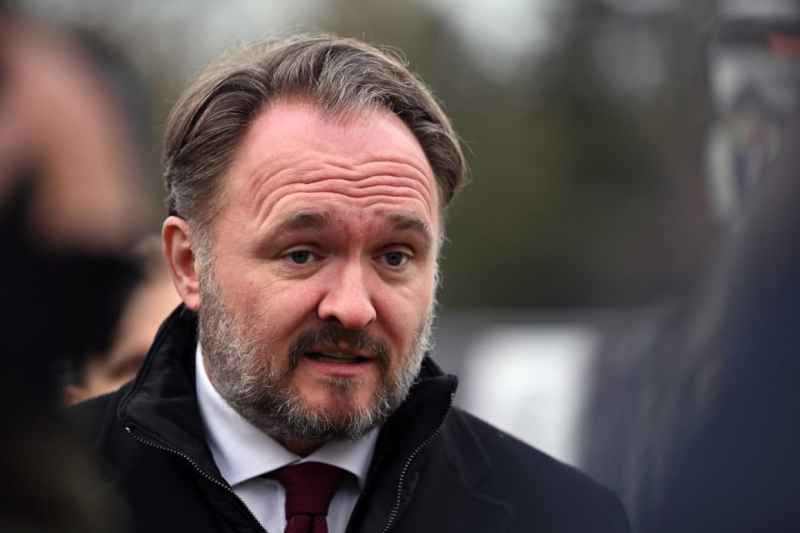

European Energy Commissioner Dan Jørgensen is urging EU governments to be flexible in how they refill gas stores.
European countries are being advised to lower gas storage filling targets and to start refilling gas stores early, as the conflict in Middle East drives up global energy prices.
European Energy Commissioner Dan Jørgensen urged in a letter to national energy ministers, seen by POLITICO, that countries should be flexible in how they refill gas stores, to “help reduce the gas demand at times where the supply is tense and ease the pressure on gas prices in Europe.”
Since the U.S. and Israel launched strikes on Tehran in late February, the ensuing conflict has caused global energy prices to spike, driven in part by Israeli strikes on Iran’s vast offshore gas field and Tehran’s effective closure of the Strait of Hormuz, a critical passage that facilitates a significant share of the world’s oil and natural gas trade.
In the letter, Jørgensen asked EU countries to lower their gas storage refilling targets to 80 percent, 10 percentage points below normal targets.
He also suggested that countries could start storage injections early to avoid an “end-of-summer rush to refill storages,” which would put upward pressure on prices. He also suggested that governments extend the deadline to meet filling targets to as late as December, two months later than usual.
He said countries can take these measures under the EU Gas Storage Regulation, which provides for flexibility in difficult market conditions.
The EU requires member countries to maintain gas reserves at 90 percent of capacity by the winter — a measure brought in after Russia’s 2022 invasion of Ukraine. But this year’s colder-than-average winter depleted those reserves to an average of under 30 percent as of March, the lowest since 2022.
Anxiety has been growing in Brussels over whether the conflict in Iran, coupled with already low gas reserves, could spark a fight among countries over dwindling global energy supplies.
Jørgensen said that the EU’s gas supplies remain “relatively protected” since the bloc only has “limited reliance” on gas imports from the region. But as a “net importer” of gas globally, “high and volatile global prices may also impact the EU gas storage injections,” he said.
As developments in Iran and the wider region are “are significantly impacting global oil and gas markets,” there are indications that it could take longer for Qatari gas production to return to pre-crisis levels, Jørgensen said.
The commissioner said he would support countries to make use of the allowed flexibilities, which should be discussed with the European Commission and other member states before being implemented.
A Commission spokesperson confirmed that the letter was sent to energy ministers.