

Feud between defense ministry and army pushed a frustrated Volodymyr Zelenskyy to fire his defense minister.
KYIV — There couldn’t be a worse moment for an internal brawl, but that’s exactly what is unfolding in Kyiv, where a hasty reshuffle is underway to make spy chief Yevhenii Khmara Ukraine’s new interim defense minister.
Instead of talking about how to maintain the wartime initiative it has enjoyed over Russia this year, Ukraine is seething over President Volodymyr Zelenskyy’s decision to oust 35-year-old tech prodigy and reformer Mykhailo Fedorov, who is adored by Ukraine’s partners and people, from the defense brief.
The reason? Fedorov’s acrimonious relationship with Ukraine’s Army Commander Gen. Oleksandr Syrskyi.
“Those two could not work together. A wartime president must not face such choices, honestly. I want unity, but the sides did not find it. I respect both,” Zelenskyy said at a press conference in Kyiv on Thursday.
“They even refused to sit at the same table without me,” he added. “I had to make a choice.”
That choice, to get rid of rogue reformer Fedorov, who in his six months in office launched major positive changes in the army, shocked many prominent Ukrainian service members and watchdogs, and surprised the country’s foreign partners.
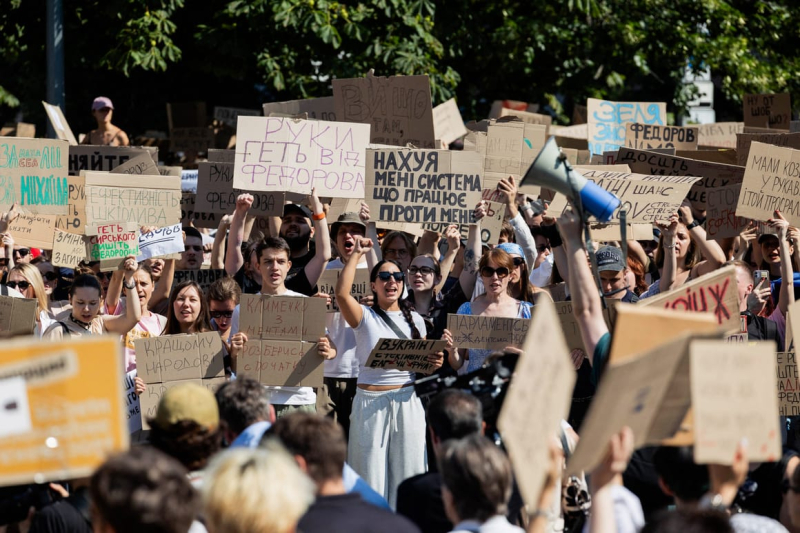
Ukrainians held another so-called cardboard protest on Thursday to demand that Zelenskyy return Fedorov to the ministry. In the evening Zelenskyy announced that Khmara, who is acting head of Ukraine’s SBU intelligence agency, will fill the vacancy — but only in an acting capacity until he can formally resign from the military to take up the civilian role.
Fedorov vs. Syrskyi
Fedorov said Syrskyi had forced Zelenskyy to push him out, although Fedorov himself has reportedly been urging Syrskyi’s removal for some time. The general, whose nickname is “the Butcher”, is seen as a Soviet-style leader who rewards loyalists and discourages field commanders from showing initiative.
“When the president said he has no plans to fire [Syrskyi], I accepted and was ready to learn how to work with him, because we both have one goal — to serve the Ukrainian people. But what we faced was that all our initiatives were blocked. Syrskyi was not ready to openly discuss problems, but was instead plotting against us and finally set an ultimatum for me to be out,” Fedorov said at a press conference in Kyiv on Thursday.
“Instead of figuring out how to asymmetrically defeat Russia, which is the task of the commander-in-chief, he figured out how to split the country,” Fedorov added.
He praised Syrskyi’s military talent but said the general wants to keep fighting the old ways while war is rapidly changing and becoming more technological.
Syrskyi responded with a condescending remark, saying it’s only because of his past successes, such as in the battle for Kyiv in 2022, that Fedorov can now speak freely in the Ukrainian capital.
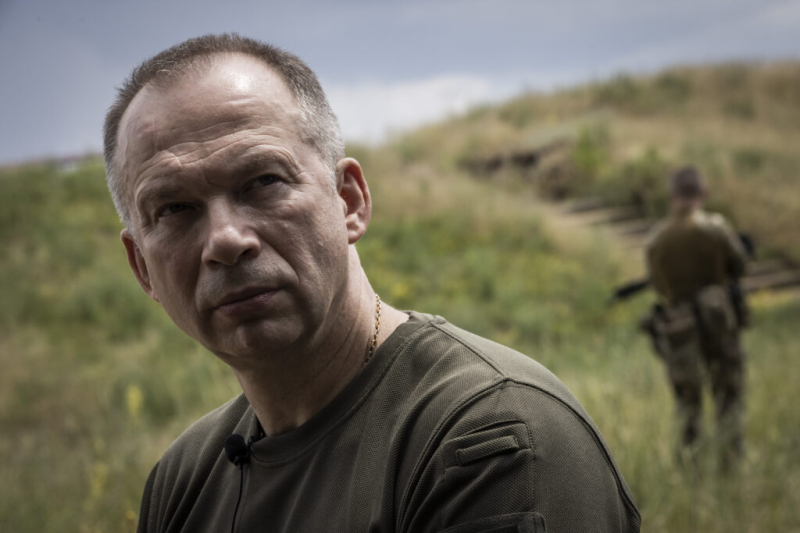
“We managed to defend our capital, and now briefings can be held in this city, visions can be formed, decisions can be made. I will make every effort to ensure that similar events can take place in a free and independent Ukraine. To do this, we need to focus on the war and on an effective strategy that is now demonstrating concrete results,” Syrskyi said in a social media post.
He also thanked Fedorov for his work and expressed hope that “he would stay in Team Ukraine.” It is not yet clear where Fedorov will end up.
An official from the General Staff of the Ukrainian army refused to provide further details, saying the military “can’t comment on presidential decisions and politically charged statements.”
Positive aura
In the six months he was in office Fedorov persuaded Elon Musk’s SpaceX to switch off Starlink terminals being used by the Russian military, creating chaos for the Kremlin’s forces. He also helped push the mid-range strike campaign that uses drones to hit targets up to 100 kilometers behind the front lines, disrupting Russian logistics and slowing enemy territorial gains.
Zelenskyy hired Fedorov because he had a strategic vision of war, while the army prefers tactics over strategy, Fedorov claimed on Thursday.
Fedorov proved adept at communicating Ukraine’s strategy and vision of the war, both internally and externally with partners, and had good relations with private defense producers from his time at the digital transformation ministry, said Mykola Bielieskov, a defense analyst based in Kyiv.
He also used his tech background to introduce post-action reviews of Russian attacks, which helped the Ukrainian air force improve its drone interception rate.
German Defense Minister Boris Pistorius praised Fedorov, crediting him for Ukraine’s recent successes; Romanian Deputy Defense Minister Sorin Moldovan commended Bucharest’s “good cooperation with Mr. Fedorov.”
“He seemed very effective,” said a senior European defense official, granted anonymity like other individuals in this article to speak freely, describing him as “a digital guy in a mostly mechanical world.”
A NATO diplomat said they had been “very surprised” by the dismissal, and that it was not a smart decision.
“We loved him; he did great,” the diplomat said. “I did not see this coming.”
Some top Ukrainian military commanders also expressed solidarity with Fedorov, crediting him with the Ukrainian army’s successes this past year. Colonel Pavlo Yelizarov, one of the architects of a new system that improved the performance of Ukraine’s air defenses against killer drones, resigned from his post as deputy commander of the air force after Fedorov’s ousting. “Fedorov’s dismissal is a very big harm for Ukraine’s defense during wartime,” he said.
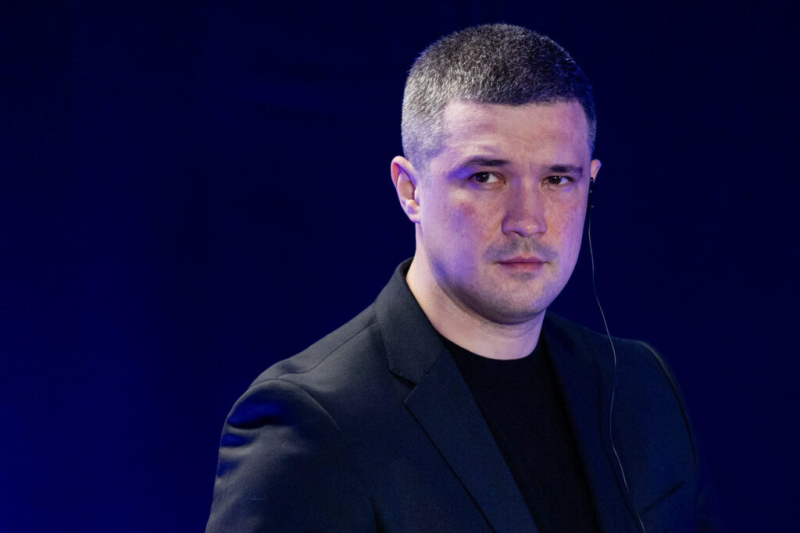
To be sure, not everything Fedorov did was a success. Key reforms to improve pay for frontline troops and make it easier for foreign volunteers and previous draft dodgers to fight for Ukraine fell well short of expectations.
But while the former defense minister admitted the reforms had been poorly communicated, he said they had been stalled by the army command, like many of his other initiatives.
Houston, we have a problem
Whatever positives emerged from Fedorov’s tenure, experts agree that the conflict between the defense ministry and the army command was a serious problem.
“If the head of the defense ministry starts behaving not as a supplier fulfilling the orders of the general staff, but starts asking questions and getting into strategic management of war, that’s when the conflict appears,” Bielieskov said.
“The military has a very wary attitude towards civilians when it comes to strategic war management — they perceive attempts to be involved in this as a violation of their prerogatives,” he continued. “Therefore, if this problem is not resolved, the tension will remain — only its degree may change.”
It’s perhaps with an eye on healing the rift that Zelenskyy has tapped Khmara, an experienced combat special service officer behind many of Ukraine’s bold long-range drone strikes inside Russia, to replace Fedorov. Yet Khmara can’t be appointed to a defense minister’s post without resigning from service, as it is a role for a civilian.
Khmara also reportedly maintains close ties with many Western intelligence agencies, which could assuage uneasiness among partners currently keeping Ukraine afloat. Nonetheless, the EU, which is set to pour further billions into Ukraine’s defense industry, will now have to wait to see reforms enacted and reorganizations take place under a new minister.
And the war is not standing still.
“People think there is a risk that all the advantages that we have shown recently may simply be lost,” Bielieskov said. “Russia is adapting while we have such changes and uncertainty.”